What changed and why it matters
Cambridge’s Net Zero Action Plan 5‑year update added a new lane for embodied carbon alongside operational energy. Buildings drive over 80% of the city’s greenhouse gas emissions when you include construction and operations, so the plan targets both sides of the coin (City of Cambridge NZAP Update, 2023) (City of Cambridge NZAP Update, 2023). For manufacturers, that shift turns product EPDs into the primary data feed for design teams modeling up‑front impacts.
The embodied‑carbon hook in zoning
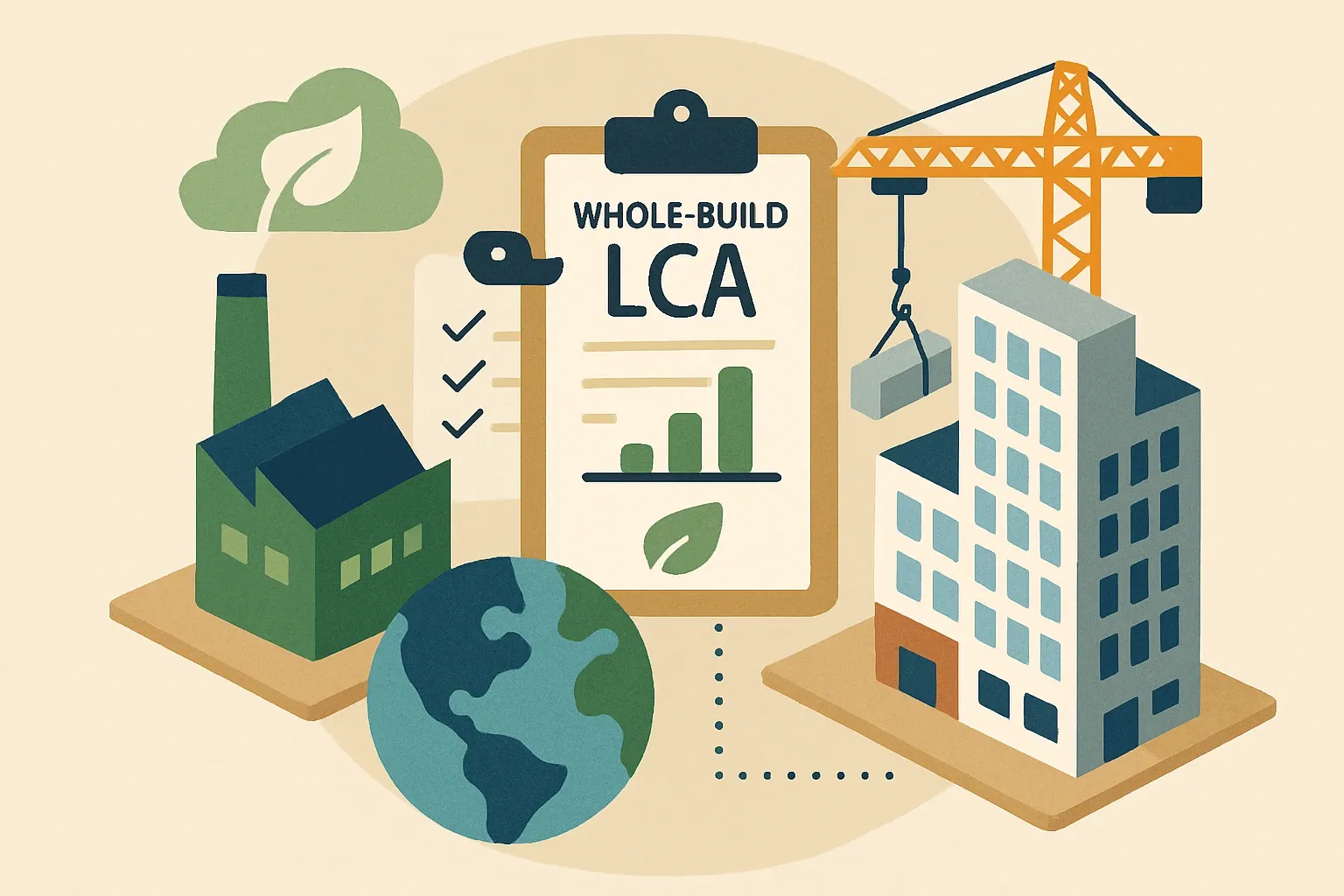
Since June 17, 2024, non‑residential projects of 50,000 square feet or more must submit a whole‑building LCA as part of the Net Zero Narrative under Article 22.20. The city published final embodied emissions reporting regulations and a template to standardize those submittals (City of Cambridge Article 22, 2024) (City of Cambridge Article 22, 2024). No EPDs, no credible model. Product‑specific, third‑party verified EPDs make your materials selectable without penalty factors.
BEUDO’s clock is running
Cambridge’s BEUDO now requires large non‑residential buildings to reach net‑zero operations on firm timelines. Properties 100,000 square feet and up begin reductions in 2026 and must hit net zero by 2035. Those between 25,000 and 100,000 square feet start in 2030 and must reach net zero by 2050 (City of Cambridge BEUDO, 2025) (City of Cambridge BEUDO, 2025). Roughly 1,100 buildings report annually under BEUDO, so specifications influenced by these rules are a meaningful sales channel (City of Cambridge, 2023).
Where EPDs show up on Cambridge projects
Whole‑building LCAs depend on trustworthy product data. Design teams look for product‑specific Type III EPDs that align to current PCRs, include plant‑level energy, and map cleanly to MasterFormat so they can be swapped into model bill‑of‑materials quickly. Without that, they fall back to generic averages that often carry conservative assumptions, which can knock a product out of contention on carbon grounds.
Navigating new environmental regulations in construction?
Follow us on LinkedIn for updates that help you stay compliant and competitive in your projects.
Practical playbook to get EPD‑ready fast
Aim for the products and plants most likely to land in Cambridge projects: structural steel, reinforcing steel, concrete mixes, glazing systems, insulation, gypsum, ceiling systems, flooring, pipes, and MEP components. Prioritize product‑specific EPDs for higher‑volume SKUs first. Confirm the declared unit matches how estimators buy your product. Keep background datasets current and note electricity sources in the reference year. If your PCR is nearing expiration, your existing EPD remains valid, but plan your next renewal against the newer rulebook.
Submittal friction is the enemy
Teams under Article 22 deadlines need clean PDFs, machine‑readable data, and clear scope notes. Pre‑map your EPDs to CSI codes and include a one‑page cheat sheet that states declared unit, system boundary, and A1‑A3 GWP. That small step can shave hours off LCA modeling and speed material selection. It also reduces the risk of being swapped for a competitor with easier paperwork. This is definately worth the prep.
Municipal work and the private market
Cambridge’s municipal portfolio cites life‑cycle requirements in the NZAP update, and the city continues to refine procedures across BEUDO phases. Private labs, offices, and campuses respond to the same signals. When owners must show year‑over‑year progress, design teams hunt for materials with lower embodied impacts they can document. EPDs are the proof.
State momentum to watch
Massachusetts’ Embodied Carbon Intergovernmental Coordinating Council is developing a statewide plan for measuring and reducing embodied carbon across priority materials, due January 1, 2026 (Massachusetts ECICC, 2025) (Massachusetts ECICC, 2025). Expect growing alignment between state procurement guidance and city‑level LCA reporting.
Your next three moves
- Identify the top 10 Cambridge‑relevant SKUs by revenue potential and publish product‑specific EPDs first.
- Deliver an EPD data pack with each submittal that includes CSI mapping, declared unit, and GWP figures.
- Set a simple renewal calendar so nothing expires mid‑pursuit. Tie it to your fiscal planning.
Bottom line
Cambridge turned embodied‑carbon intent into project‑level requirements. Manufacturers who show up with current, product‑specific EPDs make design decisions easier, accelerate approvals, and win more often when LCAs sit at the center of compliance. The paperwork is not the product, yet in Cambridge it unlocks the product’s path to the jobsite.