The Benelux at a glance
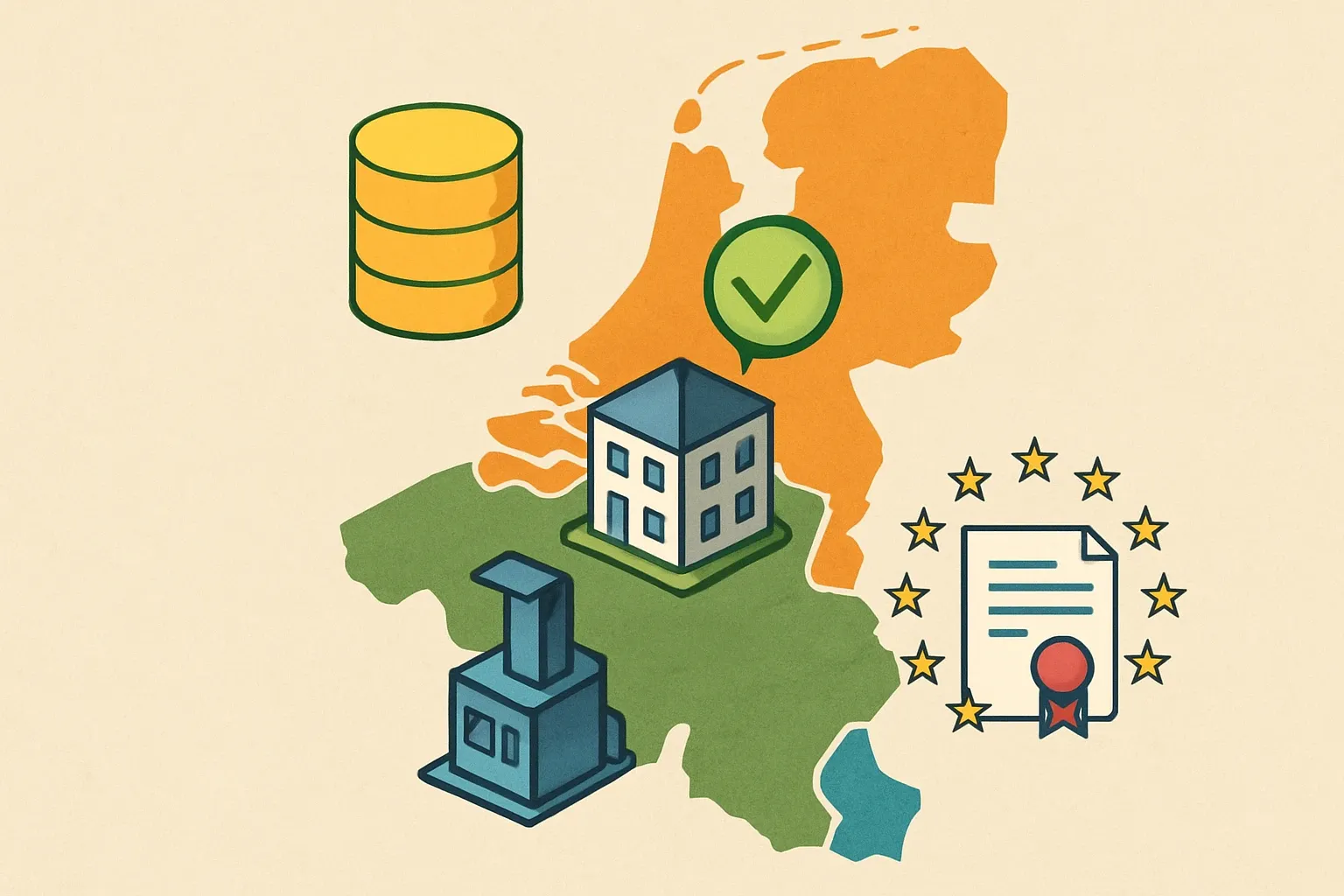
The Netherlands funnels product data into the Nationale Milieudatabase (NMD) and uses the MPG building score to gatekeep permits. Belgium runs a federal B‑EPD program and pipes verified declarations into the TOTEM building tool. Luxembourg leans on European EPDs accepted by project teams and certification schemes like LENOZ. Searchers typing epd benelux usually mean one of these three lanes.
Netherlands: NMD, MPG and where MRPI fits
If your product needs to influence a Dutch project’s MPG score, it must be in the NMD or mapped to it. The current MPG maximums are 0.8 for new homes and 1.0 for offices, with a tightened methodology postponed to apply from 1 July 2025 (VSK, 2024). NMD reported 1,000 new environmental declarations added in 2024, a clear signal that specifiers expect product‑specific data (NMD, 2024).
Stichting MRPI is the Dutch program operator whose EPDs flow smoothly into NMD. In 2025 MRPI marked its 1,000th EPD, reinforcing its role as the default path for local publication (MRPI, 2025). For infrastructure, many public clients benchmark with DuboCalc and MKI, so category rules and datasets that align with NMD conventions matter.
Belgium: B‑EPD and TOTEM
Belgium’s federal authority operates the B‑EPD program under EN 15804+A2. To make environmental claims in the market, a product’s declaration must be verified and registered in the B‑EPD database, after which it can be integrated into TOTEM for building‑level calculations (FPS Public Health, 2025). Teams selling into Belgium usually pick B‑EPD publication for direct TOTEM use, or bring a recognized European EPD and add a B‑EPD later when projects require it.
Luxembourg: small market, clear signals
Luxembourg uses European standards and recognizes EPDs from reputable program operators. The LENOZ scheme scores whole buildings on six themes, with thresholds at 85 percent, 70 percent, 55 percent, and 40 percent for its four classes (Guichet.lu, 2025). That pushes manufacturers toward product‑specific EPDs that plug into design tools used by OAI‑accredited experts.
Want to navigate EPD requirements in the Benelux?
Follow us on LinkedIn for insights that help you align your products with regional specifications and win more tenders.
What the new EU CPR means for EPDs
The revised Construction Products Regulation 2024/3110 was published on 18 December 2024 and entered into force on 7 January 2025, with general application from 8 January 2026. It moves environmental information toward the Declaration of Performance and Conformity, which will steadily make third‑party verified data the norm across the single market (DIBt, 2024). For Benelux sales teams, that means fewer exceptions and more consistent requests for EN 15804+A2 EPDs.
Picking a program operator for Benelux projects
Choose based on where the EPD must be consumed first, not just on familiarity.
- Netherlands: MRPI publishes EPDs that land in NMD. Many competitors rely on this route for quick MPG impact.
- Belgium: B‑EPD ensures TOTEM integration after verification. International EPDs can support early conversations, but B‑EPD removes friction in tenders.
- Luxembourg: widely accepts European EPDs from operators like IBU and the International EPD System. Match the format the design team already models against.
Data choices that prevent rework
A PCR is the rulebook of Monopoly. Ignore it and the game falls apart. In Benelux, pick the PCR that competitors use so your results compare on equal footing, then check its revision timeline. Collect a clean reference year of plant data and align declared unit, system boundary, and transport modeling to local practice. When NMD or TOTEM introduce new weighting sets, a structured model lets you update quickly rather than start over.
Commercial upside without the scramble
Where MPG, TOTEM, or LENOZ drive decisions, a product‑specific EPD removes the penalty of generic data and keeps price from being the only lever. On cross‑border projects that layer BREEAM, DGNB, or even LEED v5, a verified EPD becomes the common currency specifiers trust. We see teams unlock faster shortlist decisions once their data appears in the local database, because it shortens the back‑and‑forth on proofs.
Execution that respects your bandwidth
Most of the effort sits in collecting plant data that no one else wants to chase. A white‑glove workflow that does the wrangling across operations, finance, and EH&S will beat a DIY approach every time, because it protects your R&D and production leads from spreadsheet sprawl. Publish with MRPI, B‑EPD, IBU or IES based on the first market that matters, then mirror to others. That keeps momentum and avoids re‑modeling.
Bottom line for Benelux work
Map the first project to the first database, then publish there. Netherlands means MRPI into NMD for MPG. Belgium means B‑EPD into TOTEM. Luxembourg means accepted EU EPDs aligned to LENOZ and the team’s modeling tools. Do this and your EPD stops being paperwork and starts being a sales asset. It is a small shift, but it changes teh conversation.