Bulgaria’s EPD landscape in 60 seconds
Environmental Product Declarations for construction products in Bulgaria follow EN 15804, adopted nationally as BDS EN 15804:2012+A2:2020. The Bulgarian Institute for Standardization shows the standard in force with an effective date of 24 September 2024 (BDS, 2024) (BDS, 2024). That means an EPD created to EN 15804+A2 is the accepted currency with designers, contractors, and public clients.
What counts as an EPD in Bulgaria
An EPD is a third‑party verified, comparable, and standardized report of a product’s lifecycle impacts, typically cradle‑to‑gate for A1 to A3, with optional modules added when buyers request them. European buyers often ask for A5 or C modules when planning site impacts and end‑of‑life choices. Think of EN 15804 as the Monopoly rulebook, and the Product Category Rules as the house rules pinned to the fridge.
Who publishes EPDs used in Bulgaria
There is no domestic EPD program operator with broad market use. Bulgarian manufacturers commonly publish under The International EPD System or IBU, both recognized across Europe through ECO Platform. Recent examples include multiple cement EPDs from the Devnya plant of Heidelberg Materials Bulgaria, all compliant with EN 15804 and valid into 2029, which signals buyer familiarity with these operators in the local market (EPD International, 2024) (EPD International, 2024).
Policy signals to watch
Buildings are responsible for around 40 percent of final energy use in the EU and over one third of energy‑related emissions, which keeps product‑specific EPDs on the shortlist for public and private projects (European Commission, 2024) (European Commission, 2024). The revised Energy Performance of Buildings Directive sets milestones for zero‑emission new buildings, including 2028 for new public buildings and 2030 for all new buildings, increasing demand for transparent product data that fits into whole‑building calculations (Consilium, 2024) (Consilium, 2024).
CSRD and why your product data suddenly matters more
Corporate sustainability reporting rules continue to evolve. In 2025 the EU approved a two‑year delay for many companies originally due to start CSRD reporting in 2026, pushing the start to 2028 for that wave, which gives manufacturers time to systematize product LCA data and avoid last‑minute scrambles (Harvard Law School Forum on Corporate Governance, 2025) (HLS, 2025).
Want to navigate EPDs in Bulgaria effectively?
Follow us on LinkedIn for insights that help you win tenders and unlock new markets.
Timelines and validity, without the mystery
Under leading program operators, EN 15804 EPDs are typically valid for five years, after which they need renewal or earlier if major process changes alter results by more than about 10 percent. The International EPD System states the validity is normally five years and explains when updates are required during that period (EPD International, 2024) (EPD International, 2024). A live Bulgarian example shows cement EPDs published in September 2024 with validity to September 2029, which is exactly what buyers expect to see on tenders (EPD International, 2024) (EPD International, 2024).
What buyers in Bulgaria look for
Public buyers tend to accept EPDs from recognized European operators as long as they cite EN 15804 and an applicable PCR. For tenders, documentation usually needs to be submitted in Bulgarian, so keep a local language version of key declaration pages ready. Private developers and international GCs often reference BREEAM, LEED v5 draft pathways, or Level(s) aligned metrics in specs. Having product‑specific EPDs removes the penalty of being modeled with conservative default values when whole‑life carbon is tallied.
Picking PCRs that match the field of play
The fastest path is to use the same PCR family your competitors already use, unless there is a clear advantage to another rule set. Construction products in Europe typically rely on EN 15804 c‑PCRs from the International EPD System or equivalent families. Program updates in 2025 tightened versioning, so check that your chosen PCR is current before you start data pulls (EPD International, 2025) (EPD International, 2025).
Data, language, and verification practicalities
Collect one clean reference year of data for materials, energy, transport, waste, and packaging across your Bulgarian sites. If a product just launched, a prospective EPD can get you in the game and then be updated once a full year of production is available. Plan for verifier lead time and keep evidence files bilingual when possible. For submissions in public tenders, expect to package the declaration and any third‑party confirmations in Bulgarian. It is not glamorous work, but this is where weeks are either lost or saved.
Where EPDs move the market in Bulgaria
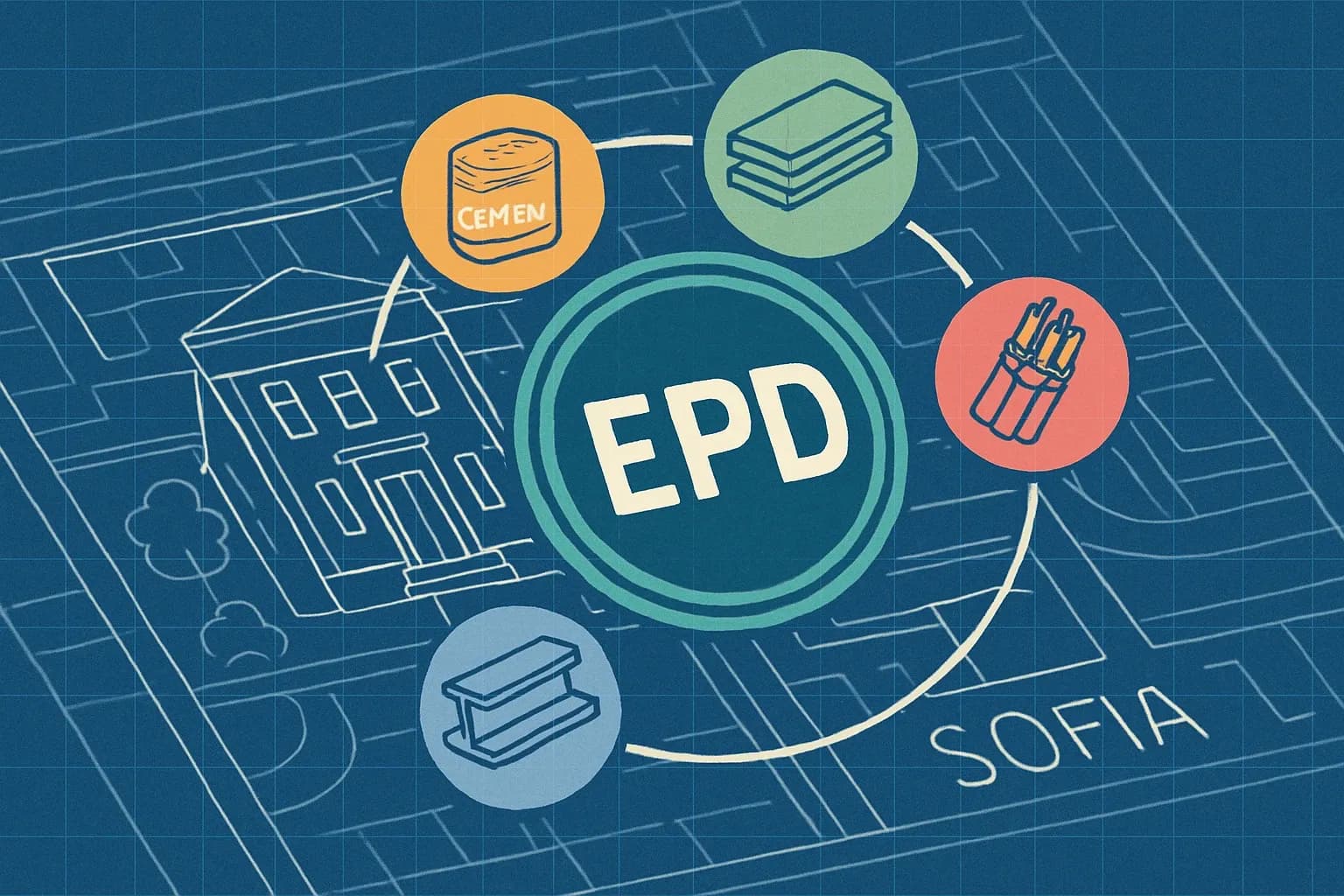
Cement and concrete, masonry, insulation, asphalt, steel, gypsum, cables, waterproofing, and building hardware are the categories we see most often referenced in specs. That mirrors European patterns and makes sense given Bulgaria’s active civil and building pipeline. A product‑specific EPD helps shorten buyer debates about comparability, which means less time stuck in spreadsheet purgatory and more time in the jobsite schedule.
Your fastest route from data to a published EPD
Speed is won in data capture and project management, not in cutting corners on the LCA. Ask a partner to own the collection from utilities, ERP exports, weighbridge slips, and supplier declarations, then verify early whether the PCR version and program operator fit the target buyers. Insist on plain‑English progress reports, a draft declaration you can review in days not months, and a publication plan with the operator your customers recognize. The heavy lifting should sit with your partner, not your plant manager who already has a day job. That is the white‑glove model that actually sticks.
What this means for your next spec
If your team is typing “EPD Bulgaria” today, buyers are probably asking tomorrow. Publish to EN 15804 under a recognized operator, align your PCR to the category your competitors use, and keep a Bulgarian‑language pack handy for tenders. Five years of validity buys time, but the best time to lock in enviromental credibility is before your competitor shows up with theirs.