What “market ready” really means in the EU
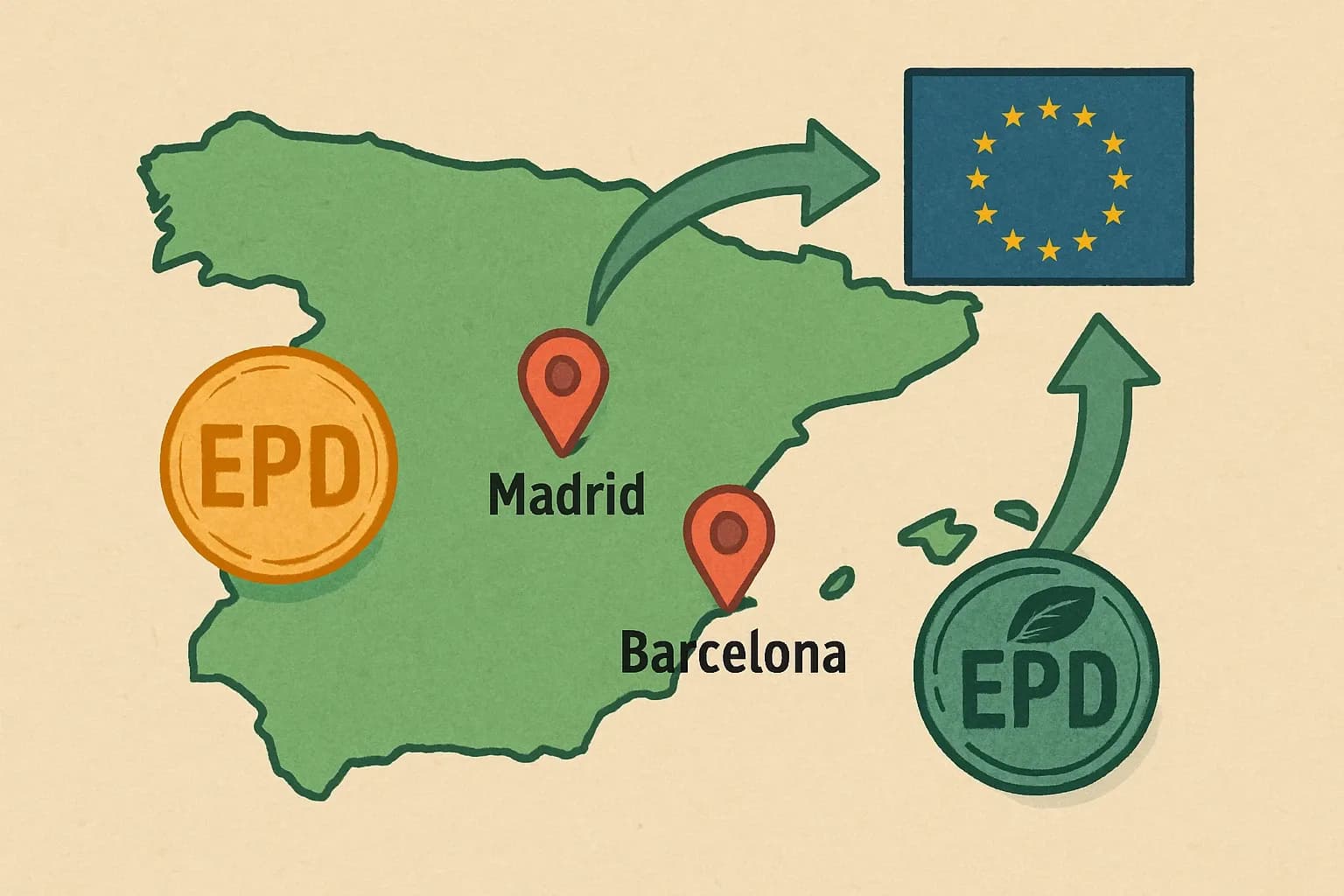
An Environmental Product Declaration that is credible in Europe follows EN 15804+A2, is third‑party verified, and is published by a recognized program operator. In many tenders, an ECO Platform EPD mark or national database listing settles questions about local acceptance fast.
The rulebook in practice: EN 15804+A2
Think of EN 15804 as the rulebook of Monopoly. Ignore it and the game falls apart. The A2 update expanded climate and resource indicators and tightened modeling details, so data collection needs to be cleaner and more complete than older A1 files.
The new CPR and the coming Digital Product Passport
The revised Construction Products Regulation entered into force in January 2025, with most provisions applying from early 2026, including the path to Digital Product Passports that bundle performance and environmental data for CE‑marked products (Council of the EU, 2024) (European Commission, 2025). This is not another label. It is a pipeline that makes verified product data travel across the Single Market.
National databases you cannot ignore
France models whole‑building LCAs with INIES. As of 31 December 2024 INIES listed 4,560 FDES and 1,342 PEP, representing about 265,318 commercial references, and continues to grow under RE2020 workflows (INIES Baromètre, 2024). Germany’s ÖKOBAUDAT is the federal data backbone for BNB projects and accepts A2‑conform EPD datasets that meet its ILCD+EPD rules. If you plan to sell in either market, plan for the right data format from day one.
Navigating EPDs in the EU market?
Follow us on LinkedIn for insights that help you meet regulations and win cross-border tenders.
Program operators most seen across the EU
Manufacturers ask which operator to use. Several are widely accepted. The International EPD System reported 12,749 ECO EPDs as of July 1, 2025, while IBU listed 2,565 and EPD‑Global powered by EPD‑Norway 3,716, with multiple other national programs active too (ECO Platform, 2025). Pick the operator that aligns with your buyers and your rollout plan rather than chasing the biggest logo.
Why this matters commercially
Public procurement in the EU is enormous. It represents about 14 to 15 percent of GDP across OECD‑EU countries, which means thousands of tenders that increasingly expect product‑specific, verified impacts for whole‑building LCA models (OECD Government at a Glance, 2025). An EPD removes default penalties that push products out of shortlists and helps bids move faster because the data is already trusted.
Where EPDs intersect with CSRD
The Corporate Sustainability Reporting Directive reshapes company‑level ESG reporting, yet it does not require a product EPD. Timelines for sector standards were pushed to 2026 to ease implementation, but building teams still ask for verifiable product impacts to feed LCA tools and taxonomy‑aligned claims at the asset level (Council of the EU, 2024). In other words, company disclosures and product EPDs are different jobs that feed the same conversation.
The minimum European playbook for manufacturers
Aim for A2‑compliant, third‑party verified, product‑specific EPDs with machine‑readable data ready for ECO Portal or national databases. In France, align with FDES conventions to land in INIES. In Germany, supply ILCD+EPD‑valid datasets for ÖKOBAUDAT acceptance. Keep validity in view and avoid letting key SKUs drift toward expiry during busy bid seasons.
How to scale work without stalling your team
Two things determine speed and quality. First, ruthless internal data collection that spans utilities, material flows, packaging, and transport with a clear reference year. Second, experienced LCA and verification orchestration so the PCR fit, modules, and allocation choices don’t bounce back in review. The right partner takes on the heavy lifting so R&D and plant leaders dont spend weeks in spreadsheets.
A note on the phrase everyone uses
When people say “EPD European Union and market” they usually want one declaration that works in Berlin, Milan, and Lyon. The reality is simple. Build to EN 15804+A2, publish with a respected program operator, and make sure the data lands where local models pull from. That combination behaves like a true passport for specs.
Close the loop
Treat your EPD as a living asset. Keep the data structured for digital handoffs so it can stream into DPPs, national databases, and whole‑building models without rework. That is how paperwork turns into pipeline, and pipeline turns into wins at scale.