Start with the job, not the kilogram
Steel and FRP do different things per unit mass. Define a functional unit that mirrors the spec, like one linear meter of platform meeting a 4.8 kPa live load with L⁄240 deflection, including fasteners and coatings. Declared units in EPDs are usually per kilogram or per piece, which is fine for reporting, but not for choosing between materials.
Use the same rulebook
Comparisons only hold when the EPDs follow the same PCR and system boundary. For construction products that usually means EN 15804+A2 and ISO 14025, with Modules A1–A3 at minimum. If installation is material‑intensive or heavy lifts differ, include A4–A5. If maintenance differs, include relevant B modules. If end‑of‑life assumptions diverge, disclose them and report Module C and D consistently.
Know the steel baseline
Recent facility‑specific EPDs for U.S. structural steel show cradle‑to‑mill‑gate GWP commonly in the 0.53 to 1.15 kg CO2e per kg range depending on the mill and year (AISC, 2025). Industry averages also move, with the latest industry‑wide EPDs reporting a drop of more than 10 percent versus 2021, so always check dates before comparing (AISC, 2025).
Why FRP often needs less mass
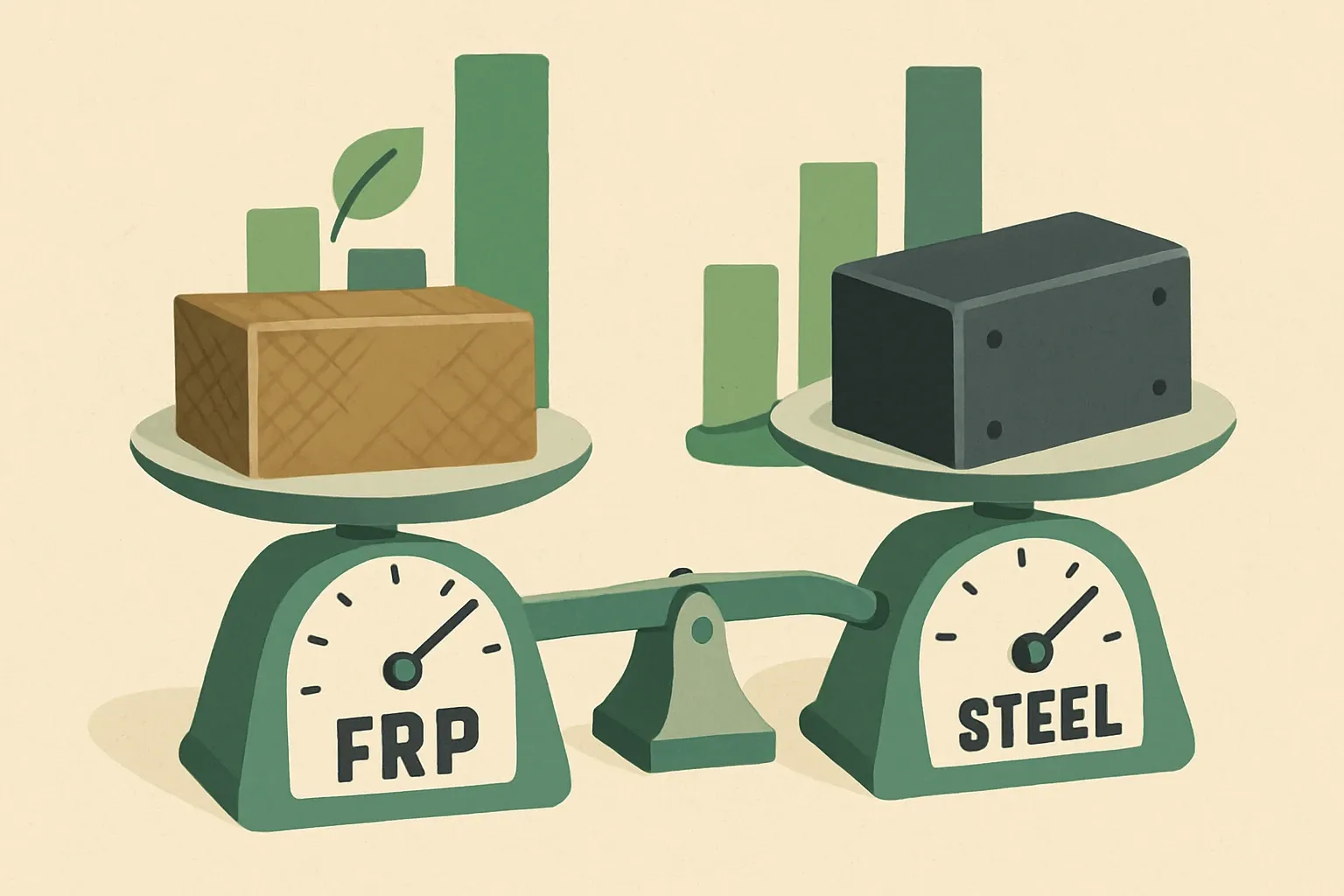
FRP’s density is roughly one quarter of steel’s, which means you can meet many strength or corrosion requirements with far less weight, even after increasing section depth for stiffness. That lighter bill of materials is the quiet lever that can match or beat steel on a functional basis (FDOT, 2026).
Want to win more projects with EPD insights?
Follow us on LinkedIn for updates on comparing materials and strategies to get your products specified.
Recycling credits and where they live
Steel often shows a lower A1–A3 per kilogram due to scrap use in EAF routes, and many steel EPDs include a beneficial Module D credit for net scrap at end‑of‑life. FRP end‑of‑life is improving, but today it is commonly landfilled or used for energy recovery, so Module D is usually small or zero. That does not invalidate FRP, it just means your claim has to rest on the functional unit, not the kilogram.
A practical, “same job” comparison workflow
- Fix the function. Write one sentence that names span, load, serviceability, environment, and design life.
- Do paired designs. Size a steel option and an FRP option to that spec using the correct design standards and manufacturer datasheets.
- Quantify BOM. Extract total mass for each material including fasteners, coatings, and any corrosion protection.
- Map EPDs. Pull A1–A3 for both. If transport or installation differ materially, add A4–A5. If maintenance regimes differ, add the relevant B modules. Keep the same impact method.
- Report two numbers. Show total GWP per functional unit for steel, then FRP. Add a plain‑English note on uncertainty and any assumptions that drive the gap.
Communicate without tripping on claims
Good: “For a 2 m span ladder with 1.3 kN rung load, our FRP design achieves comparable stiffness with 58 percent less material mass and similar cradle‑to‑gate GWP per ladder.” Bad: “FRP is greener than steel.” Tie every claim to the unit, the modules, and the date on the EPDs. Buyers smell hand‑waving a mile away.
Design nuances that swing results
Stiffness often governs FRP, not ultimate strength. That pushes you toward deeper sections, closer supports, or hybrid details to keep deflection in check. Corrosion resistance matters too. If the steel option needs a heavy coating system and periodic repainting while FRP does not, those B‑stage impacts belong in scope.
Documentation that wins specs
Specifiers want current, program‑operator EPDs, clear functional units, and apples‑to‑apples boundaries. They also want the modeling files and BOM that back the numbers. Teams that package this neatly shorten reviews and avoid value‑engineering surprises.
Make the math your edge
Pick the right unit, include the right modules, and let mass efficiency do the talking. FRP can be “as good as or better than steel” for many structural and access applications when you compare the same job on the same footing. The enviromental story then reads like engineering, not marketing.