Who Gerard Roofs is, right now
Gerard is the residential and light‑commercial stone‑coated steel brand associated with New Zealand’s Ross Roof Group, which is now part of IKO. Regional sites span New Zealand and Australia, plus legacy global pages for Africa and other markets. Their proposition is consistent across regions: steel panels pressed into familiar profiles, finished with stone granules, and backed by long service claims.
What they sell
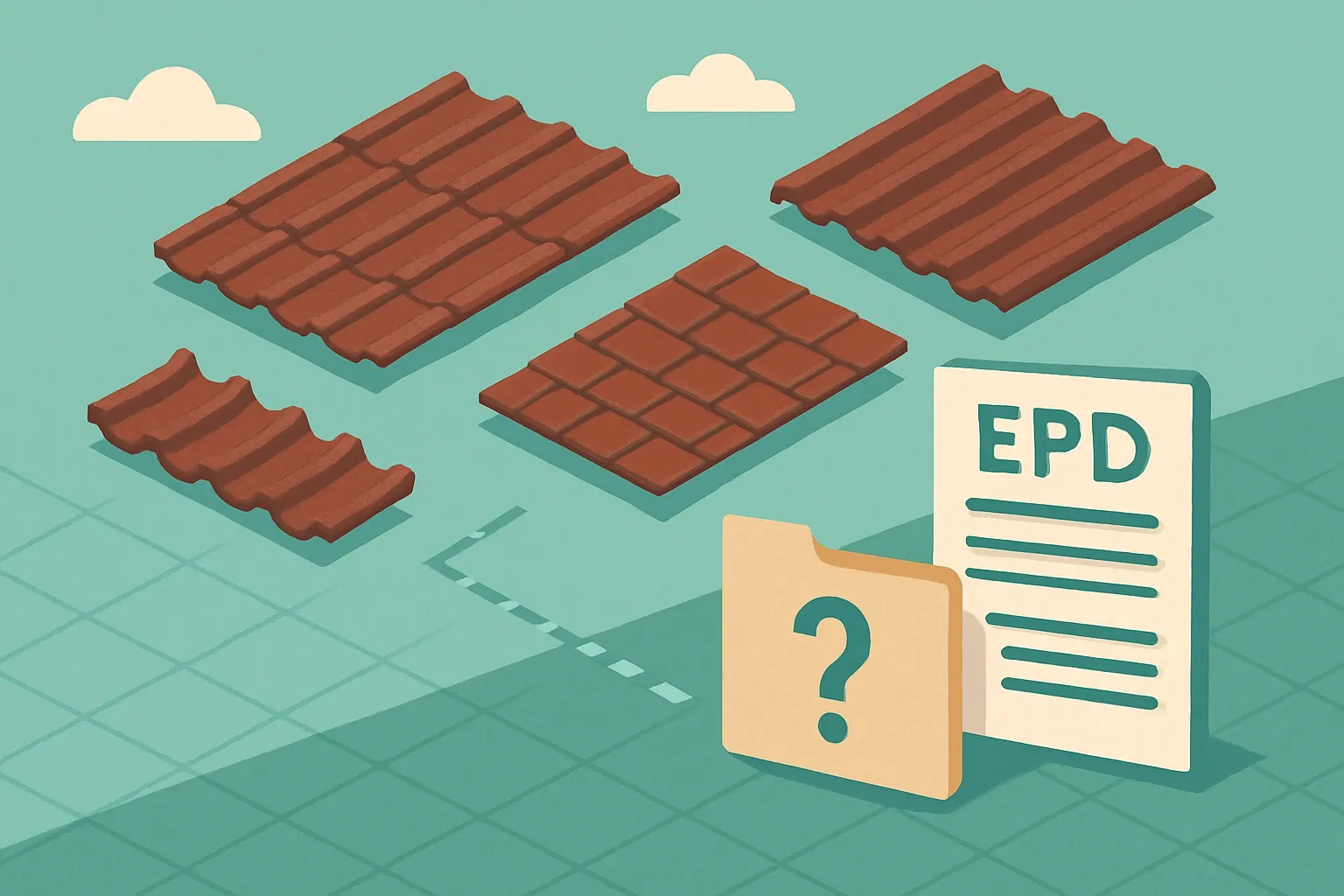
Gerard’s catalog centers on stone‑coated steel roof panels with matching accessories. Profiles commonly include Classic, Milano, Shake, Slate, Heritage and Shingle, alongside newer Concealed Fastening variants like CF Shake and CF Shingle for a cleaner look and hidden screws. Taken together, that translates to several profiles in textured and satin finishes, plus colorways across geographies, so the total SKU count sits in the dozens rather than the hundreds.
If you want a quick tour of their sustainablity framing, the Africa site outlines materials, coatings and end‑of‑life recycling claims in a simple roll‑up (Gerard Environment page).
EPD coverage today
As of December 18, 2025, we could not find a current, product‑specific EPD published for Gerard’s stone‑coated tiles in major public registers. One earlier tile‑system declaration appears to have lapsed rather than been renewed. That leaves the brand competing on performance and aesthetics but thin on verified environmental data many submittal packages now expect.
Why that gap matters commercially
On projects pursuing lower embodied carbon or working to align with emerging LEED v5 requirements, missing EPDs force teams to use conservative default factors. In practice, that can push a non‑EPD product to the wrong side of a materials short‑list when schedules get tight and the spec team is tallying paperwork. The difference is less about marketing and more about avoiding an accounting penalty.
Work for Gerard Roofs or selling against them?
Follow us for product-by-product EPD comparisons to see which profiles get VE'd out against DECRA or CertainTeed.
A likely bestseller without an EPD, and who wins the spec meanwhile
CF Shingle is positioned as the asphalt‑shingle look many homeowners want, with steel durability. If it lacks a product‑specific EPD at bid time, teams often pivot to alternatives where disclosures are already in place. Two common paths show up in submittals:
- Asphalt shingles from major brands with product EPDs listed through recognized operators. GAF and CertainTeed actively publish EPDs across roofing lines, including membranes and insulation, with many listings valid into 2028 to 2030 (NSF International EPD listings, 2028–2030)(NSF International, 2028–2030).
- Single‑ply or metal systems that already carry program‑operator EPDs, letting the roofing package keep its transparency count without re‑working the spec set. That saves time when the contractor is finalizing submittals.
Without its own EPD, Gerard’s CF Shingle risks being swapped for an EPD‑backed shingle or a different roofing assembly altogether when documentation rules the day. It’s not about product quality. It’s about paperwork that clears review.
Who Gerard bumps into most often
Direct competitors in stone‑coated steel include DECRA in North America, Unified Steel from Westlake Royal Roofing, and Tilcor in multiple regions. On many pitched‑roof jobs, alternatives also include standing‑seam metal from regional fabricators and national brands, plus the big asphalt shingle makers. Several of those categories already maintain live EPDs or can assemble a fully EPD‑backed roof package, which keeps them in play when owners ask for verified disclosures (NSF International, 2028–2030)(NSF International, 2028–2030).
How to close the gap fast
- Prioritize a product‑specific, third‑party verified EPD for one high‑volume profile per region. Start where sales most often run into documentation asks, then scale to the rest of the range.
- Choose the same PCR competitors use for functionally similar roofing so reviewers can compare apples to apples. A good LCA partner will validate the PCR landscape before modeling.
- Lock the data year and collection plan early. Production, energy and scrap flows for a single 12‑month period beat partials. For new lines, a prospective EPD can bridge the gap, then be refreshed after a full year of data.
A note on speed and effort
Getting an EPD isn’t just modeling. The time sink is data wrangling across plants, suppliers and ERP exports. The right partner makes collection painless, maintains audit trails for verifiers, and keeps publication with your preferred operator straightforward. That is where schedules tend to slip, and where a white‑glove process pays off.
What we’d watch next
- Renewal cadence. If a lapsed declaration exists, re‑issuing it under today’s PCR would instantly restore specability for tile‑system bids.
- Regionalization. If Gerard fulfills across multiple markets, facility‑specific EPDs can reduce variance and bolster credibility with owners tracking embodied carbon by locale.
- Portfolio sequencing. Classic and CF Shingle likely move first in North America. Shake, Slate and Milano can follow. This is the fastest path to turn EPDs into everyday sales enablement.
Gerard’s brand is built on a focused idea that customers clearly want. Pair that focus with product‑specific EPDs and the sales team stops fighting paperwork headwinds. In many bid rooms, that is the quiet difference between making the short‑list and being kindly filed away, which is definately avoidable.