Who they are
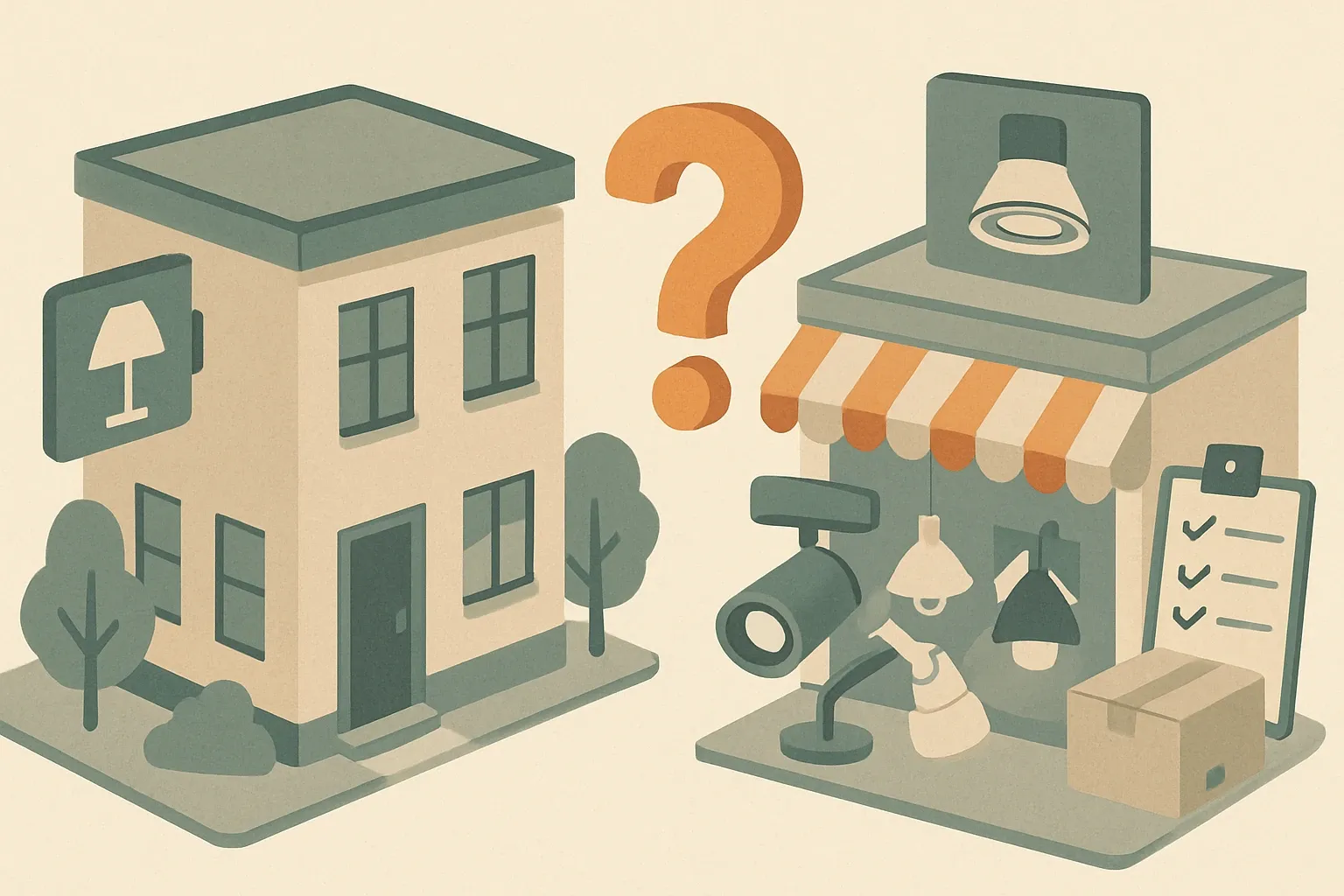
Elementlighting.com is a design practice that conceives lighting schemes for projects across residential, workplace, hospitality, retail, and cultural spaces. They specify and coordinate products from many brands, then tune controls and aiming to meet design intent. You can browse their studio pages here: elementlighting.com.
Why this distinction matters in specs
EPDs are product declarations. A design studio does not manufacture goods, so there is nothing to declare. If a submittal asks for an EPD from “Element Lighting,” the request is misdirected. The right move is to identify the actual luminaire brand and model intended for the project and check whether that product family has a current, third‑party verified EPD.
The products people usually mean by “Element”
In North America, “Element” commonly refers to Visual Comfort Architectural’s Element families of recessed downlights and multiples used in ceilings for offices, hospitality, residential and mixed‑use. Retailers list numerous housings, trims, and modules that combine into dozens of SKUs across 3 inch and 4 inch families, adjustable and wall‑wash options, plus canless variants. See typical assortment snapshots from reputable sellers such as Lumens and trade distributors to understand scope. That is the product world where EPDs might be relevant.
EPD coverage today for luminaires
We did not find publicly listed EPDs under the Element brand on the main program operator libraries where lighting EPDs are commonly published as of December 19, 2025. Luminaires are catching up fast though. Signify reports more than 2,000 EPDs covering roughly 70,000 product variations worldwide (Signify, 2024) (Signify, 2024). The International EPD System also confirmed 62 fully digital EPDs live in its library on May 20, 2025, showing rapid digitization of declarations across categories (International EPD System, 2025) (International EPD System, 2025). LEDVANCE publicly committed to EPD coverage for at least 80 percent of its professional luminaire portfolio in Europe by the end of 2026, and shared interim counts in 2024 and 2025 updates (LEDVANCE, 2024–2025) (LEDVANCE, 2025).
Work for Visual Comfort Architectural or competing brands?
Follow us for product-by-product analysis of which downlights get spec'd and where EPD gaps could cost you projects.
What this implies for “Element” spec intent
If a project narrative names Element downlights but requires EPDs, submittals may stall unless an alternative with an available EPD is chosen or the originally intended brand publishes one in time. On LEED v5 oriented jobs, a verified product‑specific EPD often removes conservative default factors in embodied‑carbon accounting. That can be the difference between smooth approval and a late substitution.
Likely competitors on the same ceiling plans
For recessed architectural downlights in offices, education, hospitality, and healthcare, the frequent head‑to‑head set includes Cooper Lighting Solutions (Halo or Metalux where relevant), Lithonia and Juno from Acuity Brands, Focal Point, Cree Lighting, and specification‑grade European brands such as Fagerhult, iGuzzini, XAL, BEGA, and ERCO. Several of these manufacturers already publish luminaire EPDs through operators like EPD International, PEP Ecopassport, EPD Hub, or national programs. When an Element‑intended fixture has no EPD, a competitor with a similar photometric package plus a live declaration tends to look instantly safer to a project team.
A quick reality check on SKUs
Visual Comfort Architectural’s Element families span configurable housings, trims, optics, outputs, and color characteristics. That structure multiplies into dozens of SKU variants per family. If the intended model is a high‑runner adjustable 3 inch downlight, the same optical engine and housing rules can often scale across many trims and outputs. One well‑scoped EPD can therefore unlock coverage for many configured units from a single family. This is where the commercial ROI starts to show up.
Missed revenue is hard to see
Sales teams rarely log the projects they never bid. Where EPDs are mandatory or strongly preferred, a product without one gets modeled with pessimistic generic factors and sometimes an additional penalty, so it is more likely to be swapped. Even a single mid‑sized office floor or hospitality fit‑out can repay the effort to create an EPD. We see manufacturers regain momentum quickly once documentation matches spec expectations. It is definately a blind spot otherwise.
Fast‑track playbook for luminaire makers
If you are the brand behind the intended Element‑like product, triage the top families used across corridors, open office, and guestroom footprints. Map one family first where one declaration can govern many variants, then stage the next two families by volume. Pick an operator recognized in your priority markets, and make data collection painless for plant teams with clear utility, materials, and waste pulls keyed to a single reference year. That keeps engineers focused on product and not paperwork.
Bottom line for elementlighting.com readers
Elementlighting.com is a design studio. No SKUs, no EPDs to publish. If your spec intent is the Element product line under Visual Comfort Architectural, EPD availability will hinge on that manufacturer, not the design practice. In competitive bid rooms, the luminaire with a current, project‑specific EPD frequently wins the tie on documentation. Align the name on the drawing with the entity that can actually publish the declaration, then move quickly to cover the highest‑runner families first.