Why installation scrap changes the story
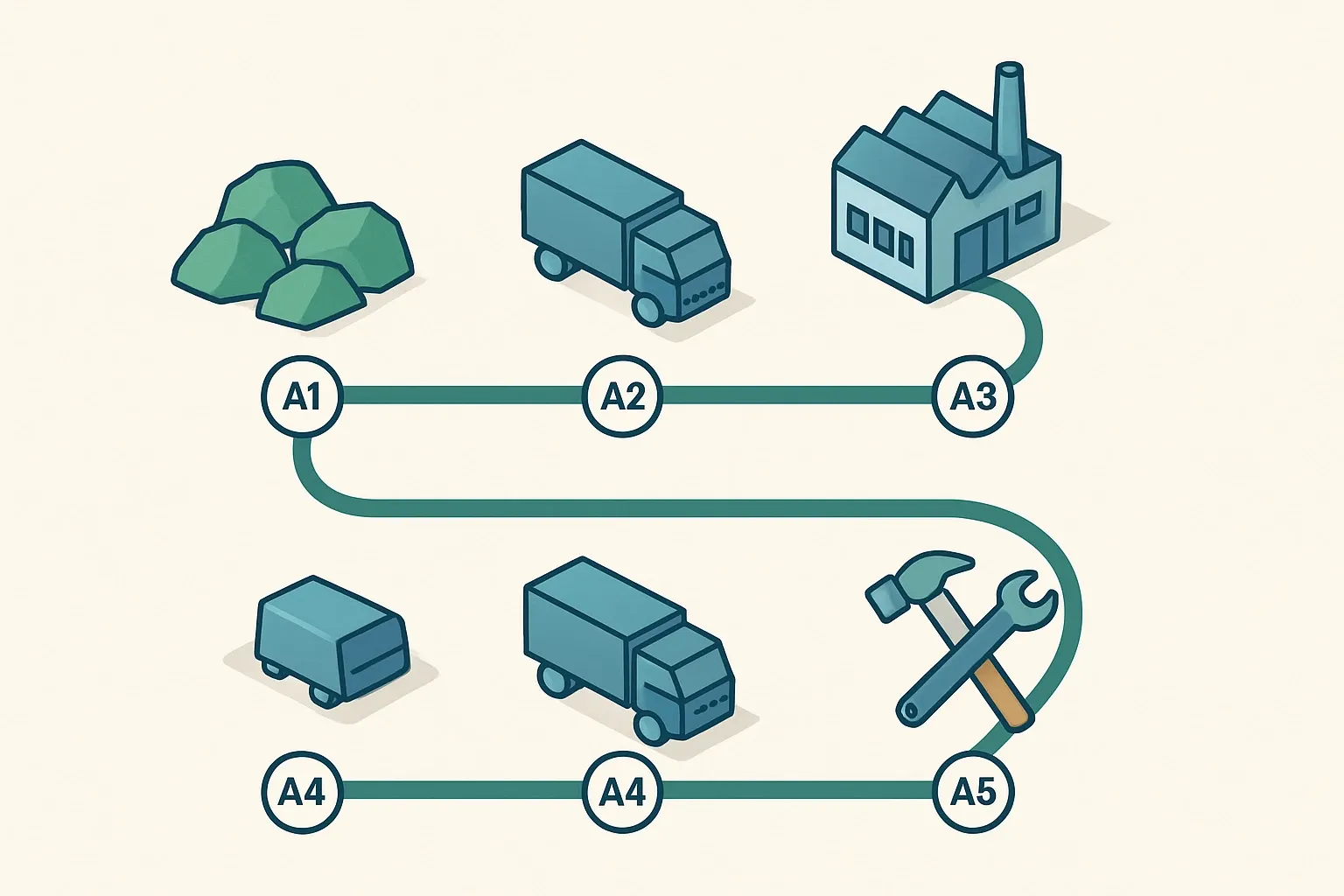
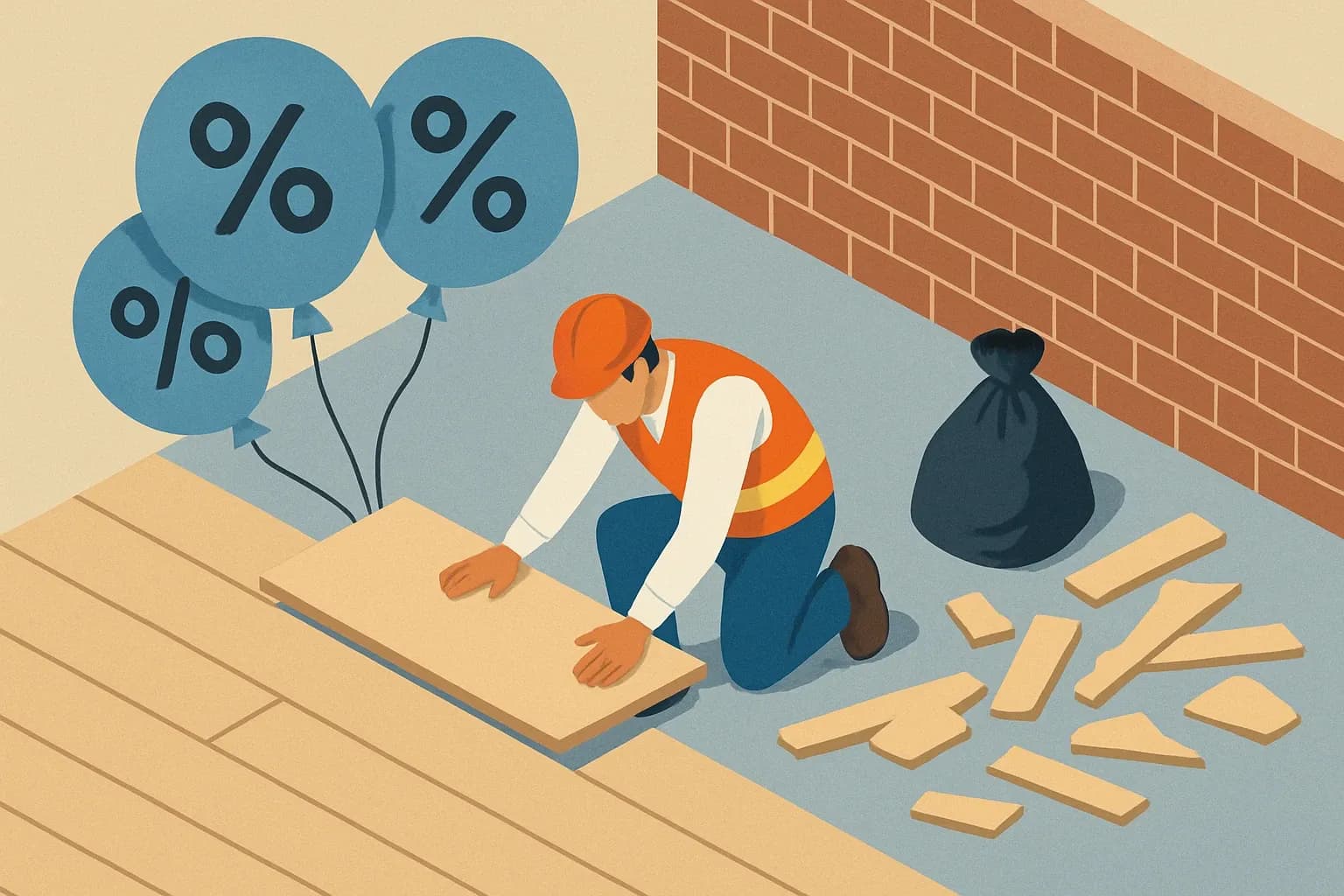
Installation and on‑site scrap sits in A5, with ripple effects into A4 transport and even A1–A3 if you backfill extra manufacturing to cover losses. Offcuts and breakage mean more material moved, more packaging handled, and more waste processed. Small percentages can swing results for dense, high‑impact products.
Cut‑off rules are not cut‑off rates
Two terms sound alike but do very different jobs. Cut‑off rules are the inventory thresholds that let you exclude truly minor flows. Under EN 15804 practice, per CEN PCRs for specific product types, you can omit a flow under 1 percent of mass or energy per unit process if data is unavailable, with a hard cap of 5 percent per module, and substances of very high concern over 0.1 percent by weight must always be included (EN 17074, 2019). Cut‑off rates in installation scenarios are about what fraction of product never becomes part of the building. Do not mix them.
Why fixed percentages age poorly
Some program traditions lean on fixed, low single‑digit installation losses for simplicity. That helps comparability but can misrepresent formats that are jobsite‑cuttable with near‑zero waste or that are delivered cut‑to‑length. Conservative is good. Fiction isnt.
A defenceable way to set installation scrap
Aim for conservative and evidence‑based.
- Start with how the product is actually installed. Sheet vs tile, roll vs panel, custom length vs field‑cut, factory kitting, and nesting constraints.
- Partition losses. Separate offcuts, breakage during install, mis‑orders, and attic stock retained by the owner. Only the first two belong in A5 for product scrap.
- Quantify with primary data where possible. Use installer QA logs, weight tickets from jobsite bins, factory cut plans, or commissioning records that show delivered vs installed quantities.
- Cross‑check with packaging. If packaging enables damage‑free placement, show the correlation in the data and keep packaging in A5 separately.
- Document assumptions and uncertainty. Report a central estimate and note the bounds you tested in sensitivity analysis.
Looking to optimize your installation scrap modeling?
Follow us on LinkedIn for insights that help you win specs, improve ROI, and understand the critical impact of installation scrap on your EPDs.
Quick math to keep results honest
If the installation loss rate is s, the manufactured mass needed per unit installed becomes 1 divided by (1 minus s). That multiplier flows into A1–A3 and A4. A five percent assumption increases produced and shipped mass by roughly 5.3 percent, which is not trivial on heavy products.
Evidence verifiers say yes to faster
Verifiers want transparent scenarios that are realistic and probable, not optimistic guesses. The 2025 update of PCR 2019:14 emphasizes tighter scenario transparency and alignment with new programme instructions and ECO Platform updates, with version 1.3.4 phased out on June 20, 2025 and version 2.0.0 valid to 2030 (International EPD System, 2025). IBU likewise refreshed its PCR Part A on April 30, 2024 to implement ECO Platform calculation rules and EN 15941 data‑quality requirements (IBU, 2024). Strong documentation shortens verification back‑and‑forth.
What belongs in A5 product scrap, what does not
Include offcuts from fitting, pieces broken during setting, adhesive‑locked remnants that cannot be reused, and on‑site remnants that leave as waste. Exclude attic stock retained by the owner. Keep packaging impacts separate within A5 and report waste treatment flows clearly. When factory pre‑cut or made‑to‑order formats avoid trimming, say so and show it.
When to challenge a legacy assumption
Revisit a legacy single‑digit loss when any of these are true. The product is delivered cut‑to‑project measures. Installers document yields that beat the assumption over multiple jobs. A change would materially shift A5 or tip a spec threshold. Bring two to three lines of evidence and a short sensitivity write‑up. Most reviewers accept realistic, well‑argued scenarios faster than bare percentages.
Portfolio consistency without copy‑paste errors
Keep a product‑family rulebook. Use the same structure of scenario text, the same definitions of what counts as scrap, and the same measurement method. Let the rate vary where formats or patterns demand it. Consistency builds trust while letting performance shine where it is real.
Sensitivity tests worth running
Show A5 and total cradle‑to‑gate results at your central estimate and at a conservative plus bound. Flag whether transport dominates changes or whether manufacturing backfill does. If results barely move across the tested range, say so. If they swing, mark installation optimization as a real eco‑design lever.
Choosing partners who make this painless
Installation scrap is data work. The fastest path is a team that can wrangle installer logs, weigh tickets, and factory cut plans without pulling your plant leads into spreadsheet duty. Look for white‑glove data capture, fast scenario iteration, and a verifier‑ready narrative that matches the latest PCR structure.
Last word
Being conservative does not mean ignoring evidence. Model installation scrap with humility, measure where you can, and write clean scenarios that a reviewer can follow in one sitting. Your A5 will be credible, repeatable, and strong enough to carry across a whole portfolio.