A1 Raw Material Supply
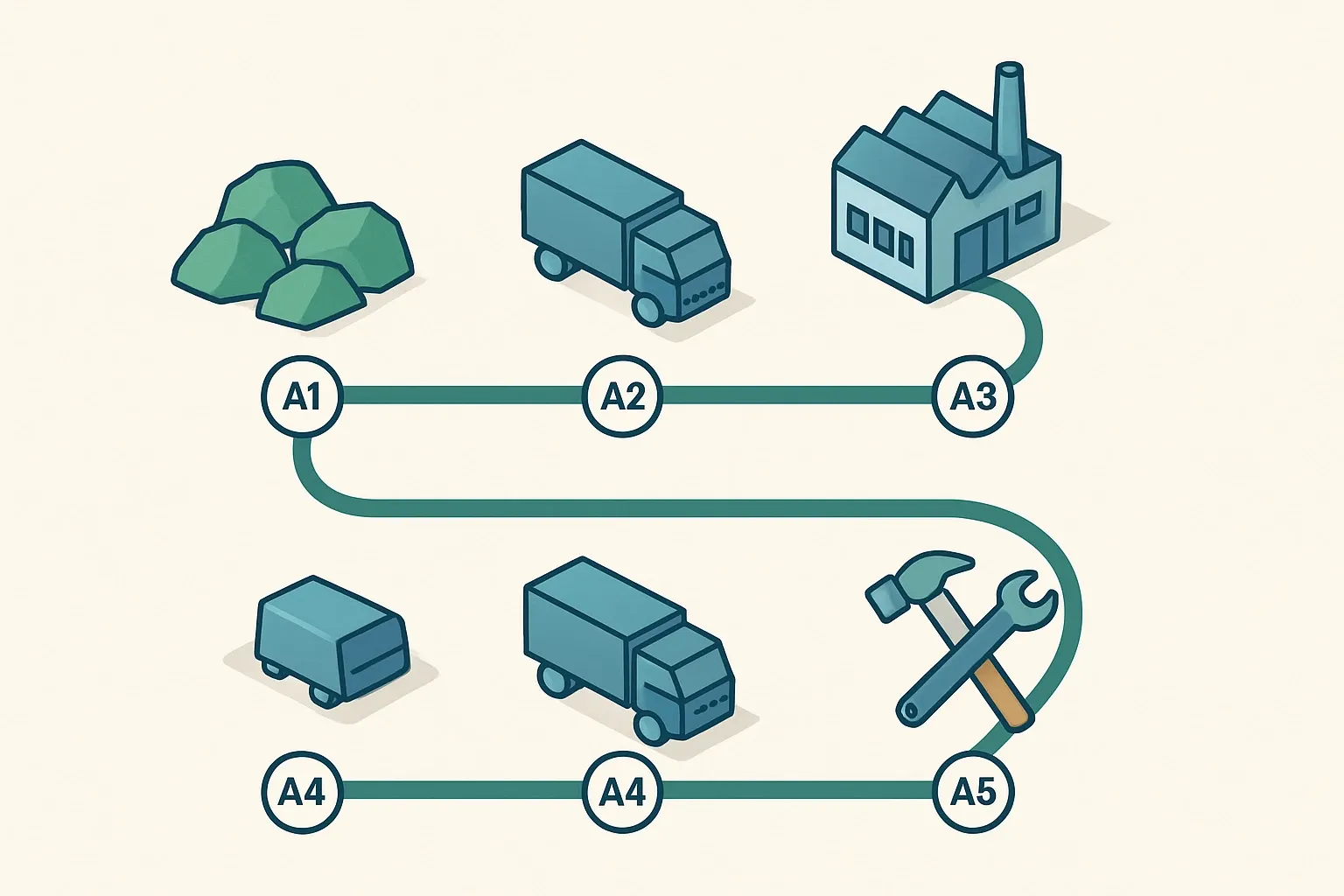
A1 is everything that happens before materials reach your gate. Think of it as the origin story, from extraction to preprocessing and upstream energy. Focus on supplier data quality. Request primary data for electricity mixes and scrap content early, then lock suppliers in a simple template so updates take minutes, not weeks. Pick a partner that can chase and validate this data so engineers stay on real work.
A2 Transport to the Plant
A2 covers the journey from each supplier to your production site. It is a logistics snapshot, not a novel. Capture mode, distance, payload, and backhaul assumptions in one place. If your carriers change routes seasonally, document ranges and keep the bill of lading samples ready. Small tweaks here reduce noise that can ripple through comparisons.
Confused by EPD modules A1 to A5?
Follow us on LinkedIn for clear insights that help you meet project specifications and boost your competitive edge.
A3 Manufacturing
A3 is your house. Utilities, yields, scrap, wastewater, packaging in and out, on the line and off the line. Treat it like a monthly fitness tracker for your factory. Pull a single reference year and reconcile meters to production volumes. List any on‑site fuels and abatement equipment explicitly. When data gaps appear, document why, then improve next year rather than guessing now. Guessing is how re‑verification shows up late Friday.
A4 Transport to Site
A4 starts when the product leaves your gate and ends at the jobsite. It is about typical delivery, not the edge case. Provide the default shipping configuration, average loads, and distribution centers. For products that ship globally, set region bundles and clearly state the assumed destination. Clear A4 notes prevent misinterpretations that can cost a spec.
A5 Installation
A5 captures what happens during installation and site waste. Adhesives, anchors, site equipment, cut‑offs, and packaging disposal live here. Ask tech services to document common install methods and typical waste percentages with disposal routes. If options exist, present the most common method as the default and list alternatives transparently. Clean, auditable A5 assumptions build trust with reviewers and buyers alike.
How the modules fit together in 2026
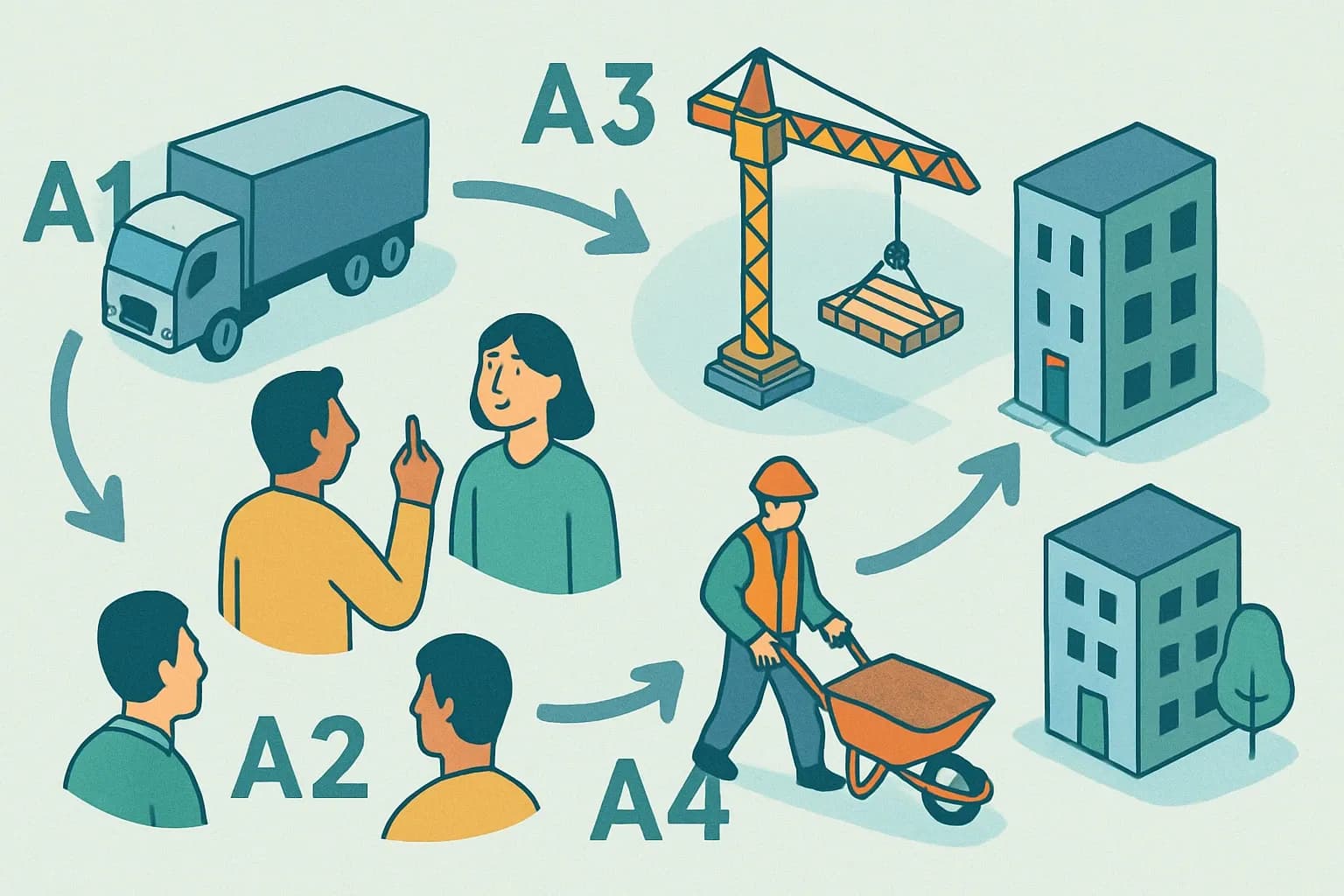
A1 to A3 describe cradle to gate. A4 and A5 bring you to handover. Most construction PCRs still require these as the minimum scope for product‑specific EPDs in 2026 under EN 15804 and ISO 14025 rule sets. When selecting support, favor consultants that own data collection and project management so your experts dont become data clerks.
Getting to publication without the drama
Decide the reference year, assign one owner per dataset, and use a light checklist that mirrors A1 to A5. Keep supplier requests simple and repeatable. Choose an LCA partner who handles data wrangling, QA, and operator coordination so the team stays focused and the EPD ships on time.