The short answer
Yes. In North America, the Resilient Floor Covering Institute (RFCI) publishes industry‑wide EPDs that include Rubber Sheet and Tile, released in 2024 and aligned with a UL Part B PCR for resilient flooring (RFCI, 2024) (RFCI, 2024).
Who is behind it and how it was built
RFCI coordinates member data, applies a category‑specific PCR, and publishes the sector average through a third‑party program operator. Think of it like a box‑score across many teams. Everyone’s performance rolls up into one average, then that average becomes the reference product for A1 to A3 and downstream modules.
Regional notes: United States and Canada
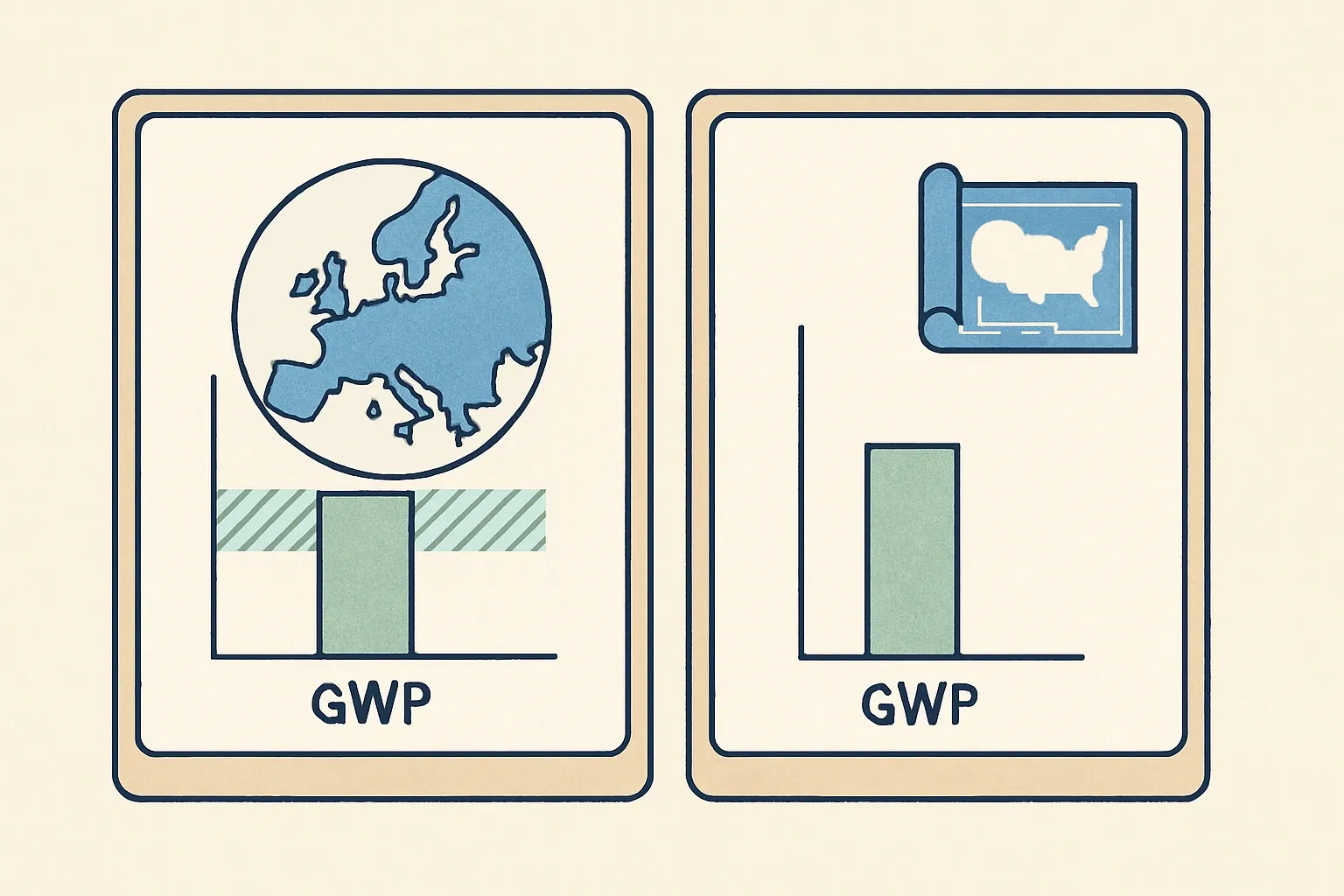
The RFCI industry‑wide EPD covers rubber sheet and tile and sits alongside other resilient categories. The document is intended for North American use, and it reflects typical materials, energy mixes, and manufacturing processes in that market in 2024 (RFCI, 2024).
Regional notes: Europe and UK
In Europe, ERFMI maintains a suite of EPDs for resilient flooring created to EN 15804. Their “EPD‑7” covers homogeneous and heterogeneous smooth rubber floor coverings according to EN 1817, and the ERFMI program lists nine general resilient flooring types in its set (ERFMI, 2025) (ERFMI, 2025).
At a rubber flooring manufacturer or competing in the space?
Follow us for product-by-product EPD insights that show how to win specs and leverage your advantages over the industry-wide averages.
Why sector averages can hold you back
Sector averages are designed to be safe and conservative. If your process is more efficient than the pack, the industry‑wide EPD can overstate your product’s impacts. On projects with embodied‑carbon targets, that gap can be the difference between staying in the spec or getting replaced late in design. A product‑specific EPD lets your real performance show up in the whole‑building LCA rather than an average that blurs your advantages.
Positive examples of product‑specific rubber flooring EPDs
Several mid‑sized manufacturers already publish product‑specific EPDs for rubber flooring in multiple regions. A few examples that are current as of December 2025 include:
- Roppe (US) with multiple rubber tile and base EPDs published through Smart EPD.
- FLEXCO Floors (US) with rubber flooring and sports rubber EPDs published through Smart EPD.
- Dinoflex (Canada) with recycled‑rubber flooring EPDs published through SCS Global.
- Artigo (Italy) with EN 15804 rubber flooring EPDs verified by UL Solutions.
- REGUPOL (Germany and US) with rubber rolls, sheets, and fitness tiles verified by IBU and UL Solutions.
These are not endorsements, just proof that competitors are already using product‑specific declarations to differentiate.
When to use the industry‑wide EPD vs your own
Use the industry‑wide EPD to unlock early conversations, get into preliminary models, and cover the category when you have no declaration yet. Move to a product‑specific EPD once you can assemble one year of solid production data. If a product launch is recent, a prospective EPD is possible with a shorter initial data window, then it updates once a full year is available. That keeps momentum without sacrificing credibility.
What buyers actually do with the numbers
Project teams often default to the most conservative value available when two similar products are compared. An industry‑wide, sector average EPD is that conservative value by design. A verified, product‑specific EPD gives them permission to model your actual performance. That reduces the hidden “penalty” that averages can add and improves your specability.
How to make the lift easier
Pick an LCA partner that handles the heavy lifting of data collection across plants, utilities, and bills of materials, then publishes with a recognized operator like Smart EPD in the US or IBU in Europe. The right team will keep timelines tight, coordinate stakeholders, and map your product family so renewals and updates are painless. The ROI is usually manyfold of the effort because even one mid‑sized project can pay back the work. It is definately worth getting ahead of competitors here.
The takeaway for rubber flooring teams
There is an industry‑wide EPD for rubber flooring in North America, and a sector framework exists in Europe. Those documents help you start, not finish. If your manufacturing is better than average, a product‑specific EPD turns that advantage into numbers people can actually use. That is how specs are won and kept.