The short answer
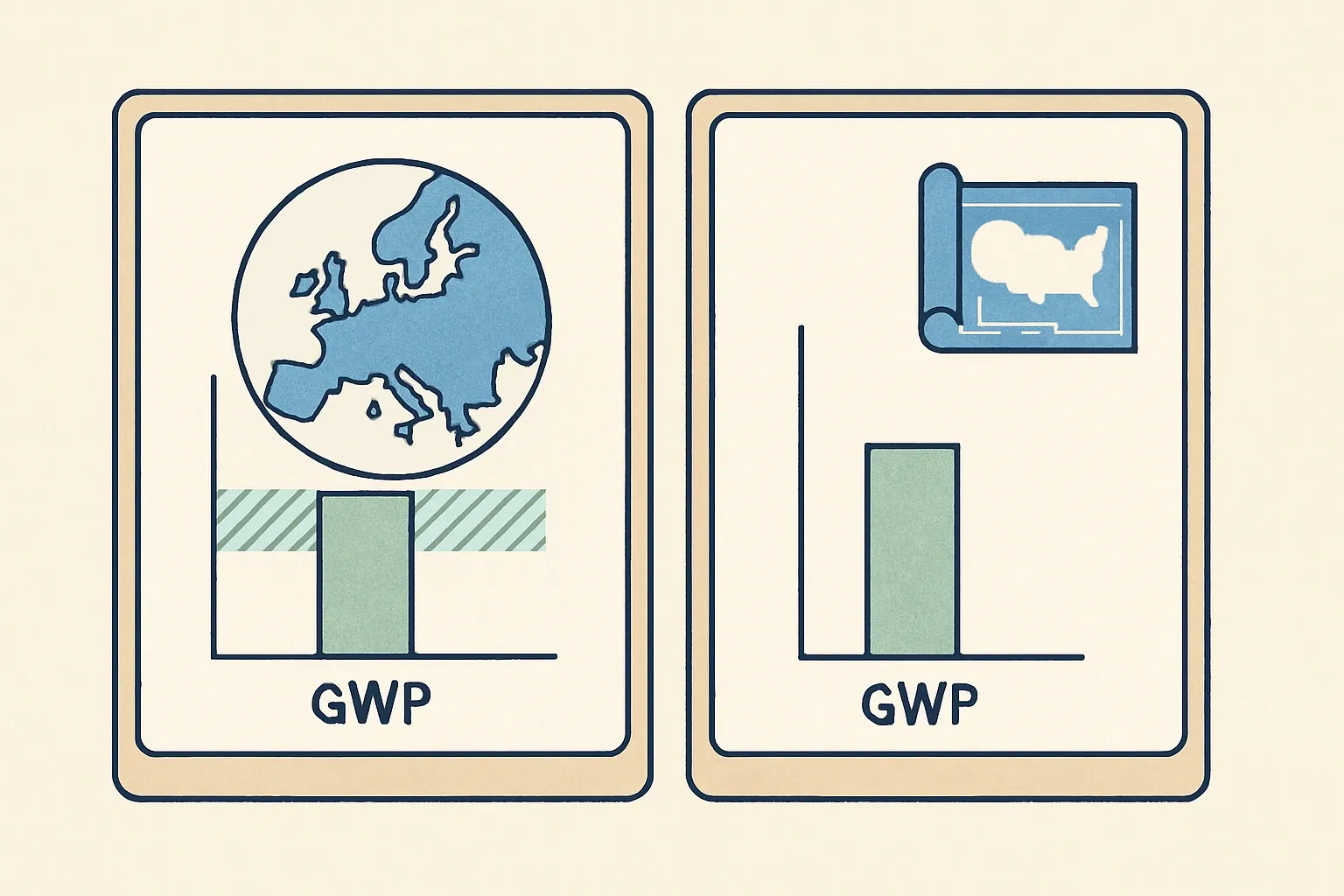
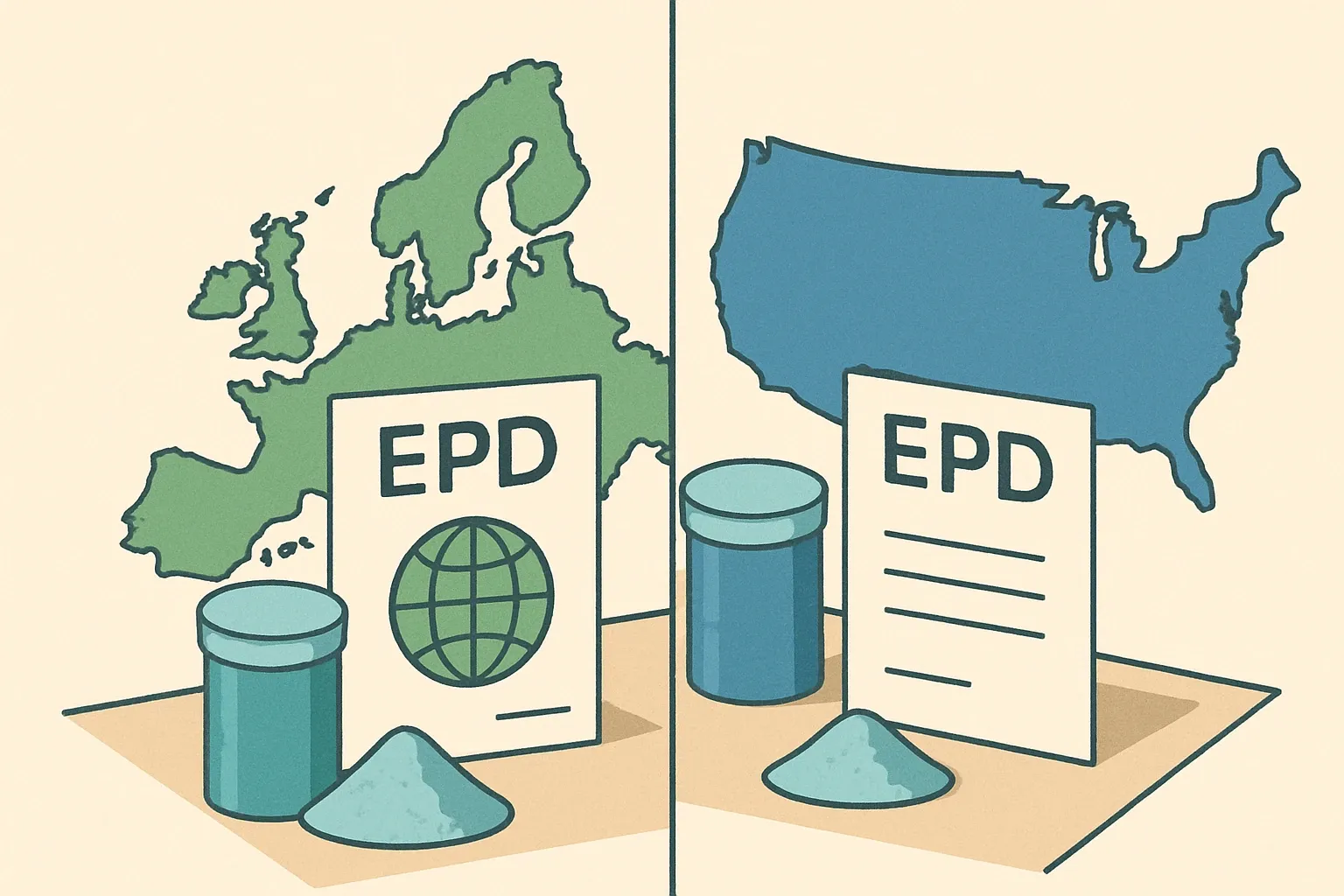
Yes. An industry‑wide, sector average EPD for powder coatings exists in Europe through the German Coatings and Printing Inks Association (VdL) and is published by IBU under EN 15804. It comes as three averages that represent typical chemistries: polyester, hybrid, and epoxy. See the VdL overview and links to the EPDs, plus the IBU English PDF for polyester powder coating here (IBU, 2023).
Where to find the documents
Start with VdL’s page that lists all three association EPDs for powder coatings and links to IBU. For quick access, here are direct pages to check:
- VdL association EPDs for powder coatings on IBU, including polyester, hybrid, and epoxy.
- IBU English PDF for polyester powder coating linked above. These EPDs are recognized across Europe through ECO Platform, so specifiers in many EU markets will accept them.
What about the United States?
As of December 2025 there is no national, industry‑wide EPD for powder coatings published by a US trade association. Project teams typically fall back to generic or conservative datasets when a product‑specific EPD is missing, which can make your material look heavier in whole‑building LCAs. That is not ideal if your line is efficient.
Selling powder coatings in the US or EU?
Follow us on LinkedIn for insights on how product-specific EPDs can help you win specifications and avoid conservative defaults in tenders.
How industry averages are built
Sector EPDs pool data across multiple producers and plants, then report a representative average using the relevant PCR. Think of it like a class average grade. It is informative and comparable, but it rarely reflects a best‑in‑class line. Averages also smooth away plant‑level improvements like fuel switching, closed‑loop reclaim, or optimized cure schedules.
Why a product‑specific powder coating EPD wins specs
On real projects, designers prefer verified numbers tied to the exact product they plan to use. A product‑specific EPD lets LCA tools drop the generic penalty and model your coating as it is actually manufactured at your facility. That clarity removes friction in submittals, avoids late‑stage swap‑outs, and helps you stay sticky in the spec. The ROI can be manyfold because a single mid‑sized win can cover the investment.
Positive examples manufacturers can benchmark
Looking for proof that peers have moved ahead with product‑specific EPDs?
- IFS Coatings in the US lists manufacturer EPDs for architectural powders, including IFS 300SP and IFS 400SD, verified by SCS Global Services with validity through January 22, 2028 (SCS Global Services, 2023).
- TIGER Coatings in Europe publishes product‑specific EPDs under IBU for select series and points specifiers to the association EPDs as context. Their certificates area and blog outline the portfolio and how the product‑specific values compare to the association averages. If you operate efficient lines, a product‑specific declaration typically reflects that advantage. Otherwise you’re judged by the class average.
Sector average vs. product‑specific in practice
Use the association EPD when you need a quick, recognized baseline for early design or when a distributor catalog must cover many manufacturers. Move to a product‑specific EPD when a project or customer asks for precise carbon accounting, when you supply a marquee facade package, or when you know your line performs better than the average. That is often, frankly, where the margin lives.
What this means for powder coating teams this year
If you sell in the EU, you can reference the VdL association EPDs immediately while planning your own. If you sell in the US or globally, a product‑specific EPD is the cleanest path to avoid conservative defaults in LEED v5 oriented bids. It also equips sales with a simple answer the next time a GC or facade consultant asks for numbers. Don’t let generic data define your story; get your own. It’s definately worth it.
Quick recap
There is an industry‑wide powder coating EPD set in Europe via VdL at IBU. There is not a US association average today. Sector averages are useful, but conservative. Manufacturers that publish product‑specific powder coating EPDs are winning more specifications because their real performance shows up in the model, not an average.