What “office partition walls” means in EPD land
Office partition walls show up under several names in EPD databases: demountable walls, movable walls, and glazed partition systems. In Europe these products typically reference EN 15804 under the International EPD System with complementary rules aligned to windows and doors. In North America some EPDs use workspace furniture PCRs for movable walls or a construction products Part A plus category‑specific Part B.
A recent PCR transition set a firm cutover for construction products under the International EPD System. PCR 2019:14 v1.3.4 reached its sunset on 20 June 2025, with v2.0 now in force for new publications (EPD International, 2025) (EPD International, 2025).
So, does an industry‑wide or sector‑average EPD exist?
Not at this time. We find no published industry‑wide or sector‑average EPD that covers office partition walls across a trade association or consortium in either the US or EU as of 11 December 2025. If one appears later, it will likely be anchored to EN 15804 or an updated North American PCR, but today the market runs on product‑specific declarations.
Current product‑specific EPD examples you can point to
These are mid‑sized players with published EPDs for partition systems. Each link goes to a program operator or the manufacturer’s public EPD page.
- DIRTT: Solid 4 in Wall and Classic Glass Wall EPDs, with plant‑specific versions in Calgary and Savannah. Published via Smart EPD and hosted on DIRTT’s site. Useful when a project team wants location‑specific numbers. (DIRTT EPDs)
- Optima Systems: Revolution 100 glazed partition system family with multiple performance categories under EN 15804. Published with EPD International. (EPD International, Optima Products)
- Environamics: Symbio Moveable Wall EPD listed by NSF for workspace products. Helpful for North American interiors packages where furniture PCRs are accepted. (NSF, Environamics)
- Clestra Hauserman: Multiple demountable partition EPDs listed in INIES for the French market, covering glazed and opaque door sets integrated with partitions. (INIES, Clestra)
This isn’t an exhaustive list, just a signal that your competitors are already on the board with product‑specific EPDs.
Why sector averages sound convenient but feel conservative
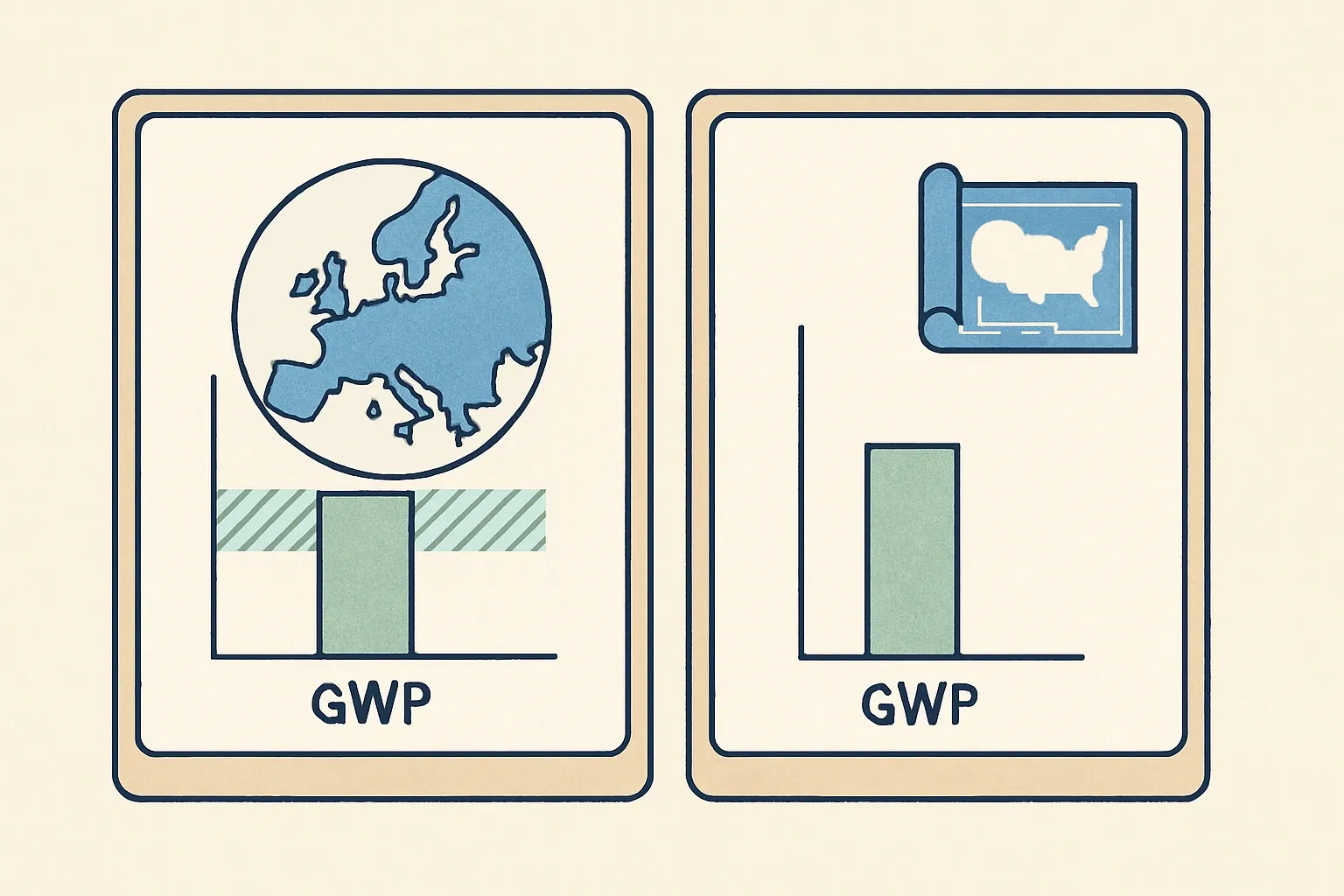
An industry‑wide EPD is a blended picture. It uses a representative mix of materials, suppliers, and manufacturing routes. That protects anonymity and sets a baseline. It also bakes in conservative choices that rarely reflect an individual plant’s best performance. When a whole‑building LCA tool cannot find a product‑specific EPD it pulls in generic or sector‑average values that are often higher than what an efficient line can deliver. That gap shows up in carbon accounting and can push a product out of contention.
The upside of a product‑specific EPD for partition walls
A verified declaration tied to your exact bill of materials, cut patterns, glass mix, extrusion alloy, and finishing line lets project teams model reality. On LEED v5 projects, design teams must hit tougher embodied‑carbon targets across interiors. A specific EPD removes the penalty of generic data and makes substitution less likely late in the game. The result is more specs won on merit, not just price.
Multi‑plant producers should get location‑specific where it matters
Movable walls often ship from more than one facility. Publishing plant‑specific EPDs helps general contractors and LCA modelers match transportation and electricity grids accurately. EPDs in major programs typically carry a five‑year validity window, which gives you a practical refresh cycle for process improvements and supplier changes (EPD International, 2025) (EPD International FAQ, 2025).
What if no perfect PCR seems to fit your wall system
There are workable paths. In Europe, the construction products PCR with the c‑PCR for windows and doors is commonly used for glazed partitions. In North America, some movable walls have been published under workspace furniture PCRs. A good LCA partner maps the competitive set, checks current PCR versions and sunset dates, and recommends the route that aligns with how specifiers already evaluate similar systems. It’s not glamorous work. It is decisive.
Strategic takeaway for manufacturers
If your team was waiting for a sector average to “arrive,” it hasn’t. A product‑specific EPD for your office partition wall is the faster route to credible, project‑ready data. It avoids conservative defaults, showcases real performance, and typically pays back on the first meaningful interiors package you win. Choose a partner who handles data collection end to end so your engineers are not stuck chasing utility bills and batch tickets. You’ll move quicker, publish with confidence, and stay ahead of that next substitution. This is definately the moment to lead, not follow.