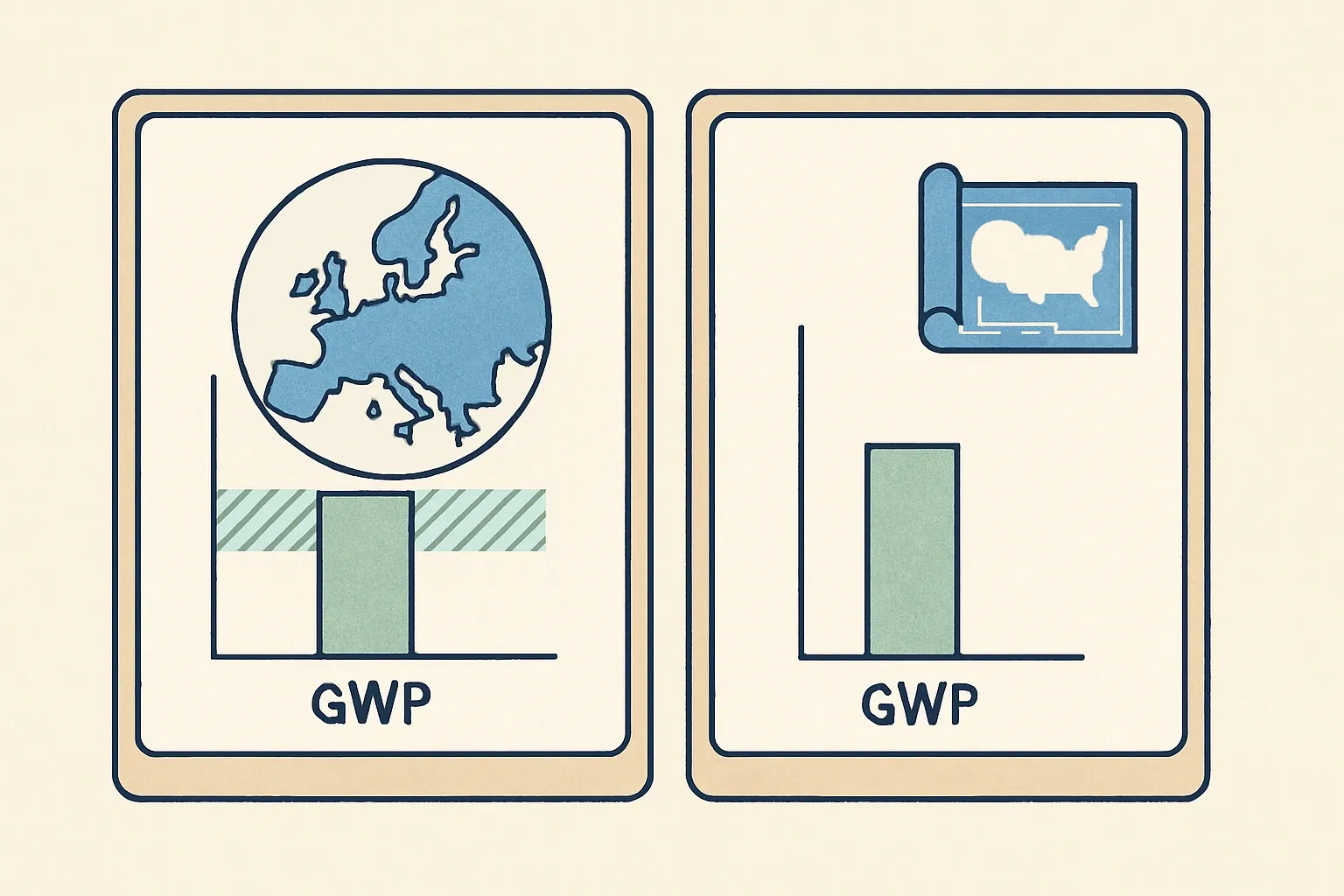
The quick take
Yes, an industry‑wide EPD for U.S. flat or “float” glass was published by the National Glass Association in 2019 and was valid for five years. It expired on December 20, 2024, and as of today there is no active U.S. industry‑wide flat glass EPD replacing it (NGA, 2025) (NGA, 2025).
What exists where
In the United States, the expired NGA document covered unprocessed flat glass made by several major producers under ASTM as the program operator. Teams sometimes still cite it for historical context, but it no longer counts as current.
In Europe, association‑backed “Branchen‑EPD” for glass are available through ift Rosenheim with the German flat glass federation. These sector EPDs cover float glass and common derivatives and can be transferred to manufacturers, typically using a conservative, worst‑case style baseline. That helps compliance but rarely showcases best‑in‑class performance.
Why industry‑wide EPDs are conservative by design
Think of a sector average like a safety net set a little low. Association EPDs often use pooled data and worst‑case guardrails so they are broadly defensible across many plants. That protects the average, not the out‑performer. If your furnace, fuel mix, cullet rate, or logistics profile is better than average, the sector EPD will understate your advantage.
The commercial angle for manufacturers
Specs, bids, and whole‑building LCAs increasingly prefer recent, product‑specific EPDs. When a sector average is the only option, modelers may apply extra margins to stay conservative, which can make your product look heavier on carbon than it really is. A verified, product‑specific EPD avoids that headwind and keeps you in more shortlisted conversations without discounting on price.
Manufacturing float glass and facing stiff competition?
Follow us on LinkedIn for insights on how product-specific EPDs can help you win specs and unlock new projects.
Proof points from recent product‑specific EPDs
Guardian Glass reports a North America unprocessed flat glass EPD at about 1,102 kg CO2e per ton A1–A3 using TRACI 2.1, renewed in March 2024. That is roughly 23% lower than the 2019 NGA industry‑wide value of 1,430 kg CO2e per ton, illustrating how an individual producer can outperform an old sector average (Guardian Glass, 2024) (Guardian Glass, 2024).
AGC Glass Europe published an EPD for Low‑Carbon Float Glass showing a 4 mm glass cradle‑to‑gate GWP of 5.5 kg CO2e per m² in INIES, again demonstrating the spread between specific plants, fuels, and cullet strategies and any generic benchmark (AGC Glass Europe, 2025) (AGC Glass Europe, 2025).
NSG Pilkington North America has an active uncoated flat glass EPD registered in The International EPD System with validity into August 2030, which signals continued momentum for product‑specific reporting in this category (EPD International, 2025).
Separately, the U.S. General Services Administration noted growth in listed flat glass EPDs in 2024, a sign that owners and public buyers are watching this metric more closely even as policies evolve (GSA, 2024).
So, should you rely on a sector average or commission your own?
If you manufacture float glass in the U.S., there is currently no active industry‑wide EPD to lean on. In Germany, a transferable association EPD exists, but by nature it is cautious. A product‑specific EPD captures your real energy mix, cullet rates, batch recipe, yield, logistics and more. That turns operational wins into spec wins.
We see teams recoup the effort fast. One mid‑sized project win can cover the EPD several times over, then keep paying dividends as it unlocks more projects. If your process has improved since 2019, standing behind an outdated sector average is like streaming a blockbuster in standard‑def when your camera shot it in 4K. It just undersells you.
How to move quickly with less drain on your plant team
Pick an LCA partner who will run a tight, white‑glove data collection that respects your time and pulls from the right PCRs and program operators. The right workflow should feel practial: clear request lists, light touch on the shop floor, and predictable reviews. Publish where your buyers search, such as Smart EPD in North America or IBU and INIES in Europe. That coverage makes the EPD easy to find in bids and portals.
Bottom line for “float glass industry‑wide EPD” searches
There is no current U.S. industry‑wide EPD for unprocessed float glass. Association EPDs exist in parts of Europe and can help with compliance, but they are intentionally conservative and may not reflect your best performance. A recent, product‑specific EPD is the clearer path to more specs, fewer carbon penalties in LCAs, and better margin protection. If you run a lower‑carbon line today, a sector average will not do you justice. It definately will not.