The quick answer
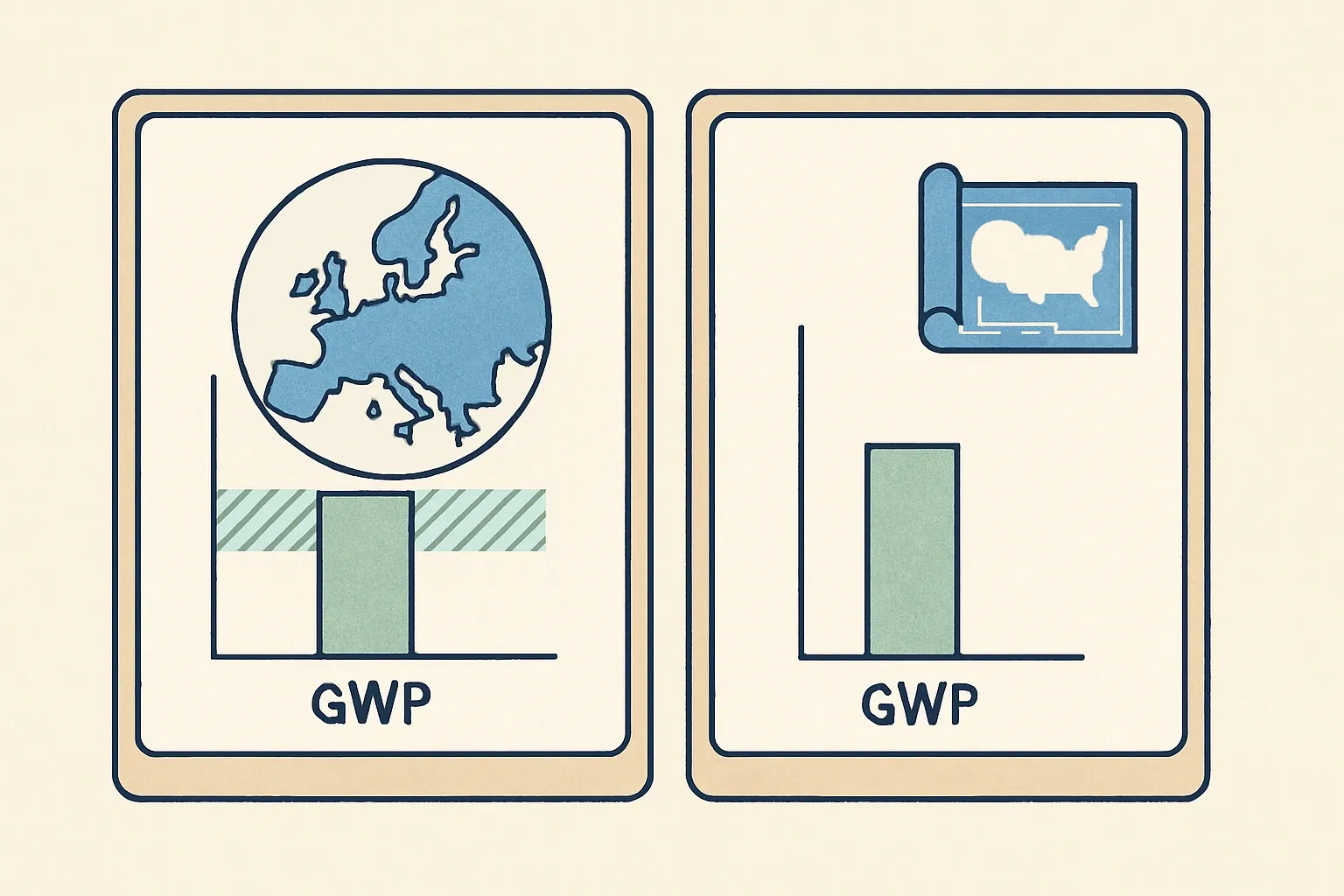
There is no industry‑wide EPD written specifically for ESD flooring systems. In North America the Resilient Floor Covering Institute publishes industry‑wide EPDs for nine resilient product types such as heterogeneous and homogeneous vinyl, LVT, VCT, SVT, rubber sheet and tile, and rigid core. None of these are ESD‑only categories, so they do not represent static‑dissipative or conductive variants on their own (RFCI, 2024) (RFCI, 2024).
What that means for static control floors
ESD performance comes from conductive fillers, grounding layers, adhesive choices, copper tape and site installation details. A category‑wide average for non‑ESD vinyl or rubber will not reflect those added materials or the resinous systems often used for ESD rooms. Relying on a non‑ESD industry average is like using a group photo to match an ID badge. Close, but not credible for a spec.
Positive examples: product‑specific EPDs for ESD flooring
If you make ESD floors, the good news is that product‑specific EPDs already exist in the market.
- Forbo lists EPDs for Colorex SD EC tiles and Sphera SD EC sheet on its product pages and Health & Environment download center, covering static‑dissipative and electro‑conductive vinyl options (Forbo Colorex SD page, 2025).
- Roppe publishes static‑control vinyl and rubber ranges and links to EPD documentation from its ESD product pages, signaling third‑party verified disclosures for its U.S. made ESD tiles (Roppe ESD Vinyl Tile page, 2025).
- Stonhard offers resinous ESD systems and communicates EPD coverage for several systems, including its Stonkote ESD coating used in electronics and cleanroom spaces (Stonhard ESD systems, 2025).
These are proof points that competitors are already investing in product‑specific EPDs for ESD flooring across vinyl, rubber, and resin platforms.
At Forbo or competing with them on ESD flooring?
Follow us for a product-by-product analysis of EPDs and insights on which ESD systems get spec'd over competitors like Roppe and Stonhard.
Why a sector average would be a blunt tool
Even if an association attempted an ESD‑only average, it would need to combine very different chemistries and build‑ups. A dissipative vinyl tile with carbon veins is not the same system as a multi‑layer conductive epoxy with a carbon‑loaded primer. Any single “ESD average” would be conservative by design and unlikely to reflect your plant energy, your recipes, or your recycled inputs. That bluntness can cost opportunity when owners are chasing lower embodied carbon in LEED v5 era projects.
How whole‑building LCAs treat you without a product‑specific EPD
Project teams often default to database generics or broad industry‑wide numbers when a product EPD is missing. Those placeholders are intentionally conservative to avoid over‑crediting. In practice, that pushes specifiers toward competitors who present verified, product‑level results. You feel it as a silent penalty that nudges you out of the shortlist.
The ROI case for ESD products
Product‑specific EPDs do more than tick a compliance box. They let teams model your actual impacts rather than a padded average, which can keep you in the spec when embodied‑carbon targets are tight. Sales cycles speed up because procurement does not need exceptions. The cost to produce an EPD is frequently dwarfed by one mid‑sized project award. We see this pattern repeat pritty reliably in ESD‑critical sectors.
What exists today that is close, but not ESD‑specific
If you make resilient ESD products, RFCI’s 2024 industry‑wide EPD set covers nine resilient categories and can be a temporary proxy for non‑ESD SKUs in those families. It should not be presented as representative of ESD variants since conductivity packages alter both composition and installation materials (RFCI, 2024) (RFCI, 2024).
Want a true industry‑wide EPD for ESD flooring?
It is possible, but it takes a coalition to share primary data, align on a common ESD scope and publish through a program operator. You would need enough manufacturers per technology family to avoid mixing apples and oranges across vinyl, rubber, and resin systems. Until that happens, the fastest path to commercial advantage is a product‑specific EPD you control.
Fast path forward
Pick the PCR competitors already use for your technology, lock a recent reference year, and let a partner run the white‑glove data chase across plants, suppliers and utilities while you keep your team on the line. Publish with the operator your market trusts. Then put the numbers to work in submittals, BIM objects and spec notes.
Bottom line
There is no industry‑wide EPD dedicated to ESD flooring systems today. Manufacturers who publish product‑specific EPDs for their static‑control tiles and resinous systems win credibility, reduce LCA penalties, and stay in more specs when carbon goals are tight.