The short answer
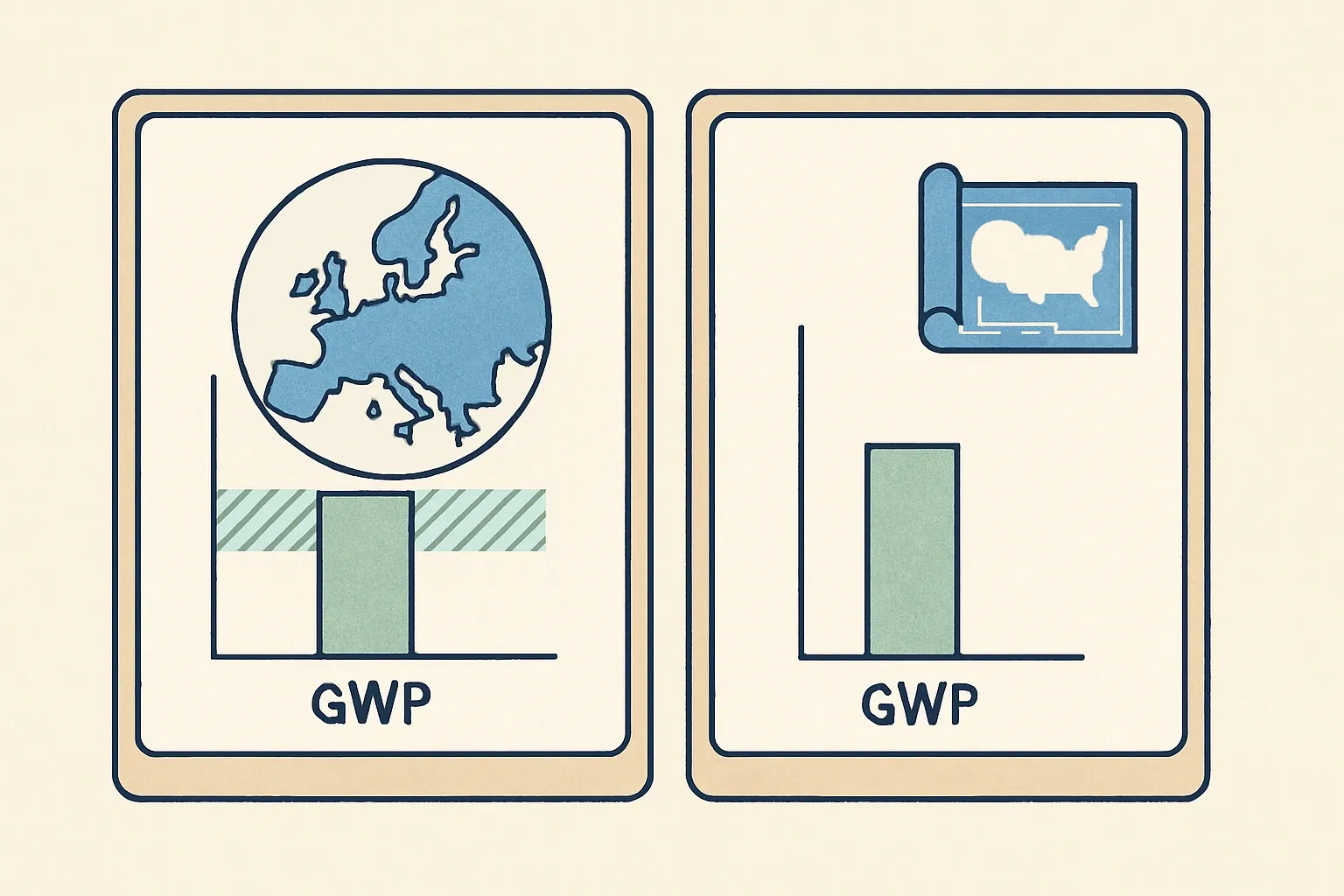
As of December 2025, we do not see a live, association-issued industry-wide EPD for fiber cement boards in major registries. What shows up instead are manufacturer or brand-specific EPDs for fiber cement siding, facade panels, roofing slates, and boards. That is good news if you publish your own.
Region check: where things stand now
United States: no current trade-association, industry-average EPD for fiber cement boards surfaced in the major EPD programs we monitor. Teams typically specify using product-specific declarations.
Europe: again, activity clusters around brand EPDs published under EN 15804 through operators like IBU and EPD Hub. We did not find a pan-industry EPD for “fiber cement boards” that is valid today.
Latin America and APAC: product-specific EPDs exist for several regional makers, which specifiers use in projects that require declarations.
If a sector average appears later, it will still function as a conservative baseline, not a differentiator.
What a sector average EPD really means
Think of a sector average as the class GPA. Useful to show the class passes, not useful to prove you are valedictorian. By design, industry-wide EPDs are conservative, roll up multiple plants and practices, and rarely capture a single product’s best performance. They help with minimum compliance, yet they rarely help win a head-to-head spec.
At a fiber cement manufacturer or competing?
Follow us for a product-by-product analysis to understand which EPDs win specs and how to leverage yours against brand-level competitors.
Why product-specific EPDs win more specs
- They let project teams model real impacts instead of pessimistic placeholders, which often come with extra “penalty” factors in whole-building LCAs.
- They unlock credits and procurement points that require product-level declarations under frameworks moving toward LEED v5 and similar regimes.
- They anchor value conversations around verified data, not just price. The ROI is often fast because one mid-sized project can offset the cost of producing an EPD, sometimes defintely faster than expected.
Fiber cement examples already publishing EPDs
Below are examples across regions to show the competitive bar. These are manufacturer or brand EPDs, not sector averages.
- Etex Group brands for fiber cement facades, such as EQUITONE and Cedral, have multiple product EPDs in Europe under EN 15804 with current validity into 2030 in some cases.
- Swisspearl Group publishes EPDs for facade boards and slates with European operators, with several valid through late 2029.
- Knauf AQUAPANEL has cement-based exterior board EPDs in Europe under IBU with multi‑year validity windows.
- Plycem Construsistemas (Costa Rica) lists a family of fiber cement siding and board EPDs current through December 2025.
If your product line competes in these categories, your rivals are already showing up with declarations that plug straight into design tools and tender requirements.
Choosing the right rulebook
A PCR is the rulebook of Monopoly. Ignore it and the game falls apart. For fiber cement, common pathways follow EN 15804 in Europe and ISO 14025 rules globally. When there are overlapping options, pick the PCR your competitors use, confirm it aligns with your markets, and check remaining validity so the EPD will live a full term before renewal.
Practical path to a product-specific EPD, fast
Start with one reference year of plant data. Prioritize the heaviest inputs and the energy mix, since fiber cement boards are sensitive to cement and process energy. Have your LCA partner handle the internal data chase, utilities pulls, allocation, and verifications so engineering and ops keep building product. Publish with a reputable program operator familiar to your specifiers, keep modules and declared unit crystal clear, and plan a light-touch renewal cadence.
What this means for your sales team
An industry-average EPD, if it appears, will be fine for basic compliance. A product-specific EPD is a sales asset. It removes guesswork in early design, reduces swap-out risk late in procurement, and helps keep margin because the discussion is about verified performance and fitness for purpose, not just lowest unit price.
Bottom line for fiber cement boards
No active industry-wide EPD is in play today for fiber cement boards in the major registries we track. The field is set by brand-level EPDs. That sets a simple strategy. Publish your own, highlight your actual impacts, and use the document to win more specs while competitors rely on averages that cap their story.