The PDF problem is a revenue problem
A static EPD PDF arrives too late in the cycle to shape a spec. It answers the last question on a submittal instead of the first question in a bid.
Treating an EPD as governed sales content flips that sequence. It helps shortlist your product while competitors are still attaching attachments.
What “governed sales content” actually means
Think of a rules‑backed layer that sits between your source documents and your selling tools. Legal, sustainability, and marketing define what can be claimed, how it must be phrased, and when comparisons are allowed.
Those rules get encoded so RFP assistants, CRM plugins, and partner portals only surface approved language and numbers. No improvisation. No compliance drift.
Structure it for machines and for humans
Teach your EPD to speak API. Extract key fields into a consistent schema. Map product names to SKUs and families. Store cut‑off rules, system boundaries, declared units, and modules covered as precise fields, not prose.
Do the same for certifications. Keep status, scope, logo use rules, and renewal dates in one place. It is like adding closed captions to your product’s environmental story.
Govern the tricky parts before they get tricky
Set plain rules for comparative claims. When is a cross‑brand comparison permitted. What minimum PCR alignment is required. Which indicators are in scope. Lock them in writing so AI tools cannot wander.
Handle carbon‑negative positioning with care. Define what “net‑negative” or “cradle‑to‑gate minus biogenic storage” means in your context, and list the evidence required before the phrase can appear anywhere.
Want to turn EPDs into revenue generators?
Follow us on LinkedIn for insights that help you unlock new business and get specified more often.
Meet buyers where they search
Specifiers now pull data from operator portals and national hubs inside modeling tools. France’s INIES passed 7,000 environmental declarations in November 2025, a signal that machine‑readable product data is the norm, not the exception (INIES, 2025) (INIES, 2025).
If your content is structured, your answers show up faster and more faithfully inside those ecosystems.
Align with LEED v5 without the guessing
LEED v5 puts heavy weight on decarbonization. Roughly half of total points track carbon outcomes, which keeps product‑specific, verified EPDs central in project decisions (USGBC, 2025) (USGBC, 2025).
A governed content layer lets sales generate credit‑aligned summaries that state scope, modules, declared unit, and any scenarios included, without over‑promising.
Timers, renewals, and the calendar advantage
Most EPDs remain valid for five years under program rules. A governed system tracks that clock and nudges teams months ahead so renewals do not collide with bids (EPD International FAQ, 2025) (EPD International, 2025).
It also records PCR versions used by competitors. That context enables safe apples‑to‑apples benchmarking in proposals.
Wire it into the sales stack
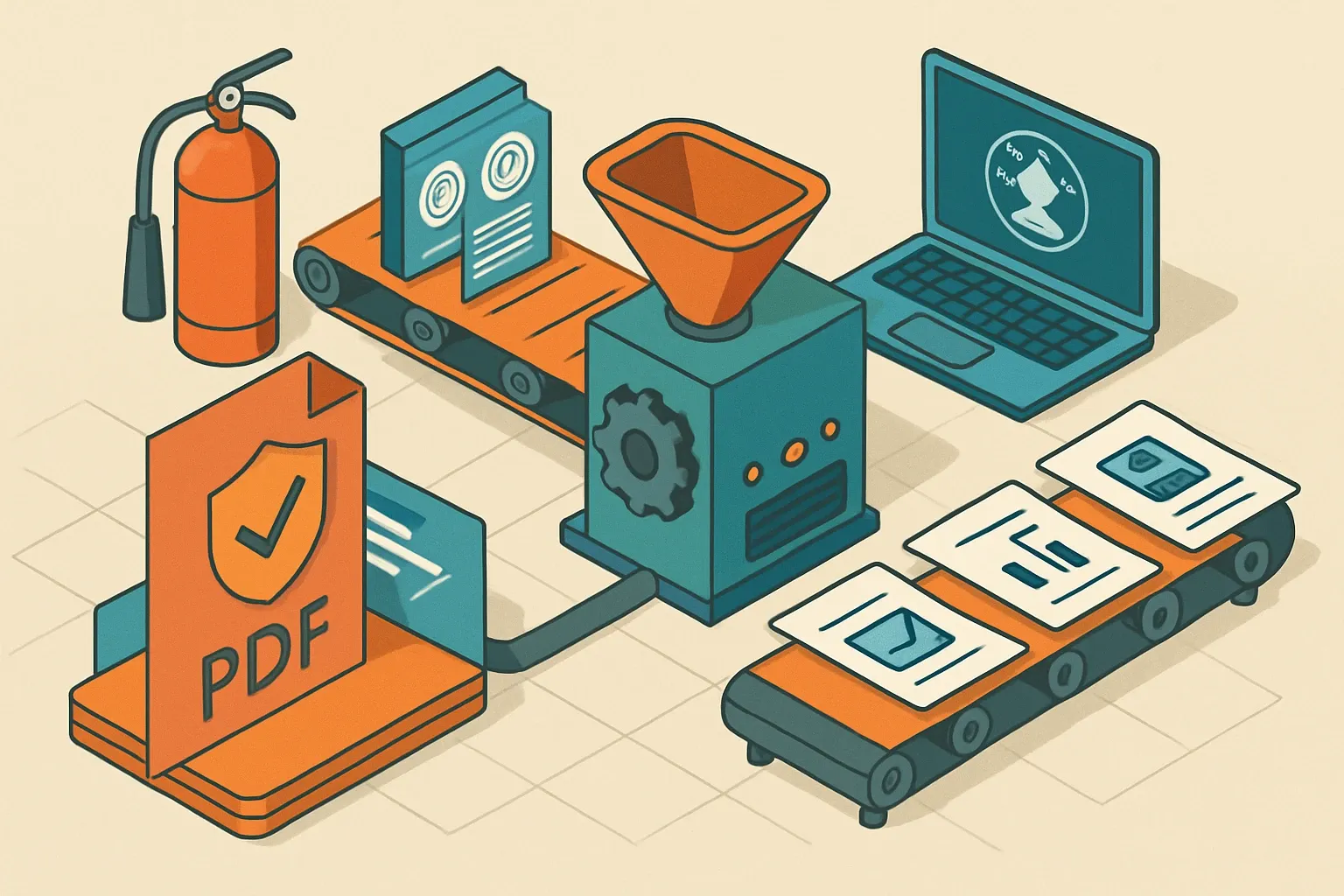
Connect the governed layer to your RFP assistant so it can autofill declared unit, modules, indicators, and verification details. Feed CRM with certification status and logo permissions per product. Let the website render a concise, always‑current summary card that mirrors the operator PDF, plus machine‑readable JSON for partners.
This reduces ad‑hoc requests to technical teams and keeps language consistent everywhere.
A simple starter playbook
- Inventory every EPD and certification. Capture operator, standard, PCR, scope, modules, validity, and renewal dates.
- Write the claim rules. Define approved phrases, disclaimers, and comparison guardrails.
- Build a tiny schema. Start with 25 to 40 fields that your RFP and web tools actually use.
- Pilot one product family. Ship AI‑ready snippets and a buyer‑ready summary, then iterate.
- Schedule renewals and evidence collection. Dont wait for expiry notices.
What changes once this is live
Sales stops asking “can I say this” because the answer is embedded in the content. Marketing stops chasing PDFs across shared drives. Legal sleeps better since every output respects the rules by design.
Most of all, environmental documentation moves from last‑mile paperwork to first‑mile differentiation. That is how a PDF becomes a governed sales engine.