Why RFQs stall in complex portfolios
RFQs ask for precise matches across families, finishes, sizes, and performance thresholds. The source data lives in ERP fields, lab reports, and EPDs that were never designed to talk to each other. That is why mapping one buyer line item to the right SKU can chew through a whole afternoon of respones.
The model that does the mapping
Start with a product and EPD schema that mirrors how buyers think. One product, many variants, each variant tied to attributes, test results, and the EPD record that proves the environmental numbers. Teach the model synonyms for buyer language, normalize declared units, and capture location logic when a plant or transport route changes the footprint.
Verified numbers or nothing
Every figure should link back to a source document with the program operator, PCR, verification status, and module boundary captured as metadata. Comparisons should reflect the indicators required by EN 15804 A2, which defines 19 core and additional indicators for building products (EN 15804+A2, 2019). Renewal planning matters because declarations are typically valid for 5 years under common program rules, so your system should surface upcoming expiries inside bid workflows (EPD International GPI, 2024).
Auto completing the RFQ, safely
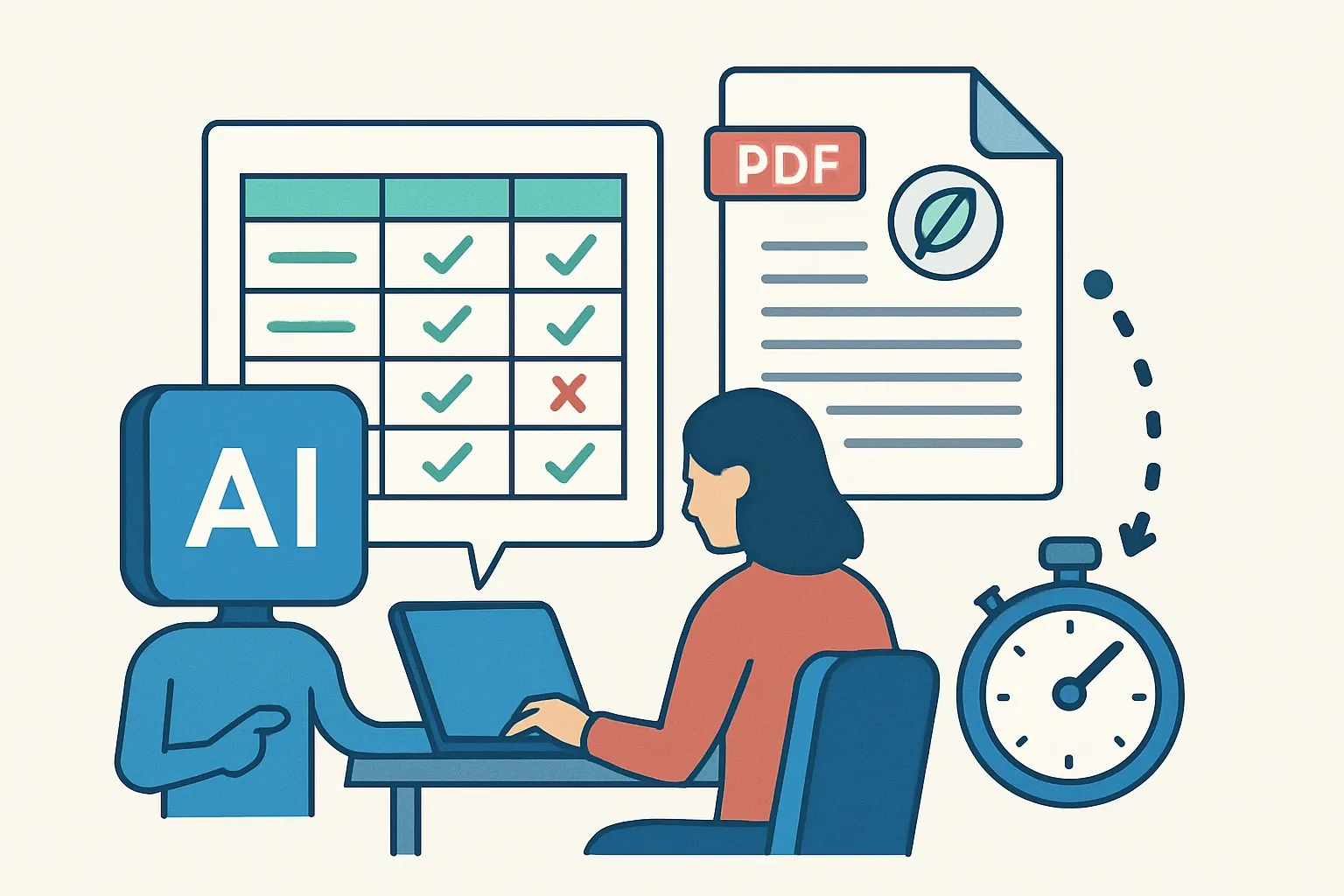
A practical AI flow parses the RFQ, extracts each requirement, and converts units into your standard catalog units. It proposes best fit SKUs, fills the attribute table, attaches citation links to the exact EPD page, and flags missing data for a quick human review. Confidence thresholds and a visible audit trail keep compliance teams comfortable, not surprised.
Side by side comparisons buyers trust
Good comparison logic levels the field. It standardizes declared units, identifies when products use different PCRs, and explains scope differences such as A1 to A3 only versus cradle to grave. If two EPDs cannot be compared, the system should say so and show why. Clear, boring honesty beats glossy ambiguity every time.
Want to unlock the revenue potential of your EPDs?
Follow us on LinkedIn for insights that help you turn EPDs into winning tenders and measurable ROI.
What good AI RFQ support looks like
Buyers evaluating platforms can use this checklist.
- Inputs handled at speed, including PDF, XLSX, and portal forms.
- Schema that joins product data, test reports, and EPD records with plant level context.
- Unit and currency normalization, plus declared unit conversions with transparent formulas.
- Scope aware comparisons that call out PCR and module differences, not hide them.
- Click through citations to page level EPD evidence and a line item audit log.
- Controls for permissions, versioning, and reviewer sign off before anything leaves the building.
Data you already own fuels the lift
ERP and PLM tables provide catalog truth. QA reports add performance thresholds. EPD PDFs contribute the verified impact indicators and notes on allocation, recycled content, and transport. Pull them into one model, keep file hashes for traceability, and you have the backbone of automation without hunting through inboxes.
Guardrails that keep legal and sales aligned
Two rules avoid trouble. Never compare products without matching declared units and system boundaries. Always show the source and date beside any number, including the PCR version. These habits prevent apples to oranges charts and make your answer package feel like a well indexed library, not a slide deck.
A note on evolving requirements
LEED v5 continues to sharpen attention on upfront carbon and transparency, so bid evaluators are asking sharper questions on scope, data quality, and verification year. Your model should track those fields explicitly, not as footnotes.
Commercial lift you can measure
When RFQs are answered with complete, comparable, and cited packages, buyers move faster and your team spends less time on scavenger hunts. Speed plus clarity is a simple equation. It frees engineering, product, and plant leaders to focus on improvements while the system handles repeatable steps.
Build once, reuse for every tender
Treat the structured model as a reusable asset. Each RFQ teaches the system new synonyms and edge cases. Each EPD renewal updates the baseline. The result is a compounding advantage that shows up in win rates, not just in neat dashboards.