The milestone in plain numbers
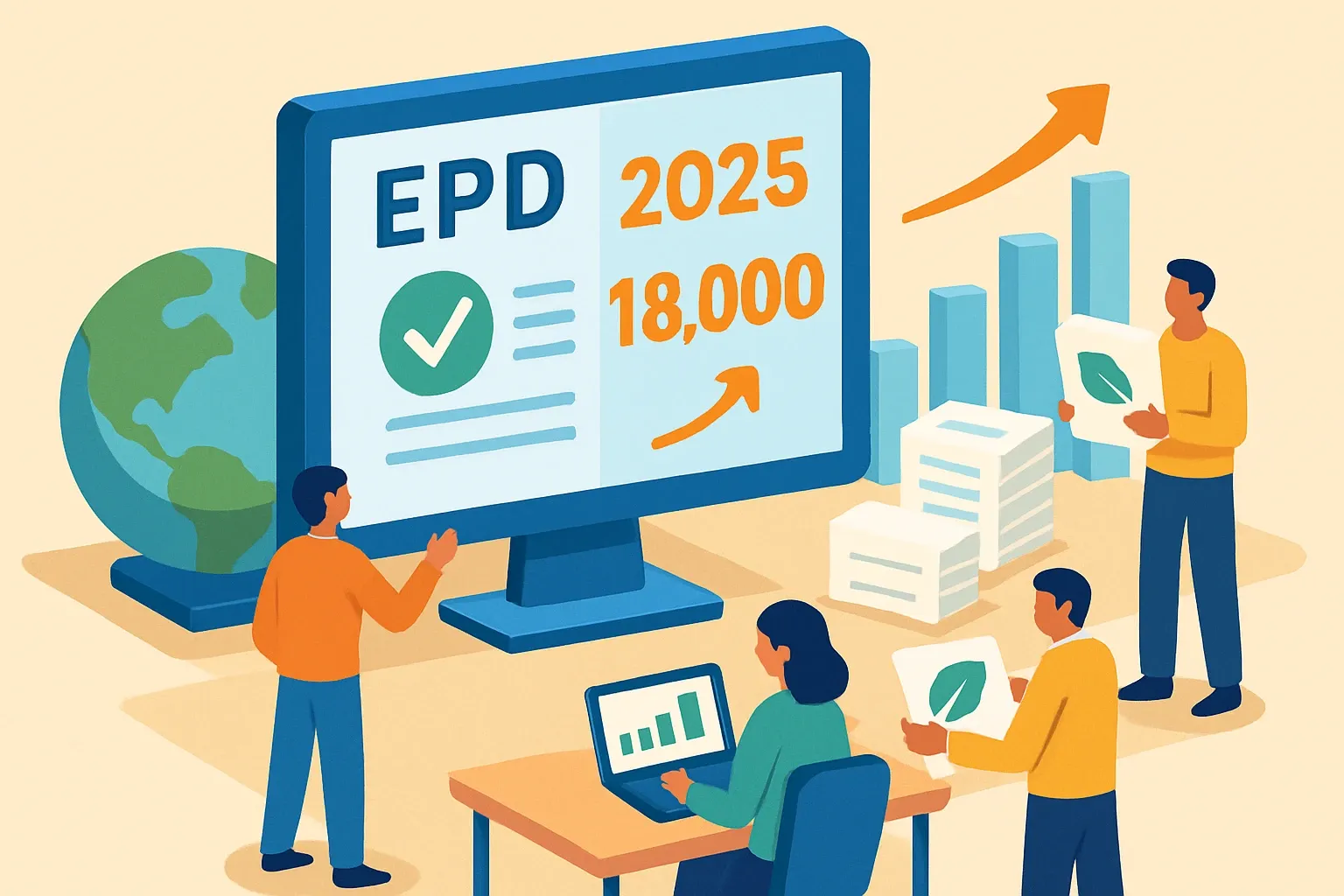
The International EPD System reports more than 18,000 valid EPDs on record, with 9,395 new EPDs published in 2025 and 252 issued in digital format ([EPD International, 2025](https://www.environdec.com/news/epd-development-2025)). That growth reflects rising global demand for verified life cycle data buyers can actually use.
Construction still leads the pack
Construction products remain the dominant category in the system, historically accounting for about 80 percent of listings, with other sectors expanding from a smaller base ([EPD International, 2024](https://environdec.com/news/milestone-over-10000-epds)). In 2025, activity broadened across machinery, chemicals, textiles, and transport equipment, which signals that EPDs are no longer a buildings-only conversation.
Why this matters for revenue
On projects that score carbon, not having a product-specific EPD often triggers conservative default factors that make bids less competitive. With a current EPD, your product is easier to model, easier to compare, and less likely to be swapped late in design. The commercial effect shows up as shorter bid cycles and more shots on goal when owners require transparent data.
Is your EPD strategy keeping up with demand?
Follow us on LinkedIn for insights that help you capitalize on the growing importance of environmental data in winning projects.
Digital EPDs are moving from pilot to practice
Digital EPDs are live in the library and started to see real volume in 2025. The count may be small today compared to PDFs, yet it removes friction in takeoffs and early-stage comparisons and sets up smoother updates. It is progess you can bank on as procurement tools get smarter ([EPD International, 2025](https://www.environdec.com/news/epd-development-2025)).
Operator choice still matters
Pick the program operator to match where your customers search. International EPD System, IBU, and others show up in different local workflows. Mutual recognition can extend reach, but technical alignment still begins with the right PCR and verification plan. A good partner will benchmark which PCR competitors use, check expiry timing, and map cross-listing options before you lift a finger.
What to prioritize inside your company
Start with clean, complete data for one reference year across utilities, materials, and waste. Lock a clear bill of materials and sites. Decide early whether you need cradle-to-gate or cradle-to-grave for target specs. Most importantly, choose an LCA team that takes on the heavy internal data collection across plants and ERP rather than pushing it back to engineering and operations.
Fast path to capitalize in Q1 2026
- Identify the two to five product families most tied to near-term bids and create a simple EPD roadmap by month.
- Align on the PCR, operator, and verifier in a single planning call, then hold that scope steady.
- Stand up a data room with utility bills, transport distances, and supplier EPDs so nothing stalls mid-model.
The bottom line for spec wins
The numbers confirm momentum. More EPDs are being published and found, especially for construction, and the infrastructure around them is maturing. Moving now secures visibility for upcoming tenders and removes the hidden penalty of no data. If you make it easier for buyers to account for your product, they buy your product.