Flooring EPDs in plain terms
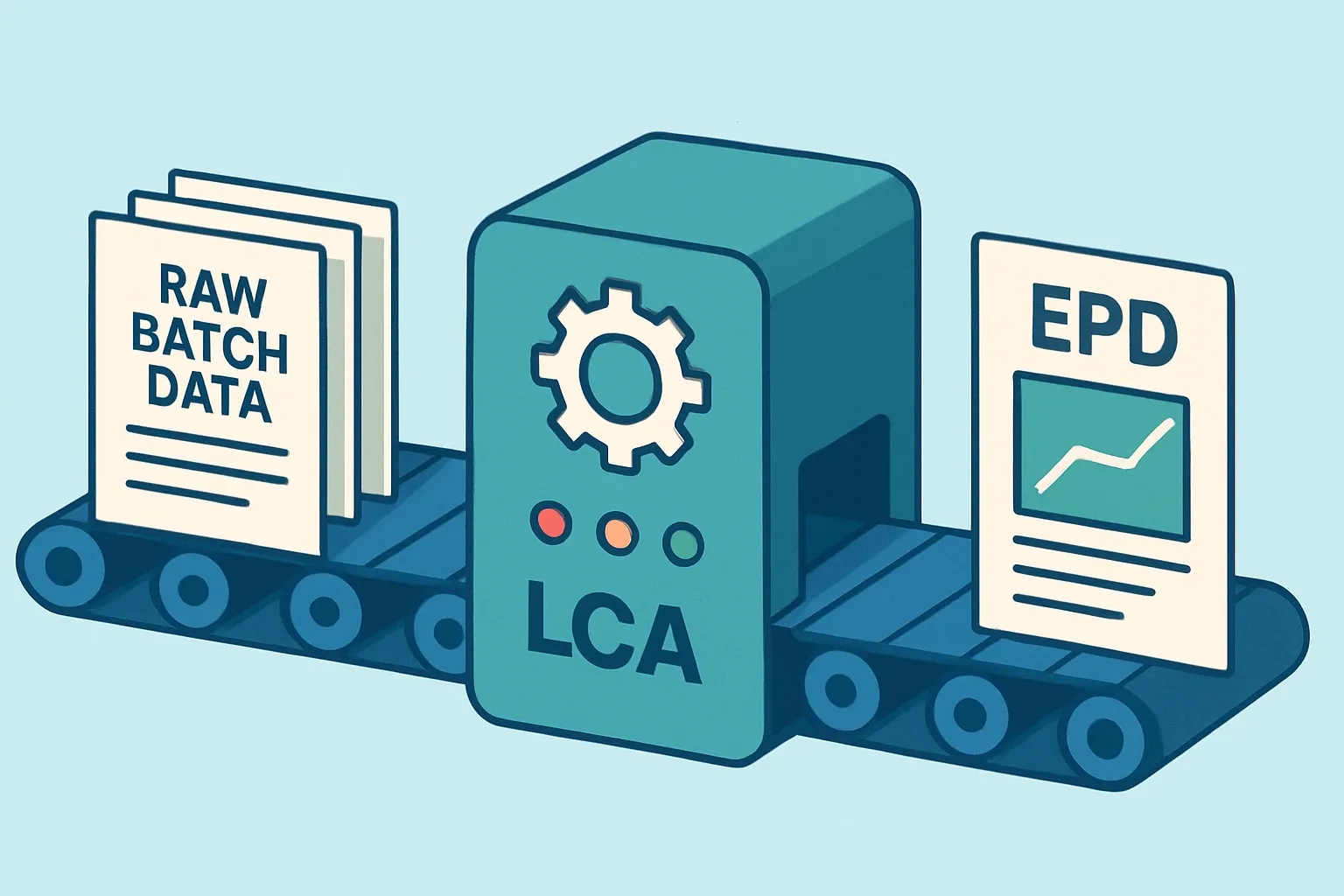
An Environmental Product Declaration is a third‑party verified report of a floor covering’s life‑cycle impacts. Think of it as a nutrition label for carbon and related indicators, built from an ISO compliant LCA and published through a recognized program operator.
What products are in scope
Most teams asking about an EPD for flooring work in one or more of these families:
- Resilient floors such as LVT, SPC, VCT, rubber, linoleum
- Textile floors such as carpet tile and broadloom
- Wood and laminate floors
- Ceramic and porcelain tile
- Resinous and cementitious floor coatings and systems
- Underlayments, mortars, grouts and adhesives that often need their own EPD
The rulebooks you will actually use
For construction products in Europe and many global markets, EN 15804+A2 is the core reference, while ISO 21930 is common in North America. Program operators then publish category‑specific rules. Two you will see a lot in flooring are PCR 2019:14 for Construction products and its companion c‑PCR for resilient, textile and laminate floors, which replaced older sub‑PCRs tied to EN 16810 and have since sunset. The c‑PCR 004 under 2019:14 reached its stated validity date in December 2024 and was updated during 2025, while the older Sub‑PCR F expired in 2022 (EPD International c‑PCR 004, 2025; EPD International Sub‑PCR F, 2022).
In North America, many resilient and tile EPDs are prepared under UL Part B PCRs, and resinous flooring systems frequently reference the NSF PCR for Resinous Floor Coatings, which is currently listed as valid through December 31, 2025 (NSF, 2025).
Want to unlock more flooring project opportunities?
Follow us on LinkedIn for insights on how EPDs can help you get spec'd more often and maximize your ROI.
Scope choices decide comparability
Cradle to gate covers A1 to A3. Cradle to grave adds use and end‑of‑life. Teams sometimes compare a cradle to gate vinyl flooring EPD against a cradle to grave ceramic tile EPD and wonder why the numbers do not line up. Align scope first, then compare. EN 15804+A2 also expanded the set of mandatory impact indicators compared to the A1 era, which is why some newer EPDs show more categories than older ones (CEN EN 15804:2019).
Validity windows and refresh cycles
Most program operators set EPD validity at five years. That clock starts at publication, with interim updates required if any indicator worsens by more than 10 percent, so product changes, energy contracts, or supplier shifts can trigger an update (EPD International FAQ, 2025). PCRs also carry validity dates, typically several years, and may be extended or revised. When a PCR updates, existing EPDs remain valid until their own expiry, then must renew to the latest PCR version (EPD International GPI 5.0.1, 2025).
Where specifiers actually look
Architects and GCs often search program operator libraries and a few large product databases. UL’s SPOT lists more than 180,000 sustainable products, including many flooring EPDs, which makes it a common first stop for project teams (UL Solutions, 2025). Operator repositories like the International EPD System and IBU are also heavily used in EU‑bound work.
LEED today, LEED v5 tomorrow
LEED v4.1 awards the EPD disclosure credit when a project documents at least 20 different permanently installed products from at least five manufacturers, or 10 products for certain project types such as Core and Shell and Warehouses. Product‑specific Type III EPDs count at a higher weight under the credit (USGBC, 2025). LEED v5 was ratified by USGBC members on March 28, 2025, and tightens embodied carbon expectations in materials credits. Teams should plan for more emphasis on verified product data and clearer carbon accounting in bid packages (USGBC LEED v5, 2025).
Data you will need, without the scramble
Pick a recent reference year, then gather plant utilities, on‑site fuels, production volumes by SKU, recycled content declarations, packaging, scrap and yield, outbound shipping to customers, and installation waste assumptions. For wood flooring, track biogenic carbon flows with care. For resilient floors and carpet, align plasticizer or backing chemistries across sites so your declared unit reflects real mix. Adhesives and self‑levelers often need their own EPD rather than being bundled, which avoids headaches in LEED submittals later.
Common pitfalls that stall flooring EPDs
PCR mismatch is number one. If competitors publish under 2019:14 with the updated c‑PCR, match that unless there is a clear procurement reason to pick a different route. Geographic electricity is number two. Using a generic grid where a plant has a distinct regional mix can swing results more than teams expect. Third, end‑of‑life scenarios. Tile with high recycling rates or carpet with take‑back changes the story, so document realistic routes rather than best‑case hopes. Finally, avoid scope creep where underlayments or adhesives are half‑counted. Either include them precisely, or split them into separate, product‑specific EPDs.
How to resource the work
Two things move the needle most. First, a partner who makes internal data pulls painless, so production and quality staff are not stuck in spreadsheets for weeks. Second, operator agnostic publishing so your EPD lands where your specifiers look, whether that is Smart EPD, a European operator, or a North American registry. A clean, fast process keeps R&D focused on improving the product instead of chasing utility bills. It is definately worth it.
The commercial lift
Flooring is often specified across large square footage, which means a single EPD can unlock multiple bids in a year. Teams who line up the right PCR, declare a clear scope, and publish under a visible operator make it easier for project teams to say yes. When credits require 20 products or recognize higher weight for product‑specific Type III EPDs, being in the catalog early is a quiet advantage that compounds over time ([USGBC, 2025]).
Put it all together
If the question on your desk reads vinyl flooring EPD, carpet EPD, or tile EPD, start by matching the PCR competitors use, decide on cradle to gate or cradle to grave based on market expectations, and line up data for one recent year. Publish where your buyers search, build a realistic plan for updates, and keep the factory floor focused on throughput while the documentation gets handled with white‑glove care.