What counts as “textiles” here
This overview covers fabrics and nonwovens for apparel and workwear, yarn and thread, carpet yarn, denim, and selected technical textiles used in construction. Think woven and knitted fabrics, protective clothing, acoustic panels with textile faces, and geotextile‑adjacent items.
The five‑year picture at a glance
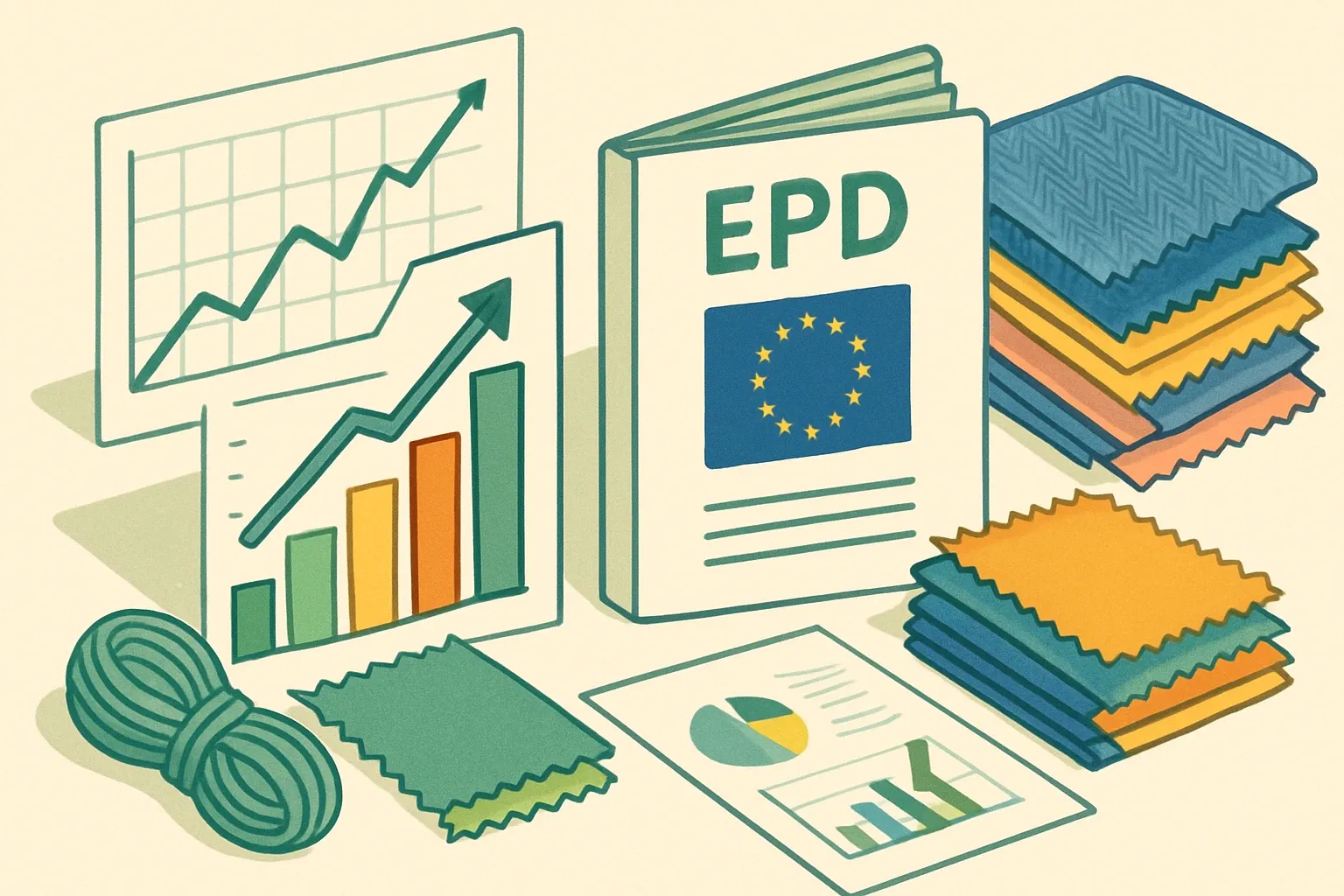
Across Europe, 50 textiles EPDs are currently valid, published by 17 manufacturers and 4 program operators. Activity surged in 2021 and 2023, then quieted in 2024.
EPDs issued per year
| Year | EPDs |
|---|---|
| 2021 | 23 |
| 2022 | 5 |
| 2023 | 21 |
| 2024 | 1 |
| 2025 | 0 |
Why it matters: buyers and specifiers care that an EPD exists and is current. Older within the validity window is usually fine, except when close to expiry.
Program operators manufacturers actually use
One operator dominates. EPD International AB accounts for 45 of 50 current textiles EPDs in Europe, used by 14 different manufacturers, which signals broad acceptance across competitors. IBU hosts 3 EPDs from one manufacturer. EPD Hub and EPD Australasia each host a single EPD from one manufacturer. For teams choosing where to publish, this spread points to Environdec as the path of least friction in Europe, with IBU as a credible alternative for some sub‑segments.
Translation to execution: if a customer base already sees Environdec EPDs in tenders, match that. If the channel leans German and construction‑centric, IBU can fit.
Who is publishing the most
The category has a few heavy publishers and a long tail. Çalık Denim Tekstil leads with 13 current EPDs. Fristads and Korteks have 6 each. Engtex and Manteco follow with 5 each. Most others have one or two. The top five account for about 70 percent of current textiles EPDs, which means newcomers can still stand out by covering a full product family rather than one hero SKU.
Why this matters commercially: a broader EPD set keeps you in more specs simultaneously and reduces the risk of being swapped for lack of coverage.
At a textile manufacturer or competing in the industry?
Follow us on LinkedIn for product-by-product insights that reveal which EPDs are gaining traction and which are at risk of being VE'd out.
The PCRs that shape your choices
Choosing the right rulebook is half the battle. Here is what manufacturers actually used in Europe, plus the nearest expiry we see.
PCR usage snapshot
| PCR name | EPDs | Latest expiry | Notes |
|---|---|---|---|
| PCR 2022:04 Fabrics (1.0.1) | 10 | Dec 6, 2028 | Solid runway for fabric makers planning renewals in 2027 to 2028 |
| PCR 2018:08 Woven, knitted and crocheted fabrics of natural fibres (except silk) (1.02) | 13 | Dec 13, 2026 | Large cohort expiring through 2026, renewal planning needed |
| PCR 2013:12 Textile yarn and thread… (edition unspecified) | 4 | Oct 10, 2026 | Yarn producers clustered here, check successor versions early |
| PCR 2013:12 Textile yarn and thread… (3.0) | 4 | Mar 20, 2028 | Later edition with more runway |
| PCR 2019:06 Trousers, shorts and slacks (1.0.4) | 2 | May 25, 2028 | Apparel EPDs exist beyond workwear |
| PCR 2019:07 T‑shirts, tops, singlets and vests (1.0.2) | 3 | Feb 9, 2028 | Consider for branded basics and uniforms |
| PCR 2019:05 Sweaters and similar garments (1.0.4) | 1 | Feb 9, 2028 | Niche but viable |
| PCR 2019:14 Construction products (EN 15804+A2) (1.3.3) | 2 | Dec 14, 2028 | Useful for textile products integrated in construction systems |
| c‑PCR‑015 Synthetic carpet yarn (construction product) (2022‑03‑06) | 1 | Feb 7, 2028 | For carpet yarn makers targeting building specs |
| PCR 2012:19 Furniture, except seats and mattresses (2.01) | 2 | Jan 11, 2028 | For textile‑faced furniture components |
| PCR 2012:14 Woven, knitted or crocheted fabrics of synthetic fibres (2.13) | 1 | Jul 2, 2026 | Marked expired at PCR level, EPD remains valid until its end date |
| PCR 2012:01 Sub‑PCR‑C Acoustical systems solutions (2021‑11‑08) | 1 | Mar 29, 2027 | For acoustic panels with textile surfaces |
| PCR 2010:16 Plastics in primary forms (3.01) | 1 | Mar 20, 2028 | Sometimes used by upstream fiber producers |
| EPD Hub Core PCR v1.0 (Feb 1, 2022) | 1 | Feb 2, 2029 | A generic route, longest current runway |
| PCR AENOR Global EPD | 1 | Nov 27, 2027 | Spain‑anchored alternative |
| Unknown PCR | 3 | Nov 27, 2026 | Verify fit before you mirror competitors here |
How to use this table: if you are planning fabrics for interiors, PCR 2022:04 Fabrics gives you breathing room to late 2028. If you are on natural fibres under PCR 2018:08, budget time in 2026 for renewal and data updates. A good partner will map your main competitors and steer you to the best‑fit PCR, not just the easiest one.
Expiry runway through 2029
Renewal pressure is real in textiles. We see 24 EPDs expiring in 2026, 4 in 2027, 21 in 2028, and 1 in 2029. Most of the 2026 expiries sit in natural‑fibre fabrics and older yarn PCRs, which creates a competitive opening for mills that renew early and add SKUs. Align renewal timing with product launches so sales can tell one crisp story instead of two fragmented ones.
The latest EPD on the board
The most recent textiles EPD we see is DAFA Vlies tape, issued on Feb 2, 2024, published with EPD Hub under EPD Hub Core PCR v1.0, valid to Feb 2, 2029. It is a reminder that even adhesive textiles and tapes can qualify when the product scope and data are tight.
Who verified the math behind the scenes
About 92 percent of current textiles EPDs were released with help from an EPD consultant or service provider. If you prefer to focus your R&D and plant teams on production while someone else wrangles utility bills, mass balances and third‑party reviews, an experienced partner saves months. Parq is one example of a white‑glove EPD service provider that handles data collection and program operator coordination end to end (Parq).
Notable absences and category quirks
A few large European names do not show current, product‑specific textiles EPDs in the public registries as of January 19, 2026. Lenzing appears absent, which may reflect a preference for other disclosure formats rather than EPDs at the fiber level. RadiciGroup does publish EPDs, yet several are positioned under plastics in primary forms rather than a textiles PCR, which can reduce apples‑to‑apples comparability for yarn buyers. Freudenberg Performance Materials publishes for certain geotextile and drainage products under a construction scope, useful for civil and roofing clients but not always tagged as “textiles” in searches. This matters alot for denim mills and yarn spinners evaluating how to frame their first declarations.
Picking your path to market
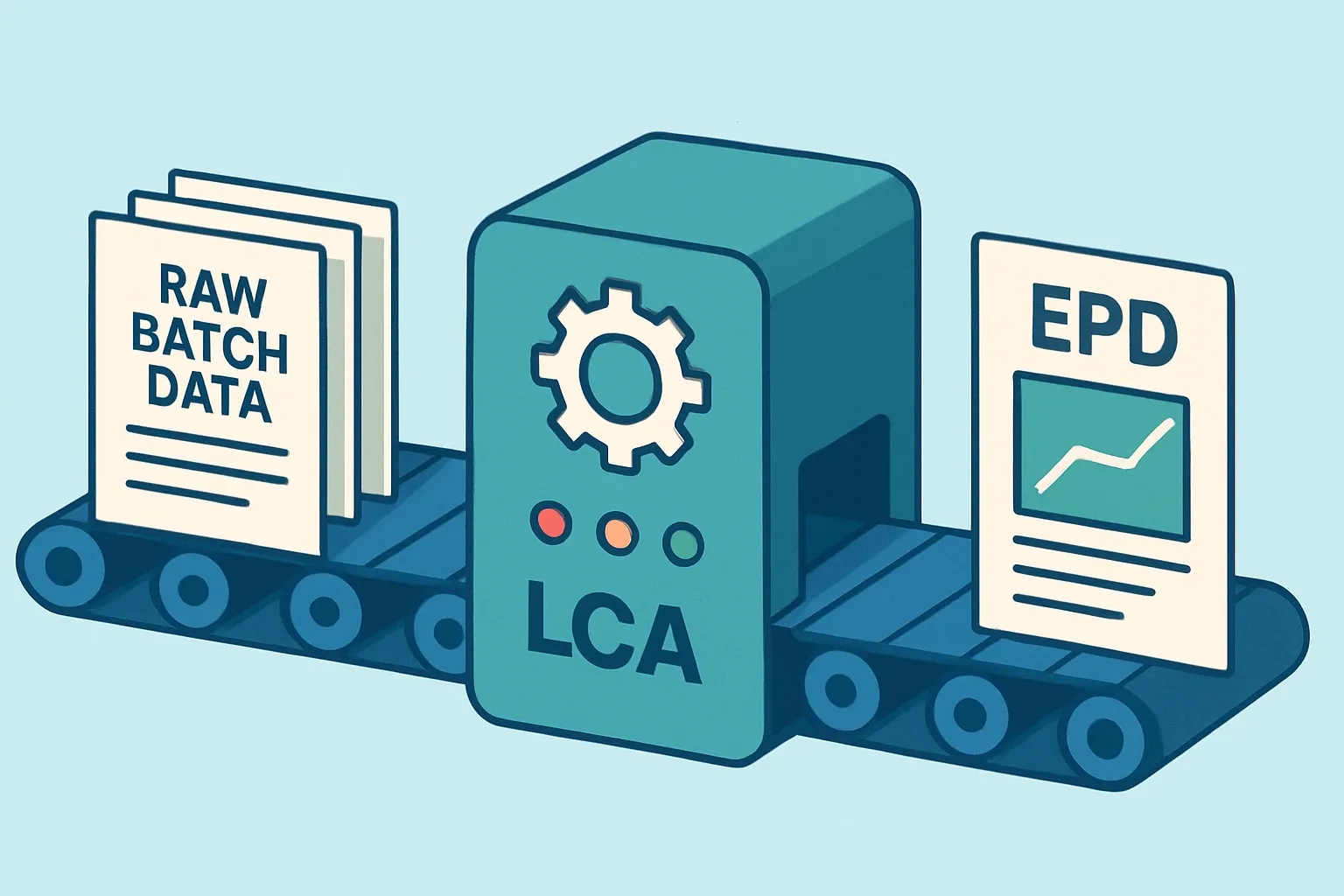
Start with the competitive map. Match your main buyer’s market and region with the operator they already see, often Environdec in Europe. Pick the PCR that mirrors your closest rival’s EPD unless a newer PCR gives a longer runway without changing comparability. Lock a reference year and build a clean data room before LCA work starts. Then publish in a batch so sales gains compound across SKUs instead of landing one by one.
One more thing
This analysis uses the global public registry many architects and specifiers consult. Due to normal loading delays, some EPDs issued in late 2025 may not yet appear. If you want the full, up‑to‑date background data or a quick, free sanity check on the best‑fit PCR for an upcoming textiles EPD, connect with me on LinkedIn and send a short note. Happy to hop on a call and help.