Why this category matters now
Outdoor lighting sits at the crossroads of construction and electronics. Project teams increasingly expect product‑specific EPDs, and the brands that have them get shortlisted faster because designers avoid using pessimistic default factors that can hurt project carbon budgets. An EPD removes that penalty and keeps pricing discussions about value, not just cost.
The landscape at a glance
Across Europe, we count 64 currently valid outdoor‑lighting EPDs in the last five years, issued by 19 manufacturers through 4 program operators and using 12 distinct PCRs. The latest addition landed on Jan 7, 2026. That velocity signals a market that is maturing rather than experimenting.
The latest EPD on the board
Hue Flux outdoor strip light 10m, issued Jan 7, 2026 by Signify N.V., published with EPD Hub using EPD Hub Core PCR version 1.1 (Dec 5, 2023). Expiry is Jul 7, 2027. A simple takeaway for competitors is timing. If your hero product is in the same subcategory, the clock for comparisons started ticking this month.
Who is publishing
Signify N.V. leads with 31 EPDs. A long competitive tail includes ABB S.p.A. and Bette GmbH & Co. KG at 4 each, CBI Europe at 6, plus focused entries from IGUZZINI ILLUMINAZIONE, CLAREO, Fagerhults Belysning AB, WE‑EF and others. That mix shows both portfolio‑scale and single‑product plays coexisting.
Program operators you will encounter
Program operator usage splits across a few hubs.
- EPD Hub accounts for 33 EPDs across only 3 manufacturers, which indicates concentration. One or two large portfolios dominate here.
- Association P.E.P carries 20 EPDs across 8 manufacturers, suggesting broader adoption among competitors.
- EPD International AB shows 8 EPDs across 8 manufacturers, a one‑brand‑per‑EPD pattern that often reflects targeted launches.
- INIES holds 3 EPDs tied to a single manufacturer. If you want signals on where specifiers will search first, follow where multiple competitors already publish. Diversity across brands at Association P.E.P and EPD International AB implies wider familiarity in design teams.
PCRs in play and what they imply
Think of a PCR as the rulebook of Monopoly. Pick the wrong one and you spend half the game arguing. Here is the active mix we see, with latest expiries noted for planning.
| PCR | EPDs | Latest expiry |
|---|---|---|
| PEP Ecopassport PSR Specific Rules for Luminaires | 24 | Nov 18, 2031 |
| Product Category Rules for Electrical, Electronic and HVAC‑R Products | 21 | Sep 1, 2029 |
| EPD Hub Core PCR version 1.1 (Dec 5, 2023) | 5 | Jan 7, 2031 |
| PCR for Electronic and Electrical Products and Systems Public Lighting Equipment | 4 | Nov 6, 2030 |
| PCR 2019:14 Construction products (EN 15804+A2) 1.3.3 | 3 | Mar 6, 2028 |
| IGUZZINI Part B: Luminaires, lamps and components for luminaires | 1 | Oct 28, 2030 |
| EN 50693:2019 EEE products and systems | 1 | Feb 21, 2030 |
| PCR 2019:14 Construction products (EN 15804:A2) 1.2.5 | 1 | May 2, 2028 |
| PCR 2019:14‑c‑PCR‑017 Technical‑chemical products | 1 | Jan 9, 2029 |
| PCR 2013:19 Railways (2.1.2) | 1 | Jan 5, 2027 |
| PCR 2019:14‑c‑PCR‑006 Wood and wood‑based products | 1 | Mar 23, 2027 |
| Unknown PCR | 1 | Aug 5, 2026 |
What to read from this. Luminaires‑specific rules under PEP Ecopassport are the most common and carry long horizons. The generic EEE and HVAC‑R frameworks remain useful fallbacks when product scope straddles building and electrical. If you are planning a 2026 launch, pick a PCR with an expiry that keeps you comfortably in market through 2030 or later so you avoid renewal churn.
Selling outdoor lighting against Signify or ABB?
Follow us for a product-by-product EPD analysis to identify which luminaires win specs and where competitive gaps exist.
Issuance trend
Momentum matters because it hints at buyer expectations. Here is the five‑year issuance curve, plus the first 2026 entry.
| Year | EPDs issued |
|---|---|
| 2021 | 1 |
| 2022 | 9 |
| 2023 | 7 |
| 2024 | 12 |
| 2025 | 28 |
| 2026 YTD | 1 |
The 2025 surge is real. If bids slowed last year without an EPD in your pack, this curve is likely one quiet reason why.
Expiry clusters to watch
Release timing is only half the game. Renewal timing can squeeze teams if multiple SKUs expire together. Here is the forward view for expiries.
- 2026: 1 EPD, tied to an Unknown PCR.
- 2027: 14 EPDs spanning EPD Hub Core PCR 1.1, EN 15804 variants, wood‑based c‑PCR, PEP Luminaires, and the Electrical and HVAC‑R rules.
- 2028: 7 EPDs, mostly under the Electrical and HVAC‑R rules plus EN 15804 flavors.
- 2029: 12 EPDs, heavily weighted to the Electrical and HVAC‑R rules.
- 2030: 24 EPDs, with long arcs under PEP Luminaires, Public Lighting Equipment, EN 50693 and a Part B for luminaires.
If your competitors cluster around 2030 expiries, there is an opportunity to launch in 2026 to secure several years of spec advantage before their renewals hit. EPDs are typically valid for up to five years, which is why these clusters matter for portfolio pacing (EPD International, 2024).
How many used an EPD service provider
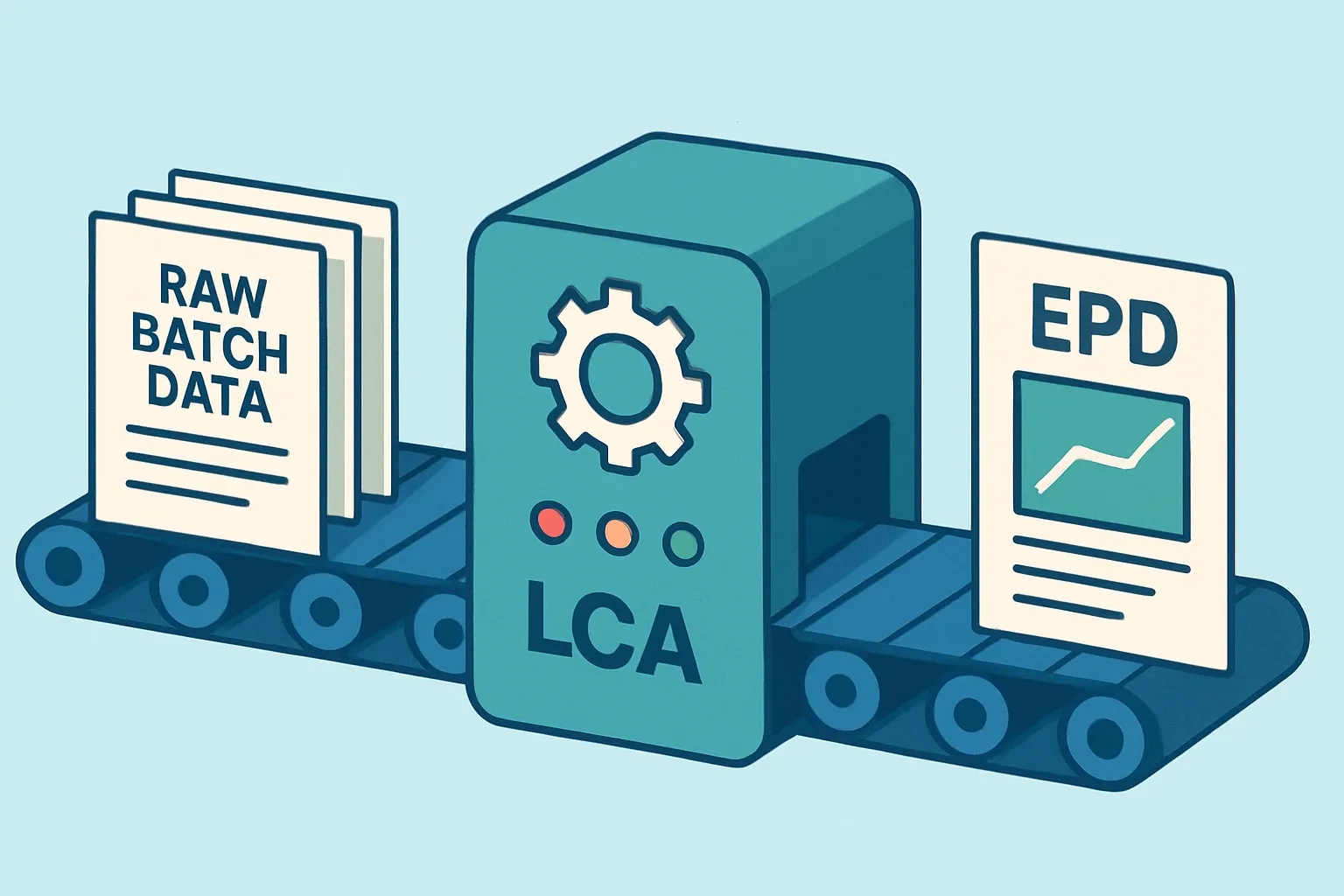
We see 38 of 64 EPDs prepared with the help of an external consultant or service provider, roughly 59 percent. That tells you two things. First, internal teams are not expected to shoulder months of data wrangling alone. Second, speed and completeness win. If you prefer white‑glove support, an EPD partner like Parq can absorb the heavy lift so engineering and product teams stay on roadmap. This is definately where many lose time.
Choosing a program operator and PCR in practice
Your choice should be driven by comparability and timing.
- Mirror the PCR most of your direct competitors use unless there is a strong reason not to. That preserves apples‑to‑apples comparisons in specs.
- Check the expiry horizon. A ruleset with 2030 or 2031 latest expiries reduces the risk of near‑term rework.
- Pick the operator your target markets already consult. Diversity across manufacturers is a healthy proxy for acceptance.
- Secure third‑party verification that aligns with EN 15804+A2 to match current European norms. The goal is to be instantly acceptable rather than theoretically compliant (CEN, 2019).
Notably absent brands in the public registry we analyzed
As of Jan 19, 2026, no current, product‑specific outdoor lighting EPDs surfaced in the common public registry we reviewed for several well‑known European players, including Schréder, Zumtobel and Thorn Lighting, TRILUX, SITECO and AEC Illuminazione. It is possible they publish under national portals not yet synced, use different product categorizations, or have EPDs in preparation. If you compete with these brands, there may be a near‑term opening to set the benchmark while they finalize theirs.
What this means for product and sales teams
If your outdoor range lacks an EPD, you are likely competing against pessimistic defaults. That makes every quote feel uphill. If you have a single EPD, check your PCR choice and issuance timing against the tables above. A portfolio approach that covers your volume drivers, aligns to the common PCRs, and rides the longer expiry horizons is usually the sweet spot. Sales will feel the difference within one or two mid‑sized tenders.
A quick note on data and getting deeper cuts
This analysis uses the global public registry of EPDs that most architects and specifiers consult. Because of loading delays, some EPDs issued in the second half of 2025 may not yet appear. If you want the full, up‑to‑date background dataset behind this article, connect with me on LinkedIn and send a note. I am happy to share the files and hop on a quick call to help you pick the best‑fit PCR for your upcoming EPDs based on the current competitive landscape.