What this category actually covers
“Miscellaneous metal fabrications” is a catch‑all many specifiers use for anchor channels, mounting channels, T‑bolts, forged connectors, gratings, handrails, and similar fabricated steel parts. Teams also search for “fabricated steel components,” “steel fabrications,” and “metalwork.” The category can span precast connection hardware to custom formed profiles, so aligning your product to the prevalent PCR in play is the first real decision.
The European snapshot at a glance
Across Europe we see 23 currently valid EPDs in the last five years from 10 manufacturers, handled by 4 program operators and based on 10 distinct PCRs. The latest issue we observed landed on Dec 18, 2025 for Hilti’s HAC‑C Anchor Channels, Mounting Channels and T‑Bolts under EPD Hub using the EPD International PCR 2019:14 v1.3.4, expiring Dec 18, 2030.
EPDs issued per year
| Year | Count |
|---|---|
| 2021 | 13 |
| 2022 | 1 |
| 2023 | 1 |
| 2024 | 2 |
| 2025 | 6 |
The spike in 2021 and renewed activity in 2025 bookend a quieter middle period. For 2026 planning this means a competitive window is open, and it rewards those who publish early in the year rather than bunching up later.
Program operators used, and how concentrated they are
- EPD International AB accounted for 13 EPDs across 4 manufacturers. This is a large share and, in this dataset, looks concentrated in one portfolio with multiple SKUs, which often signals a single manufacturer building out a family.
- EPD Hub handled 8 EPDs from 5 manufacturers. That spread suggests broader uptake across competing firms, not just a single product tree.
- BRE Global appears once, and EPD Australasia appears once, both single‑manufacturer footprints.
Operator choice affects speed, templates, verifier availability, and how easily your buyers find you in their preferred registries. If your competitors cluster with a given operator in this category, matching them can simplify like‑for‑like comparisons in bids.
Who is publishing EPDs today
ÖZKAN Çelik Steel leads with 10 EPDs. Hilti follows with 3, then Siderforgerossi Group and Peikko Finland with 2 each. Knauf, Lionweld Kennedy, Mostostal Siedlce, Piristeel, Tecnostrutture, and UAB Vytrolma each show one current EPD. The mix cuts across forged components, connection hardware, and fabricated profiles. If your product competes with these lines, an EPD now is table stakes rather than a novelty.
At ÖZKAN Çelik Steel or competing?
Follow us for product-by-product EPD insights that show which fabricated steel components get spec'd and where your competitors stand.
PCRs in play and what they signal
The rulebook matters. Here is what teams actually used in Europe for this category and the latest expiries we see.
| PCR name | EPDs | Latest expiry |
|---|---|---|
| PCR 2014:10 Fabricated steel products, except construction products, machinery and equipment (being replaced) (2.12) | 9 | Sep 15, 2026 |
| PCR 2014:10 Fabricated steel products, except construction products, machinery and equipment | 2 | Sep 27, 2026 |
| EPD International PCR for Construction Products 2019:14 (EN 15804:A2:2019/AC:2021) v1.3.4 | 3 | Dec 18, 2030 |
| EPD Hub Core PCR v1.1, Dec 5, 2023 | 2 | Aug 1, 2030 |
| PCR 2019:14 Construction products (EN 15804:A2) | 2 | Sep 15, 2026 |
| PCR 2019:14 Construction products (EN 15804+A2) (1.3.3) | 1 | Aug 8, 2029 |
| EPD Hub Core PCR v1.0, Feb 1, 2022 | 1 | Mar 15, 2027 |
| EN 15804:2012+A2:2019 core rules | 1 | Jan 9, 2030 |
| CEN standard EN 15804 (general Part A) | 1 | Nov 8, 2028 |
| Corrosion protection of fabricated steel products | 1 | Jan 23, 2030 |
Two shifts stand out. First, many 2021 declarations leaned on PCR 2014:10 variants that sunset in 2026. Second, newer work is landing on EN 15804 A2 aligned PCRs with expiries stretching into 2029 and 2030. That reduces near‑term renewal risk and keeps indicators aligned with buyer expectations in Europe.
Note on validity. Product EPDs are typically valid for five years, so PCR updates do not invalidate an EPD mid‑cycle, they steer the next renewal instead (EPD International GPI, 2024). Many PCRs themselves carry three to five year validity windows, which is why you see clustered expiries on the calendar (EPD International PCR Library, 2024).
Renewal calendar for 2026 to 2030
Here is how expiries line up for the next five years. This is the queue you will be competing in for verifier time.
- 2026 shows 13 expiries. These are dominated by PCR 2014:10 families with tight dates around Sep 15 and Sep 27, plus two under PCR 2019:14 (EN 15804 A2) that end on May 7 and Sep 15.
- 2027 shows 1 expiry on Mar 15 under EPD Hub Core PCR v1.0.
- 2028 shows 1 expiry on Nov 8 under a general EN 15804 listing.
- 2029 shows 2 expiries on Aug 8 and Dec 5 under EN 15804 A2 aligned PCRs.
- 2030 shows 6 expiries spanning Jan 9 and Jan 23 through Aug 1 and Dec 18.
Practical takeaway. If your declaration traces back to PCR 2014:10, start renewal prep six to nine months ahead of your expiry. That timing avoids the autumn rush and lets you migrate to an A2 aligned PCR without drama. Most teams underestimate the data refresh work the first time. Dont.
How much work is done by EPD consultants
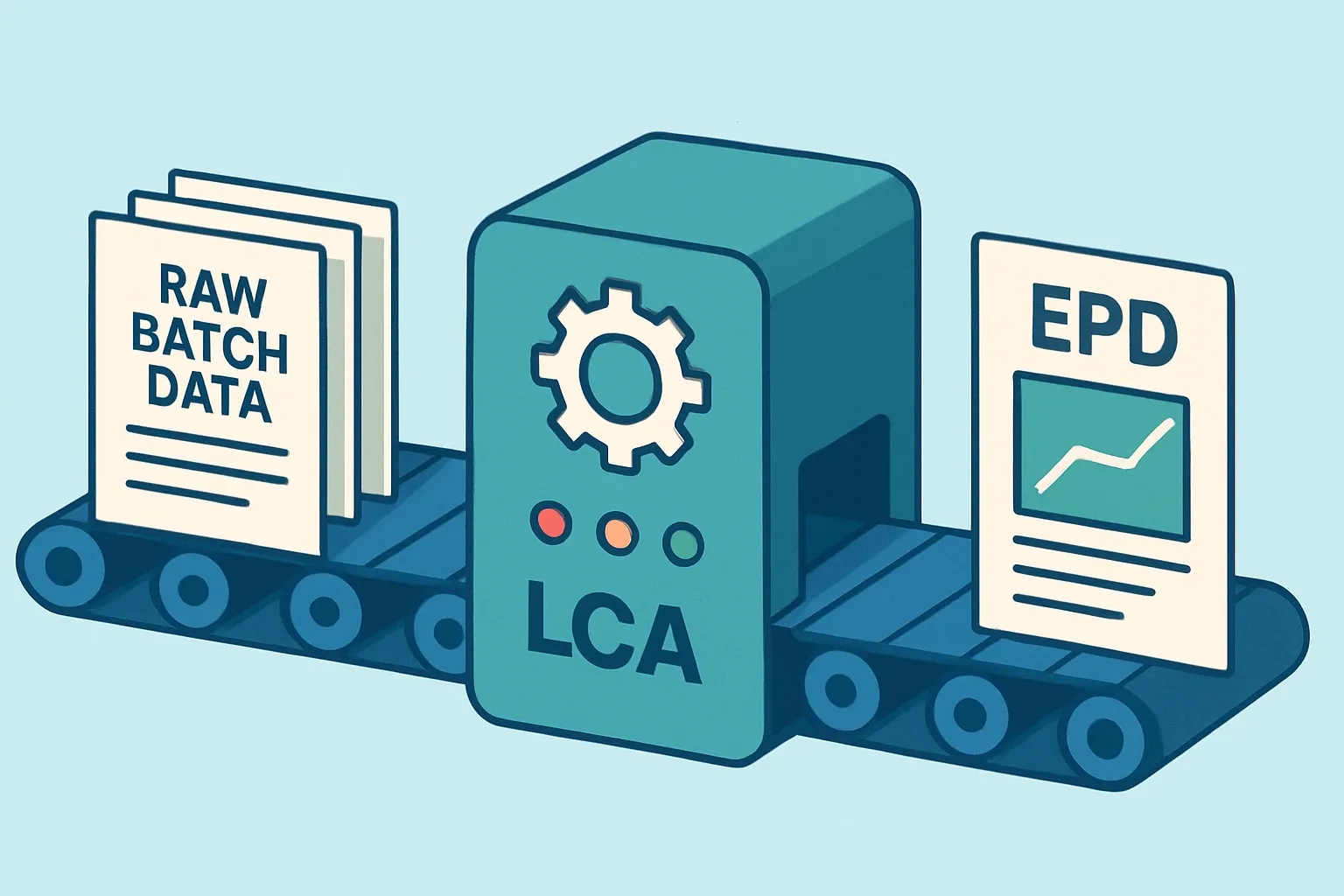
13 of the 23 EPDs in this category were produced with a third‑party EPD service provider or consultant. This is common for fabricated steel, where multi‑site utilities, scrap loops, and coating routes make data wrangling the hard part. If you want a white‑glove approach to data collection and a fast route to publication, an EPD partner like Parq can free operations and engineering from spreadsheets so they focus on the process improvements your LCA will spotlight.
Notably absent or underrepresented names in this dataset
As of Jan 20, 2026 we could not locate current, product‑specific EPDs in this category for several sizeable European players that many buyers search for.
- Leviat and the HALFEN brand show one current EPD for a load‑bearing thermal insulation element under IBU that sits in insulation rather than fabricated metal, and historical HALFEN EPDs appear expired. Anchor channel and connection lines from these brands are not visible here.
- Lindapter, Sikla, MEFA, and Meiser do not show current product‑specific EPDs for fabricated metal items in this snapshot. Some may have declarations in adjacent categories or regions, or under different legal entities.
- Fischer has current EPDs for injection mortars at IBU, which are adhesives for fixings rather than fabricated steel parts, and Georg Fischer shows EPDs for valves and manifolds that live outside this category.
If your brand is on this list there are good reasons that might be the case, such as grouping under a broader PCR or publishing in a national database. It also means a targeted EPD could help you stand out in 2026 searches where specifiers compare like‑for‑like metal fabrications.
Picking the right PCR for a 2026 launch
Think of the PCR as the rulebook of Monopoly. Ignore it and the game falls apart. For fabricated steel and connection hardware in Europe, shortlisting an EN 15804 A2 aligned PCR avoids rework and positions your results with the indicators procurement teams now expect. Benchmark competitors, weigh operator familiarity among your buyers, check PCR expiry, then lock the choice so data collection can start.
A quick checklist. Confirm the system boundaries and modules match how your product is sold. Make sure coating, galvanizing, or stainless routes are treated consistently. Verify cut‑off rules for scrap, and that end‑of‑life models reflect your markets. Small mismatches here create big comparability headaches later.
What to do next
- If you have a 2014:10 lineage EPD, lock your renewal plan now. Aim to finish in early summer, not September.
- If you are new to EPDs in fabricated metal, ride the 2026 window while competitors renew. Landing on an A2 aligned PCR with a 2030 expiry buys you time and credibility.
- If you publish many SKUs, consider a family strategy that shares one LCA model with variant‑level declarations. That is how leaders scale without sacrificing quality.
This article is based on the global public registry most architects and specifiers use. Due to normal loading delays, some EPDs issued in the last half of 2025 may not be reflected yet. If you want the full, up‑to‑date background data, connect with me on LinkedIn and send a note. Happy to share files, answer questions, or jump on a quick call to help you pick the best fit PCR for an upcoming EPD. Product EPDs are typically valid for five years in line with program rules, which is useful when scoping renewals (IBU Part A, 2024).