The snapshot manufacturers ask for in one place
Cold‑formed steel framing has 27 currently valid EPDs in the United States over the last five years. These come from 10 manufacturers, published with 5 different program operators, across 3 distinct PCRs. The latest EPD landed on May 12, 2025 for steel framing studs, track, and accessories in Spokane, verified by SCS Global Services and based on the Part B: Designated Steel Construction Products PCR, with an expiry of May 11, 2030.
Keywords buyers also search for include cold‑formed metal framing, CFS, light‑gauge steel framing, steel studs, and stud and track.
Who is actually publishing
Manufacturers with current declarations include CEMCO, MBA Building Supplies, Marino\WARE, the Steel Framing Industry Association, ClarkDietrich, SCAFCO Steel Stud Company, BlueScope Buildings, CRACO, KHS&S West, and MRI Steel Framing. Output is concentrated. CEMCO leads with 7 EPDs, followed by MBA Building Supplies with 5 and Marino\WARE with 4. Together with SFIA’s 3, these four account for 19 of the 27 current EPDs.
That concentration matters. Specifiers often prefer a familiar format and rule set, so clusters of similar EPDs can become the de‑facto baseline that others are compared against.
Where these EPDs get published
SCS Global Services handles the majority, with 20 EPDs spanning 7 manufacturers. UL follows with 4 EPDs across 2 manufacturers. EPD International AB, Dake Collaborative, and Labeling Sustainability Inc. each appear with single EPD counts. The SCS share is not just a single portfolio, it is spread across many brands, which signals broad acceptance among cold‑formed framing teams.
If you are choosing an operator, comparability and speed to publish often outweigh brand familiarity. Ask where peer products have published and how quickly reviews move for your product type.
The PCRs that rule the category
One rulebook dominates. Part B: Designated Steel Construction Products underpins 25 of the 27 EPDs. A single EPD relies on ISO 21930:2017 and one on the Product Category Rule for “Steel products for construction”. Aligning to the dominant PCR usually simplifies comparisons on submittals and reduces reviewer back‑and‑forth.
Watch the horizon. Newly issued EPDs on the Part B PCR show expiries that run as late as May 2030, which keeps that pathway comfortably open for near‑term projects. If your team prefers a different PCR, check that it is recognized by specifiers in your target segments before you commit.
The latest entrant and what it signals
The most recent declaration arrived on May 12, 2025. SCAFCO Steel Stud Company published an EPD for steel framing studs, track, and accessories for Spokane, verified by SCS Global Services under the Part B PCR, expiring May 11, 2030. The combination matches the category’s center of gravity, which is a useful clue for anyone planning their first EPD in this space.
Want to unlock opportunities in cold-formed steel framing?
Follow us on LinkedIn for insights that help you navigate EPDs, win projects, and maximize ROI.
Issuance momentum, year by year
| Year | EPDs issued |
|---|---|
| 2021 | 8 |
| 2022 | 5 |
| 2023 | 9 |
| 2024 | 2 |
| 2025 | 3 |
Activity peaked in 2023, then cooled through 2024. The 2025 uptick suggests teams resumed releases, often to keep portfolios current where key SKUs lacked coverage.
Renewal runway you can plan against
Expiries cluster in predictable waves. In 2026, 8 EPDs will expire, with the earliest on Apr 1 and the latest on Dec 5. In 2027, 5 more end on Jan 6. In 2028, 9 expire between Apr 24 and May 8, including one on ISO 21930:2017. In 2029, 2 expire on Mar 15 and Jun 5. In 2030, 3 reach the end of term between Mar 27 and May 11. Plan renewal work 6 to 9 months ahead to avoid gaps in active coverage.
If your bids lean on a few hero SKUs, put those on the earliest renewal track. Losing an active EPD the month a submittal is due is a bad kind of drama.
How often teams use an EPD consultant
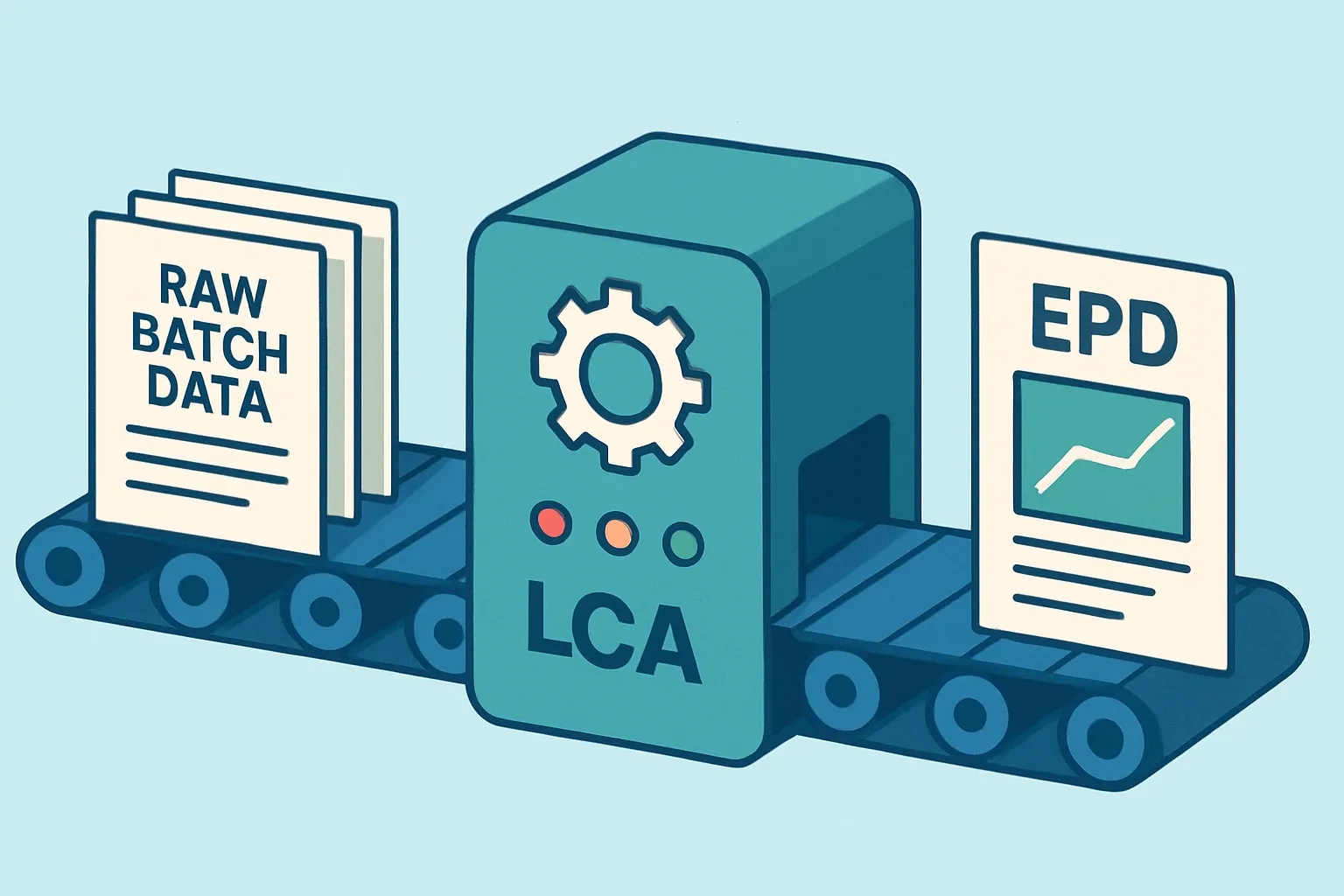
Most manufacturers partner with an external EPD service provider. 24 of the 27 EPDs involved a developer organization, roughly 89 percent of the market. That tells us the heavy lifting sits in data wrangling and reviews, not just in writing a nice PDF. An EPD consultant like Parq can streamline data collection across plants, align to the most common PCR, and publish with the operator you prefer, while internal teams stay focused on production and sales.
Speed and completeness matter. White‑glove project management and ruthlessly efficient data collection are what cut cycle time, not a templated report. It is the difference between cruise control and a tuned pit crew.
Picking the right operator and PCR for studs and track
Start with comparability. If most steel studs in your region use the Part B PCR at SCS or UL, that path is the quickest route to clean apples‑to‑apples comparisons. If you need a different operator for corporate standardization or a European tender, that is fine, just confirm reviewers accept the PCR and format in your target specs.
When the PCR update cycle hits, you do not need to panic. Your current EPD stays valid through its published date. The next renewal will align to the updated rule set, so factor that into sampling, background datasets, and allocation choices.
What this means for commercial teams
Treat EPDs like product‑line insurance. Having an active declaration on your top sellers keeps you in play for projects that enforce carbon accounting. Teams without coverage often face conservative default factors that make pricing look worse on paper, even when the product performs well in the field. One mid‑sized project can pay back the effort many times over.
If your 2026 expiries land in Q2, use Q1 to lock scope, collect data, and start third‑party review. If you are adding new SKUs, bundle them with renewals where possible so reviewers can handle similar models in one pass.
Data notes and how to get the full dataset
This guide reflects the global public registry of EPDs that most architects and specifiers consult. Due to standard loading delays, some EPDs issued in the second half of 2025 may not yet appear. If you want the full, up‑to‑date background dataset for cold‑formed framing, connect with me on LinkedIn and send a quick note. I am happy to share the extract, answer questions, or hop on a short call to help pick the best‑fit PCR for an upcoming EPD. I can definately point you to smart shortcuts.
One last nudge to move first
The field is concentrated, the rules are clear, and the expiry waves are visible. If you publish where your competitors already compare and line up renewals before the crunch, your submittals land cleanly and your pricing story holds. That is how cold‑formed framing teams turn EPDs from paperwork into a durable sales asset.