What “blown‑in” covers and why EPDs matter
Blown‑in insulation shows up as cellulose, mineral wool “blowing wool,” glass wool loose‑fill, and wood‑fiber granulate. An EPD keeps you in more specs because many project teams apply a carbon penalty when a product lacks a product‑specific declaration, which quietly narrows your sales funnel.
Market snapshot for Europe, 2021–2025
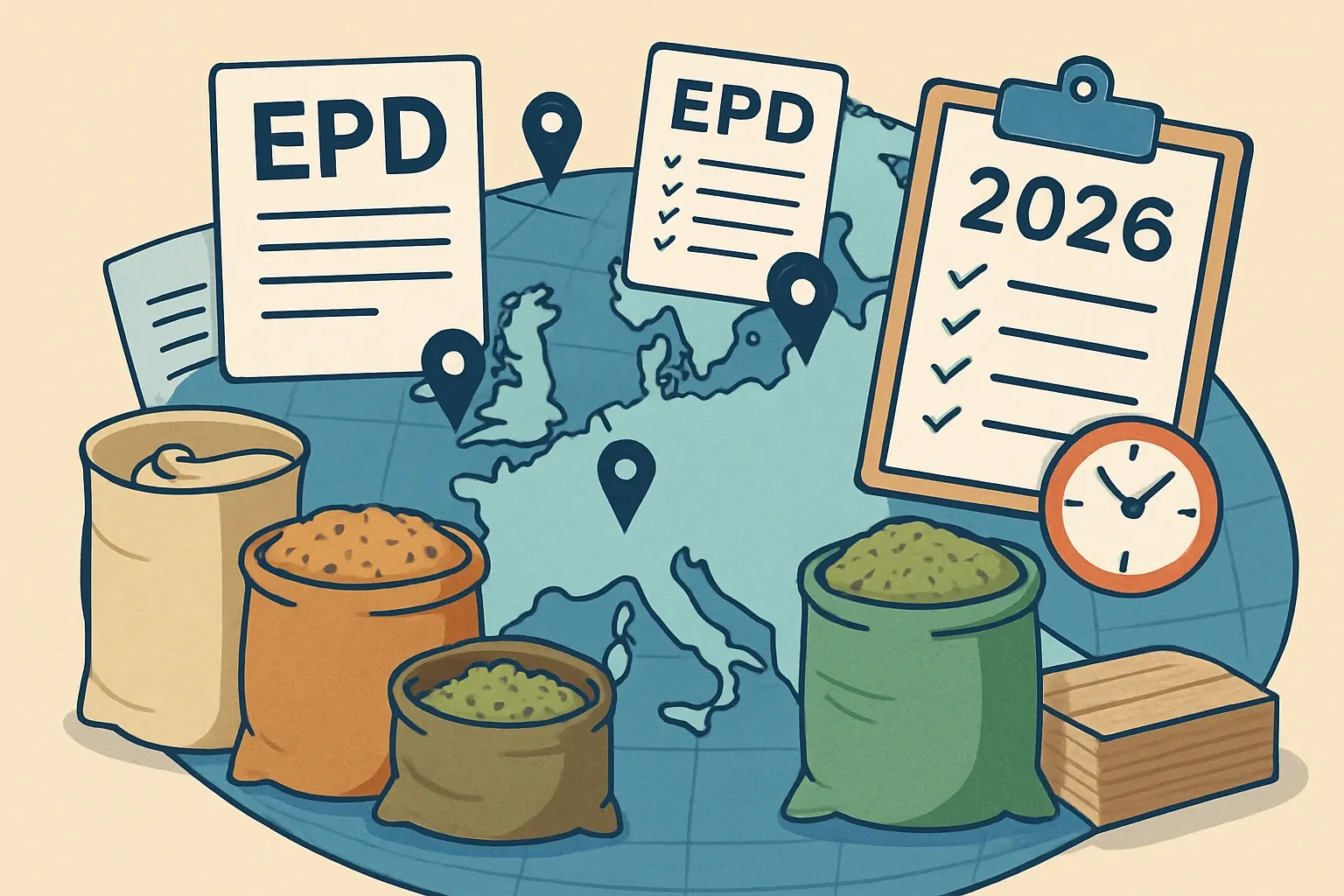
Across the last five years we see 11 current EPDs for blown‑in insulation in Europe, issued by 9 manufacturers and handled by 6 program operators, relying on 9 distinct PCRs. The latest new EPD hit on Jul 8, 2025 for SOPREMA SAS under INIES with a national addition to NF EN 15804+A2 that runs to Dec 31, 2030.
Who is publishing EPDs right now
Ekovilla Oy leads with 3 current EPDs. The rest of the field is intentionally fragmented, which is good news for challengers. One EPD each appears for Knauf Insulation, ISOCELL, SOPREMA, Saint‑Gobain Italia, Baufritz, Bau EPD GmbH, Holcim, and ASSOCIATION DES CHANVRIERS EN CIRCUITS COURTS.
This spread tells us there is no single dominant template to copy. Teams should benchmark nearest‑neighbor products, not just category giants, when scoping PCR fit and declared unit.
Program operators used in Europe
Here is where blown‑in issuers placed their EPDs in the last five years. Percentages are approximate, based on 11 total.
- EPD International AB, 4 EPDs across 3 manufacturers, about one third of the set
- INIES, 2 EPDs across 2 manufacturers, used for France‑specific needs
- Bau EPD GmbH, 2 EPDs across 2 manufacturers
- EPD Italy, 1 EPD
- IBU, 1 EPD
- EPD Hub, 1 EPD
Several operators show diversity rather than a single manufacturer saturating their listings, which signals broad acceptance rather than a one‑off.
The PCR landscape for blown‑in products
Manufacturers used nine different PCRs. Most activity sits on EN 15804‑aligned rules, with a few Part B documents laser‑focused on blow‑in formats. The long‑dated French and German Part B texts create breathing room for teams planning multiple SKUs.
At a blown-in insulation manufacturer or competing?
Follow us for a product-by-product EPD analysis to see which SKUs get spec'd or VE'd out and how to position against competitors.
PCRs used and their latest expiries
| PCR | EPDs | Latest expiry |
|---|---|---|
| Construction products, 2019:14 | 1 | Jul 4, 2028 |
| EN 15804:2012+A1:2014 core rules | 1 | Aug 20, 2026 |
| EPD Hub Core PCR v1.1 (Dec 5, 2023) | 1 | May 29, 2026 |
| PCR 2012:01 Construction products and services (EN 15804 A1) | 1 | Aug 19, 2026 |
| PCR 2019:14 Construction products (EN 15804+A2) 1.3.3 | 1 | Jul 4, 2028 |
| PCR 2019:14‑c‑PCR‑005 Thermal Insulation (EN 16783) | 1 | Oct 23, 2028 |
| Part B: Blow‑in insulation made from cellulose and wood fibres | 1 | May 2, 2030 |
| National addition to NF EN 15804+A2 | 1 | Dec 31, 2030 |
| Teil B: Dämmstoffe aus Schaumkunststoffen | 1 | Jun 8, 2030 |
| Unknown PCR | 2 | May 12, 2030 |
What this means in practice. If your competitors lean on a national addition or a Part B tailored to blow‑in, matching that reference shortens verifier questions and avoids side‑by‑side comparability debates.
EPDs issued per year
| Year | EPDs |
|---|---|
| 2021 | 2 |
| 2022 | 1 |
| 2023 | 3 |
| 2024 | 1 |
| 2025 | 4 |
Momentum improved in 2025. That aligns with the shift to A2‑based rules across Europe, which lowered ambiguity for reviewers and sped up schedules.
Upcoming expiries to plan for
Renewal pressure arrives in two waves. First in 2026 with 3 expiries tied to older A1 or early operator core PCRs. Then a bigger window in 2030 with 4 expiries driven by long‑running Part B and national‑addition texts. Map your refresh to sales seasons so specs do not stall.
A note on validity. Most construction EPDs are verified for five years before renewal is required, subject to PCR updates and material changes (EPD International GPI, 2024).
How often do teams use an EPD consultant
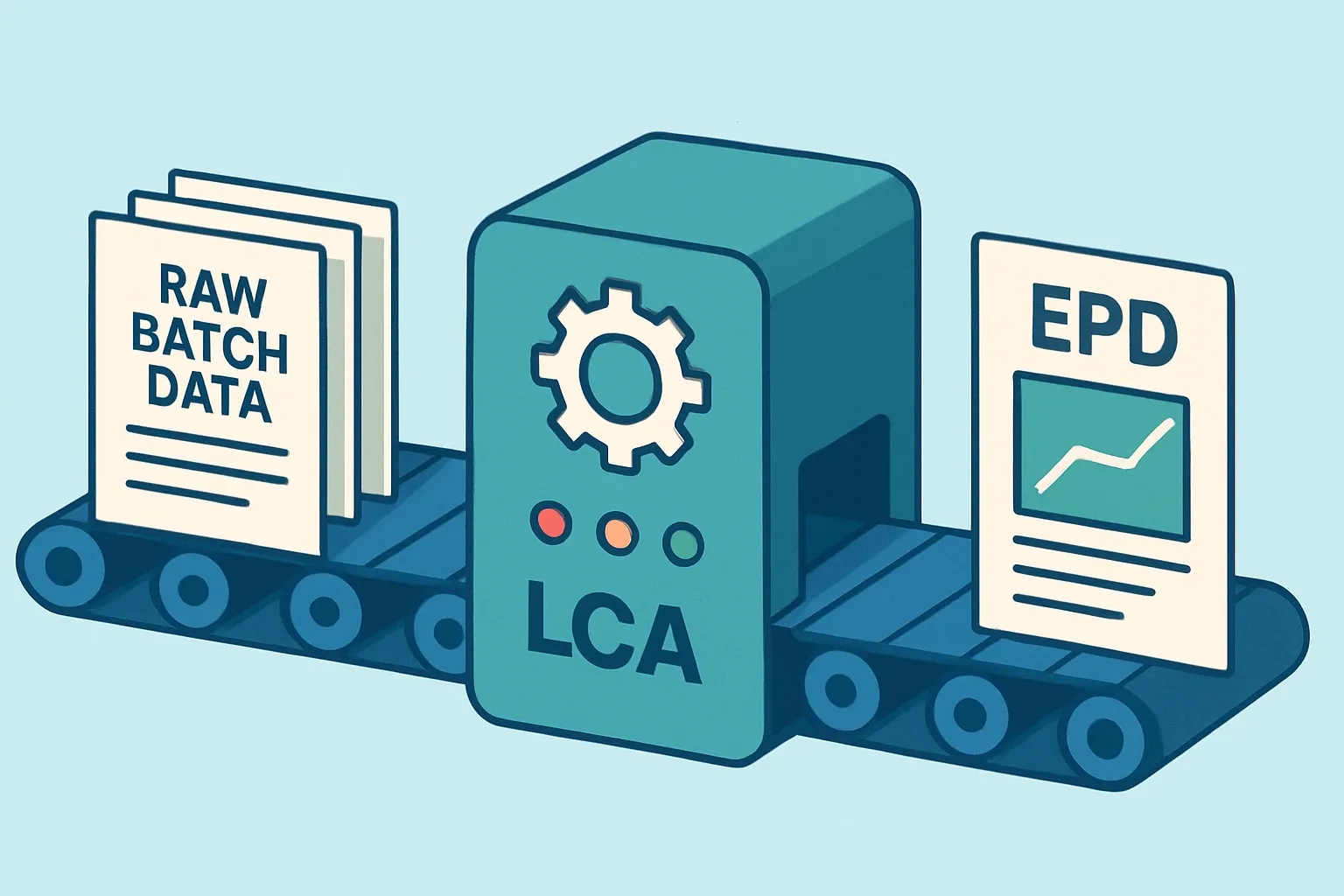
7 of 11 blown‑in EPDs list a third‑party developer or consultant, roughly 64 percent. That tracks with the category’s data complexity once you factor in recycled content variability, dust control additives, and site equipment energy modeling. If you want that lift without the internal scramble, an EPD service provider like Parq can coordinate data capture, author the LCA, and publish with the operator you pick.
Notably absent or listed under other categories
A few big European names in blown‑in or loose‑fill do not currently show a Europe‑specific blown‑in EPD tagged to loose‑fill codes in the public registry as of Jan 21, 2026. URSA and ROCKWOOL both maintain multiple thermal‑insulation EPDs, yet their blown‑in formats may be covered by broader stone wool or glass wool declarations, or filed under adjacent MasterFormat codes. Wood‑fiber leaders like GUTEX and STEICO show historic documents but no current loose‑fill EPD under that tag. This is a chance to differentiate with a focused blow‑in declaration that mirrors how specifiers search.
Picking the right PCR without the drama
Start with your competitive set, then filter by geography and operator. If most peers use A2‑based PCR 2019:14 with a blow‑in Part B, match that unless you have a good reason to break ranks. Check expiry horizons to avoid rework in the next two years. Align declared unit with the form your sales teams actually quote in the field so the EPD becomes a sales tool, not just a PDF.
What to do next
If you have a renewal in 2026 or a new SKU in the pipeline, lock your data window now. We can help you pick the best‑fit PCR and operator, then sequence LCA work so marketing and sales get a dependable launch date. And yes, speed matters here because specs do not wait.
I’m happy to share the full up‑to‑date background dataset behind this article. Connect with me on LinkedIn and send a quick note. If you want, we can hop on a short call to review your product line and I’ll help identify the best PCR fit based on your competitive landscape, free of charge.
Small print for data folks. This story is based on the global public registry of EPDs that most architects and specifiers rely on. Due to loading delays, some EPDs issued in the last half of 2025 may not appear yet. If that gap affects your category, ping me and I will send the freshest extract. Also, where trustworthy public numbers were missing we simply didn’t fill the blanks, which is definately the right choice for decisions you will bank on.