Why recycled content cuts GWP, not performance
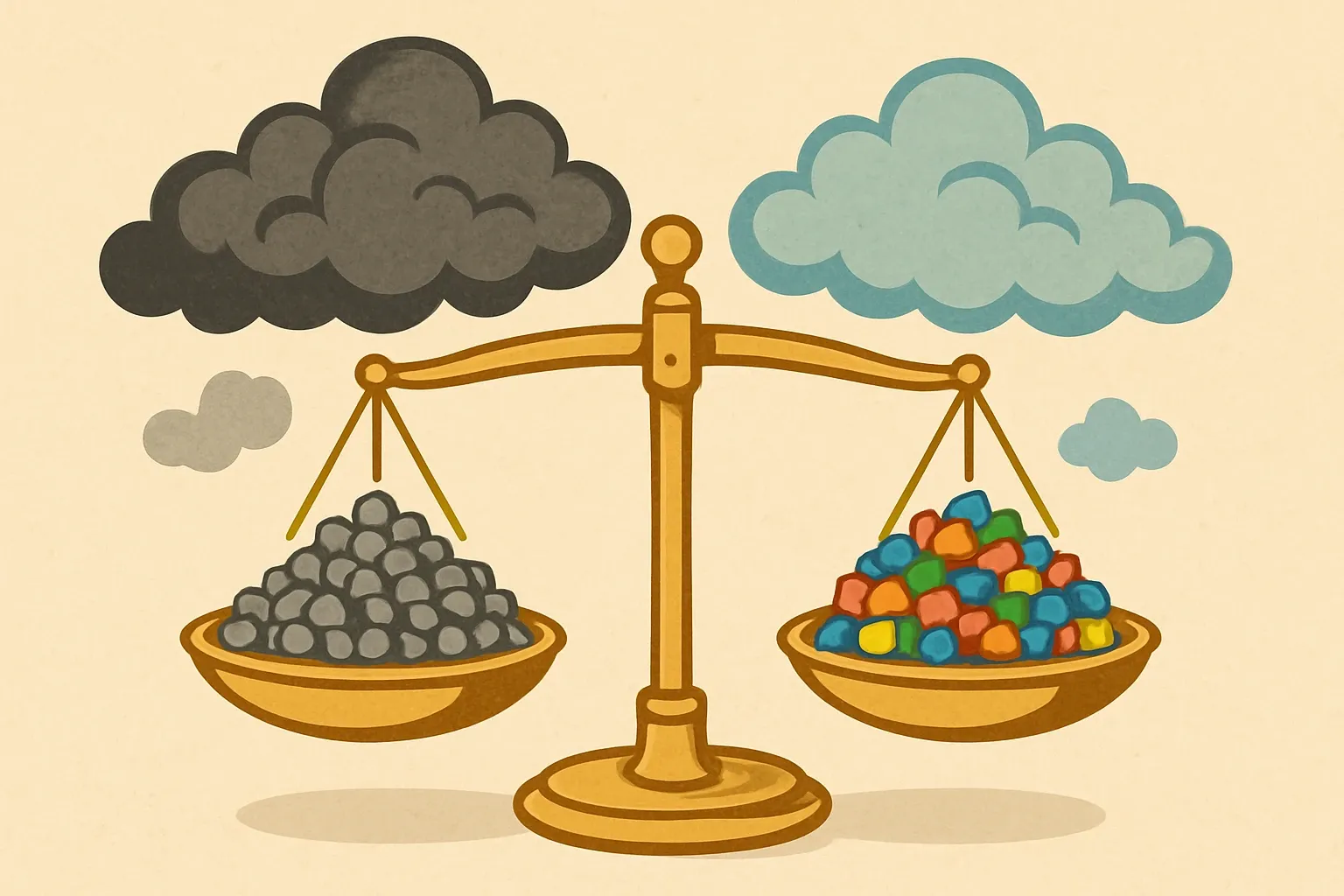
Virgin resin carries the upstream extraction and cracking burden. Recycled resin keeps the same polymer chemistry, so performance can stay constant while upstream emissions drop. Under EN 15804+A2 rules, secondary material typically enters with no inherited burden, and you only count the recycling processes and transport.
The quick math for common polymers
EPA’s WARM v16 shows typical cradle‑to‑gate manufacturing emissions per kilogram: virgin PET about 2.44 kg CO2e versus recycled PET about 0.91 kg, virgin HDPE about 1.68 kg versus recycled HDPE about 0.54 kg, virgin PP about 1.70 kg versus recycled PP about 0.52 kg. That is a 60 to 70 percent cut at the resin level, depending on polymer and power mix (EPA WARM v16 plastics chapter, 2023) (EPA WARM, 2023).
A simple example makes it real. A 5 kg polypropylene part that moves from 0 to 30 percent rPP avoids roughly 1.8 kg CO2e in A1 alone, using the factors above.
How to raise recycled content without reformulation
Think of this as a feedstock switch, not a formula change. Keep the same grade specs, then source equivalent rPET, rHDPE, or rPP with matching MFI, impact and color limits. Blend post‑consumer and pre‑consumer streams to hit stability targets. Many teams do this with process tuning and incoming QA, so R&D time stays focused on new products rather than re‑approval of the existing one.
Want to boost your EPD's sustainability score?
Follow us on LinkedIn for strategies to enhance recycled content and improve your project specifications.
What your LCA reviewer will check
Your verifier wants three things: documented recycled content by supplier lot, the recycling process energy data or an accepted dataset, and clear allocation consistent with your PCR. For EN 15804 programs, secondary material typically uses the cut‑off approach, so benefits land in A1 while any end‑of‑life credits show in D. If you claim renewable electricity at the recycler, the program operator will expect evidence and consistent accounting. IBU’s 2024 PCR Part A update clarified renewable energy treatment, so align your evidence before submission (IBU PCR Part A update, 2024) (IBU, 2024).
Where this moves the dial most
High‑polymer products such as membranes, pipe, liners, trim, and accessory parts see the biggest drop because resin dominates A1. Multi‑material assemblies still benefit, but the gain scales with the plastic mass fraction. If your bill of materials is steel‑heavy, expect a smaller percent change.
Supply and quality guardrails
Lock grade‑equivalent specs in contracts, require third‑party content certificates for PCR percentages, and pilot at 10 to 30 percent before stepping up. Watch color drift, odor, and gel count. Keep a dual‑sourcing path so line uptime is never at risk. This is practical stuff, not a moonshot.
Convert carbon cuts into commercial wins
Lower A1 GWP strengthens your next product‑specific EPD and removes a penalty in carbon‑screened specs, so your product is easier to keep on submittals without price‑only arguments. City and state buyers are still tightening embodied‑carbon expectations, and private owners are doing Scope 3 math of their own. Circularity moves are increasingly visible to procurement teams, not just sustainability leads.
Bonus: circularity momentum is real
Independent of policy shifts, circularity keeps climbing. EU analysis finds circular economy measures across heavy industry, including plastics, could abate roughly 189 to 231 million tonnes CO2e per year at scale, showing clear headroom for recycled feedstocks to deliver more savings (JRC, 2025) (JRC, 2025).
Start tomorrow: a simple plan
- Identify the polymer with the largest mass share in your product and pull the exact grade specs you already use.
- Qualify two recycled suppliers that meet those specs, request monthly content attestations, and collect their energy data or acceptable datasets for your LCA model.
- Pilot a conservative blend, update your BOM and QA plan, then refresh the EPD with verified recycled content. You get measurable GWP reduction without a formulation rewrite. It is not glamorus, but it works.