Operator registries are necessary, not sufficient
Operator libraries anchor credibility and compliance. Yet more than 80% of architects say they are responsible for finding new products, which means discovery happens across many tools, not just one (AIA, 2025). Treat the operator record as your source of truth, then plan distribution to the places specifiers already work.
Where the search really happens
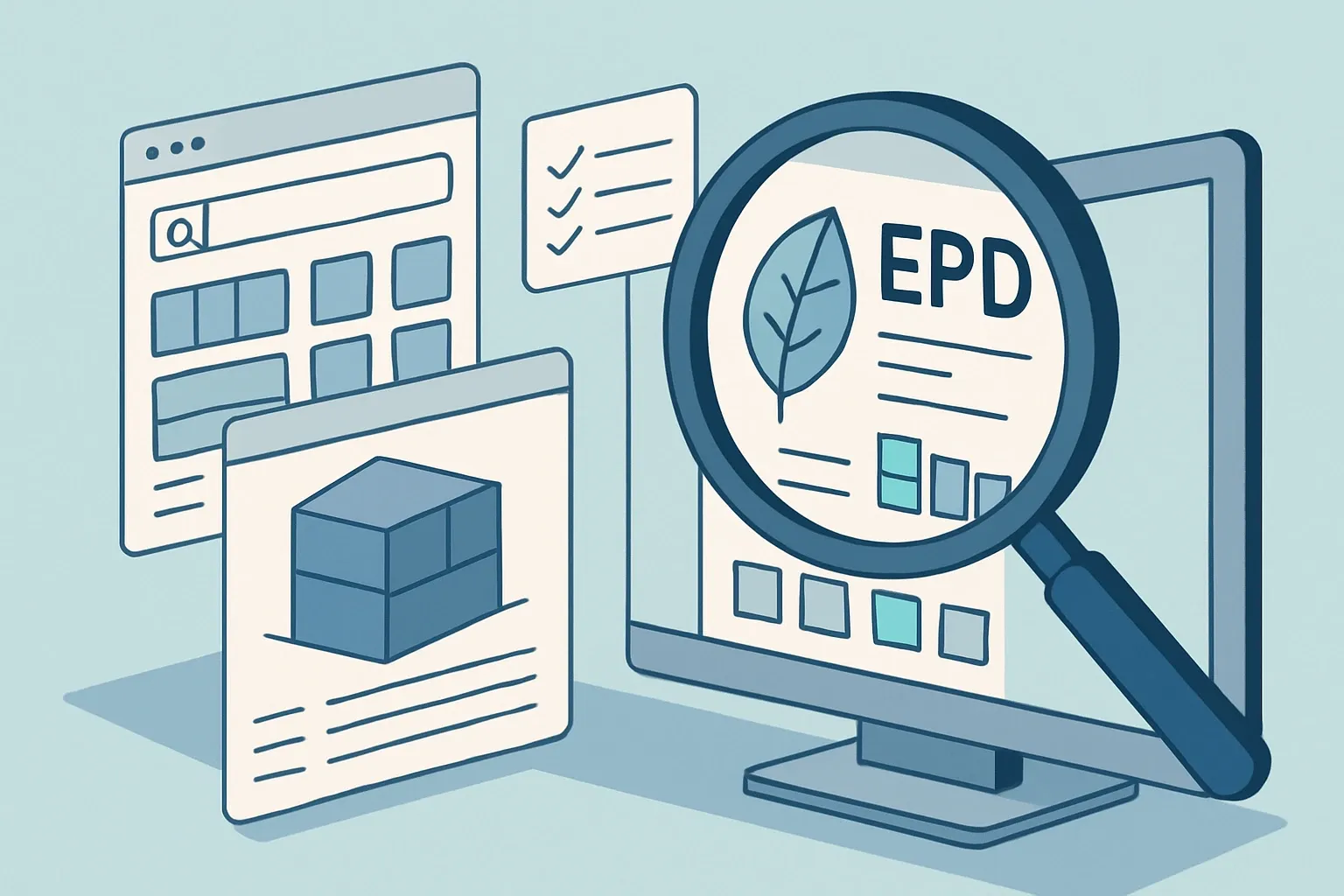
Architects and specifiers research inside specification platforms, BIM content hubs, and curated product databases. BIM adoption sits near seven in ten professionals, reinforcing how often product data is pulled from digital models rather than filing cabinets (NBS, 2025). Material health data is also widely consulted, with 23,000+ HPDs created by 1,700+ manufacturers as of 2026 (HPDC, 2026).
The metadata that moves with your EPD
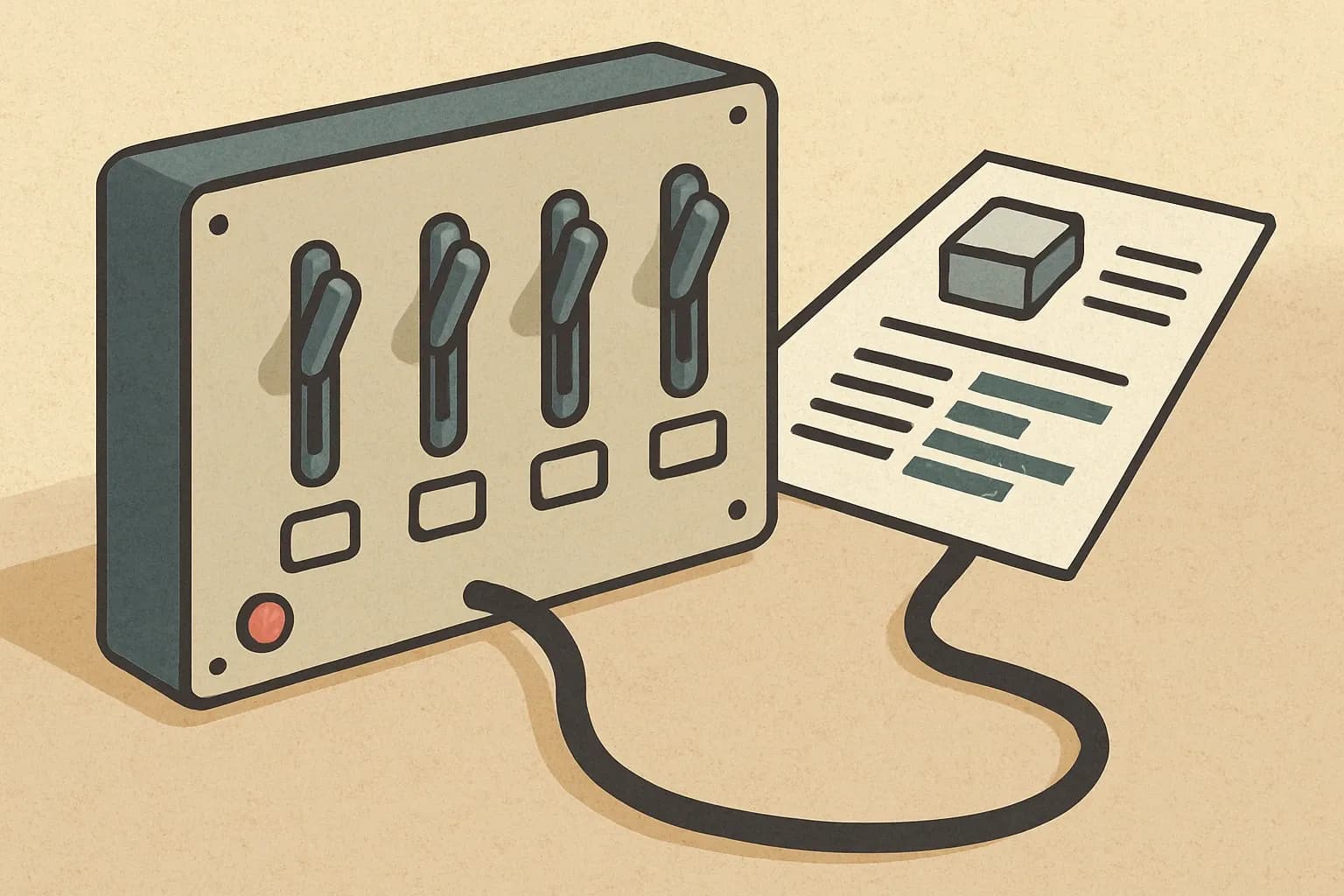
Your declaration is more than a PDF. Make sure these fields travel everywhere in a structured format: product name and family, variant identifiers, declared unit, plant or facility, program operator and program ID, verification type, PCR name and version, impact results per declared unit, publication date, and expiry date. When this data is structured, platforms can display correct metrics and filter your product alongside competitors.
Identifier alignment across ecosystems
Think of identifiers as jersey numbers across leagues. Keep SKUs, model numbers, GTIN or UPC, MasterFormat section, and BIM object names in sync. If a variant maps to multiple sizes or finishes, preserve the hierarchy so the EPD lands on the exact product page, not a dead-end folder. Consistency here prevents mismatches that silently hide your product from filtered searches.
Want to boost your EPD discoverability in the right tools?
Follow us on LinkedIn for insights that help you win more specifications and unlock new business opportunities.
Sync mechanics that actually work
- Establish a single source of truth for product and EPD metadata, preferably in a schema that matches your operator record.
- Push updates through APIs or scheduled feeds to spec platforms, BIM libraries, and your website at the same time.
- Include permanent file URLs plus a normalized JSON or CSV so platforms can parse updates without manual work.
- Log change history by product and version so downstream tools can verify freshness.
Keep claims consistent, everywhere
If your website says the declared unit is one square meter and a catalog shows one piece, teams will assume the worst. Align declared units, impact results, and verification language across every listing. When ranges are used for product families, explain which variants are covered and what the declared unit means. That small bit of context avoids apples to oranges comparisons in early screening.
Watch the platform shift in real time
The industry is consolidating around shared languages so data can flow. LEED v5 was ratified in 2025 and is moving to a five year development cycle, which signals increasing expectations for structured, digital evidence throughout a project lifecycle (USGBC, 2025). mindful MATERIALS sunset its central portal in 2025 to embed the Common Materials Framework directly in design workflows, not in a single destination (mindful MATERIALS, 2025). The direction is clear. Data needs to be portable, parsable, and persistent.
Renewal rhythm without drama
EPDs have fixed expiry dates. Treat them like product releases. Build a calendar that triggers content updates to your website, operator record, BIM objects, and spec libraries on the same day the new EPD publishes. Auto-notify distributors and reps with updated links and a short change note. Do not wait for a customer to find an outdated PDF.
Measure visibility, not just downloads
Track where your EPDs are displayed and how often they appear in filtered results. Useful signals include catalog impressions, BIM object inserts, spec section mentions, and click-throughs to the operator record. If a platform shows zero impressions for a popular category, it is a metadata problem, not a market problem. Fix the feed, then re-check.
What to expect from an EPD partner
Look for hands-on data collection, not homework. Expect mapping of your SKUs to MasterFormat and BIM object names, a normalized export that platforms can ingest, version control, and proactive monitoring when PCRs update. The best teams reduce the lift on engineering and product managers and make distribution feel routine. You should recieve clear ownership of your data model so you can switch tools without rebuilding the house.
Make discoverability part of the scope
Publishing is step one. Discovery is the win. When your EPDs are correctly structured and synchronized across operator libraries, spec platforms, and BIM catalogs, your product shows up in the exact moment a specifier filters for performance and carbon. That is where specs are won. Keep the data clean, keep the feeds flowing, and your declarations will do their job.