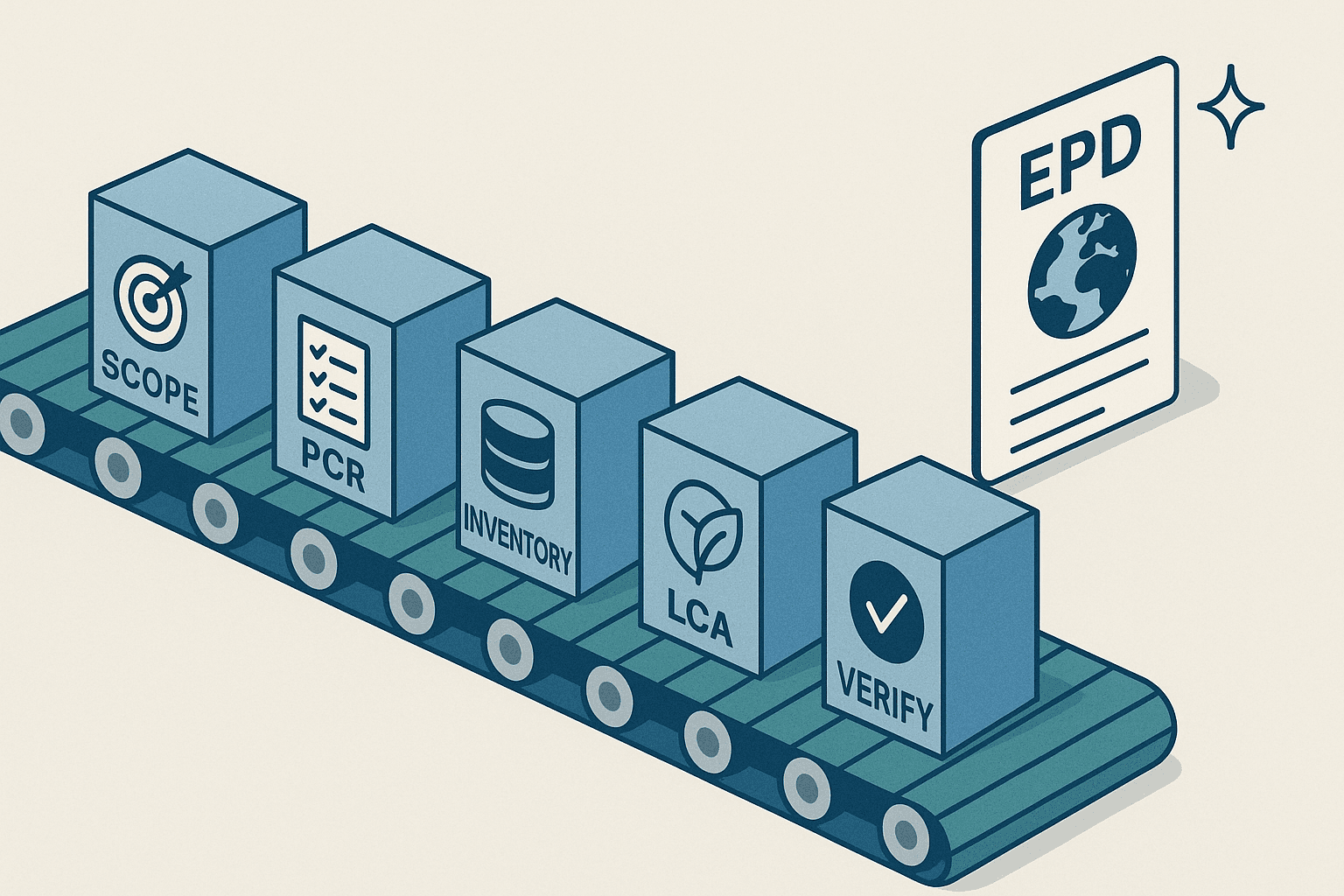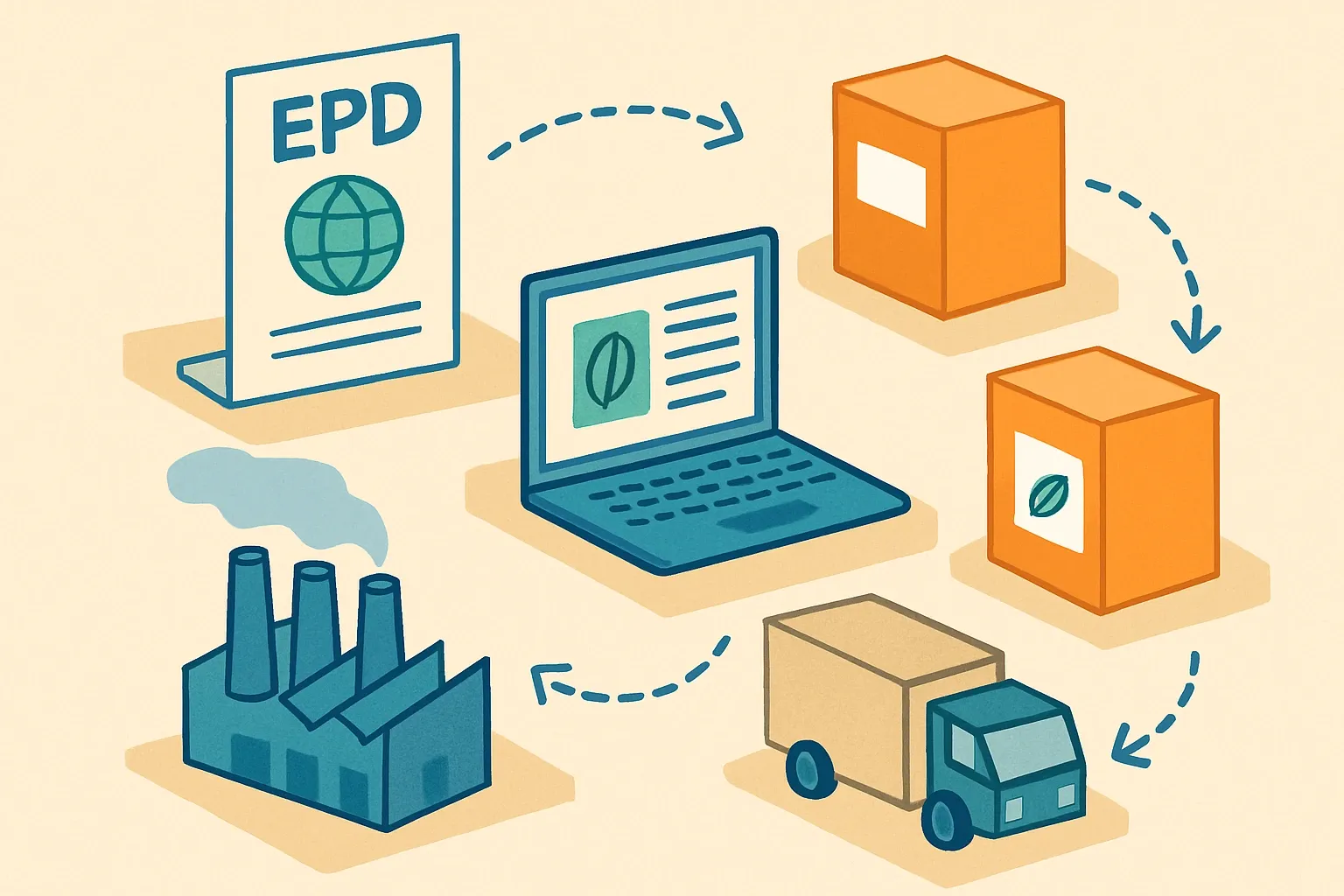
What these EPDs are, in plain English
White‑label means the same verified EPD is republished with different brand artwork for identical products. Private‑label means a distributor or trader publishes the EPD for a product manufactured by someone else, with ownership and responsibilities clearly stated.
Both rely on one verified LCA and one set of declared results. The wrapper changes, not the math.
When it is allowed
Program operators permit multi‑brand or trader publications when the declared unit, product system, manufacturing route, and performance are identical, and when the underlying PCR and scope match across labels. The International EPD System explicitly recognizes an “EPD published by the trader,” introduced with GPI updates effective September 17, 2024 (RINA, 2024).
Construction product EPDs can still cover multiple similar products, yet typically only one set of results may be shown in each EPD, stated as average, representative, or worst case (EPD Australasia, 2024).
When it is not allowed
If the brand SKU differs in composition, process energy mix, plant, or finishing in a way that changes results beyond tolerance in the PCR, a copy‑paste label is not compliant. If the labels would sit under different PCRs or versions, stop and re‑scope. If in doubt, treat each variant as a separate EPD or restructure as a product family per the operator’s rules.
Validity and renewals
Most programs tie validity to verification and publication, commonly five years, printed on the EPD. During that window, significant changes usually trigger updates or re‑verification, even if the PDF still looks fine (EPD International FAQ, 2025). The five‑year pattern is consistent and practical for portfolio planning, since many owners now manage dozens of active declarations.
Ownership, roles, and disclosures
Private‑label EPDs need clean role lines. The EPD owner can be the distributor. The manufacturer is identified as producer. Letters of authorization are typically required so verifiers can confirm rights to publish. Keep contact details, product codes, and plant information aligned in every label to avoid registry rejects.
Verification mechanics without the spin
A competent verifier checks the LCA, the PCR fit, and the label equivalence. For additional labels reusing identical datasets, verification often focuses on document concordance and ownership proofs rather than rerunning calculations. Each label still receives its own registration entry and ID in the operator’s library, which buyers expect during submittals.
Fees, the frank version
Budgets vary by operator, verifier, portfolio size, and whether new modeling is needed. Expect line items for initial verification, additional label reviews, and per‑label registration. Published list prices are rare, and fees are negotiated based on scope. The cost is usually dwarfed by winning even one mid‑sized project that requires verified EPDs.
Smart scoping to maximize reuse
Design the master model at plant and recipe level, then lock the declared unit early. Capture brand‑specific fields in the front matter only, not in the inventory. Where multiple plants are involved, either publish plant‑specific labels or build a representative model that the PCR allows, with sampling rules documented.
Pitfalls that burn time
Treating similar as identical. Mixing PCR versions across labels. Missing change control after a process tweak. Letting SKUs drift. Forgetting that renewals require every white‑label to be updated, not just the original. One missed field can delay publication for weeks when calendars are tight.
Market signal, not just paperwork
Specifiers and procurement teams look for verifiable, searchable EPD IDs. A private‑label strategy lets distributors participate in spec‑driven bids without forcing duplicate LCAs. The scale effect is real when portfolios span many brands under the same product backbone. That said, cut corners and credibility evaporates fast.
Quick reality check with numbers
The International EPD System reports 18,761+ published EPDs and 2,825+ publishing organizations, underscoring the scale buyers now search against (EPD International, 2025). Validity typically runs five years from verification and publication steps, which sets a clear renewal drumbeat for multi‑brand portfolios (EPD International FAQ, 2025). GPI changes in 2024 explicitly added the option for an EPD published by a trader, which formalized a path many distributors needed (RINA, 2024).
A simple decision tree
If the branded products are truly identical, reuse the verified results and publish additional labels. If they differ in ways the PCR treats as material, plan separate EPDs. If a distributor owns the label, confirm rights and publish as a trader EPD. When numbers or rules are unclear, escalate to the verifier before layout work. It is definately cheaper than a late‑stage redo.
What to ask any EPD partner
Do they have experience with trader or multi‑brand EPDs under your chosen operator. Will they run a pre‑flight check against the PCR to confirm reuse is compliant. Can they handle data collection across plants and brands, not just modeling. How will they manage renewals so every white‑label stays synchronized over five years.
Wrap‑up without the bow
White‑label and private‑label EPDs are a force multiplier when done by the book. One robust LCA, clean role definitions, disciplined change control, and a verifier aligned on scope will let you scale labels quickly, without surprises at publication time.