Why the declared unit sometimes fights reality
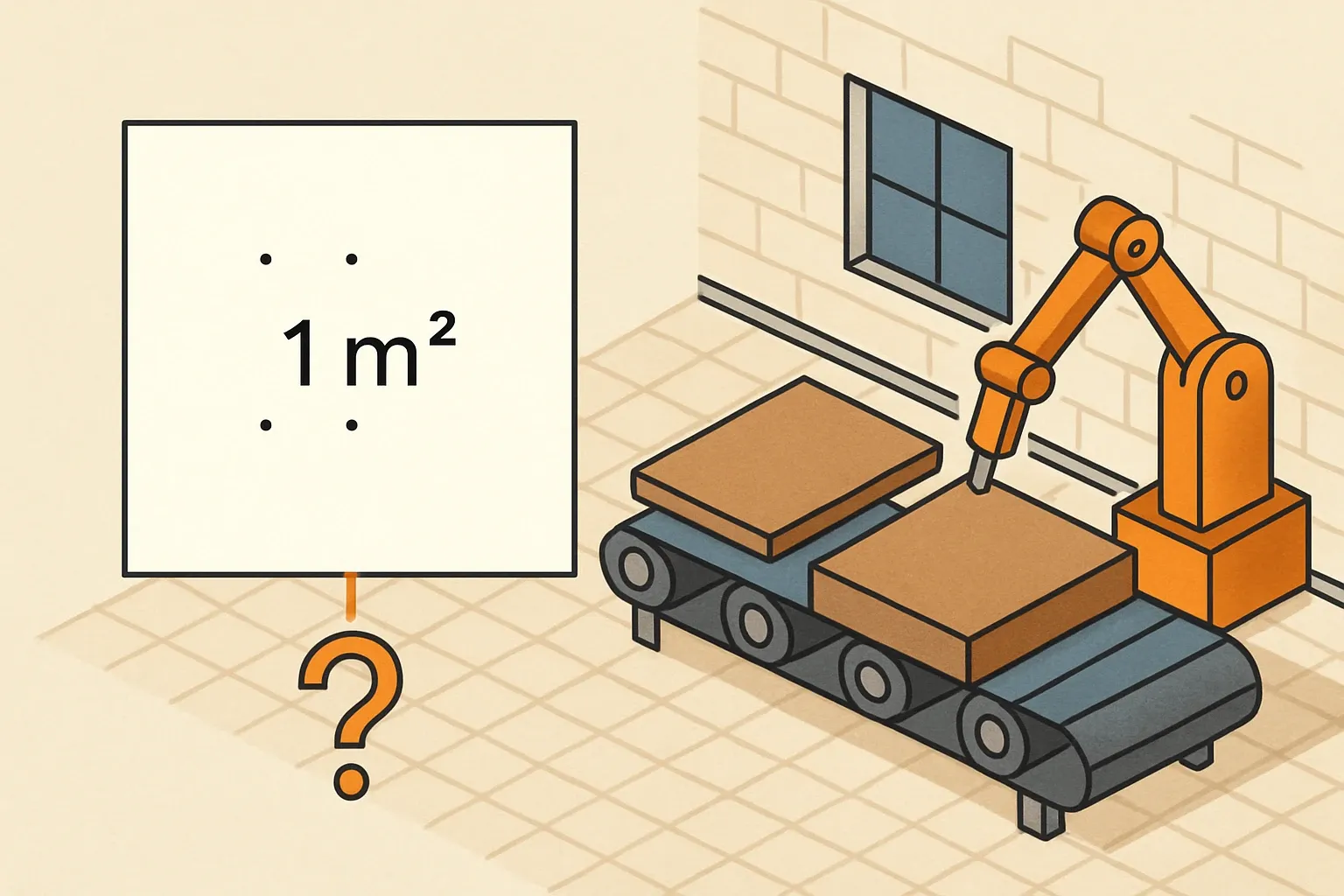
A PCR sets the declared unit so results can be compared apples to apples. Many construction PCRs choose 1 m² or 1 linear meter. Modular systems rarely start there. Doors, façades, and demountable partitions have minimum widths, fixed hardware layouts, and batching rules that drive material use and scrap. Treating a non-buildable 1 m² like a real SKU creates fantasy math.
Think of Tetris pieces. The board is the PCR declared unit, the pieces are your manufacturable modules. You can fill the board, but only with shapes you actually have.
A simple rule that works in practice
Pick the smallest manufacturable configuration that covers the declared unit with honest geometry. Model that configuration, then proportionally scale results back to the PCR unit. Document the gap between the PCR unit and the buildable module in one crisp paragraph that a specifier can read without a coffee.
This approach honors the PCR while reflecting tooling limits, cutting plans, and standard hardware sets. Reviewers respond well when the method is consistent across SKUs.
The modeling recipe
Use a short, repeatable sequence so future updates do not drift.
- Identify the minimum buildable size the factory can run without special setups.
- Map materials, fasteners, glazing, and hardware for that configuration. Include scrap and rework rates used on the line.
- Calculate impacts for this configuration, not for the theoretical 1 m².
- Convert to the declared unit with a transparent scale factor, and flag any non linear effects like perimeter frames.
- Record the geometry, bill of materials, and the scaling math in the EPD background report.
Non linear edges matter more than you think
Frames, gaskets, seals, and perimeter stiffeners scale with edge length, not area. A small panel can carry a higher frame‑to‑glass ratio than a large one, so its per m² impacts rise. Do not average this away. Show the perimeter pieces separately in your model so reviewers can see the drivers. This tiny bit of clarity can prevent days of back and forth.
Numeric guardrails worth remembering
Cut off rules still apply. Under EN 15804, individual excluded flows should be below about 1 percent by mass or energy and the total of exclusions should stay under 5 percent, which is a useful check when scaling modules down to the declared unit (EN 15804+A2, 2019).
Program operators typically set EPD validity at 5 years. That window is a good planning horizon for locking the declared unit method, then rechecking it when the EPD renews or the PCR revises (EPD International GPI, 2024) (EPD International GPI, 2024).
What to document so reviewers move fast
Write a short “declared unit reconciliation” note in the background report and summarize it in the EPD. Include: the buildable configuration chosen, the reason it is the smallest practical option, the scale factor, and any perimeter effects. Add a one line statement on how the method will be reused for variant SKUs. This keeps reviewers from asking the same clarificaiton twice.
Example that passes the sniff test
Suppose the PCR declares 1 m² and the smallest operable façade module is 1.2 m by 1.2 m. Model the 1.44 m² module with its real frame, anchors, and gasket lengths. If the frame weighs 6.0 kg per module and glass is 14.4 kg, convert to 1 m² by multiplying by 1 divided by 1.44 for the area driven parts, and by perimeter ratios for frame pieces. State the two scale factors, do not bury them in a spreadsheet.
Quality checks that catch surprises
Run a quick sensitivity on the perimeter to area ratio. If changing module width by 100 mm moves GWP per m² by more than a few percent, keep that in the interpretation text. Review scrap rates against recent production batches, not last year’s plans. If your plant runs seasonal changeovers, note the period your reference data covers so the reviewer understands the context.
How buyers should read these EPDs
A specifier comparing modular systems should scan the declared unit reconciliation. If the EPD scaled from a larger module, they can mentally adjust expectations for very small openings or partitions. The key is transparency. An EPD that explains its geometry will be trusted in bids more than one that silently fits a square peg into a round hole.
Tie the knot without tying yourself in knots
Choose one representative configuration, scale with explicit geometry, and write it down the same way every time. That rhythm lets technical teams move fast, keeps verification smooth, and helps sales answer tough questions with confidence. We prefer methods that are boring to repeat and easy to audit, because boring beats brilliant when deadlines and specs collide.