When equipment changes trigger an LCA refresh
Two clocks govern timing. First, most construction EPDs sit on a five‑year validity window, with mandatory annual internal follow‑up to keep content current (EPD International, 2025) (EPD International, 2025). Second, if any reported indicator worsens by more than 10 percent, a formal update is required even before expiry (EPD International FAQ, 2025).
Improvements are optional to report, yet strategically smart when they are material. If an efficiency project shifts your A3 electricity or fuel use enough to move GWP, treating it like a model‑year refresh keeps your specs competitive.
What to capture during energy‑efficiency projects
Think like a documentary filmmaker. Get before, during, and after footage.
- Metered energy by carrier: electricity (kWh), fuels (MMBtu or liters), with meter IDs and time granularity.
- Operating profiles: run hours, load factors, setpoints, part‑load curves, control logic screenshots.
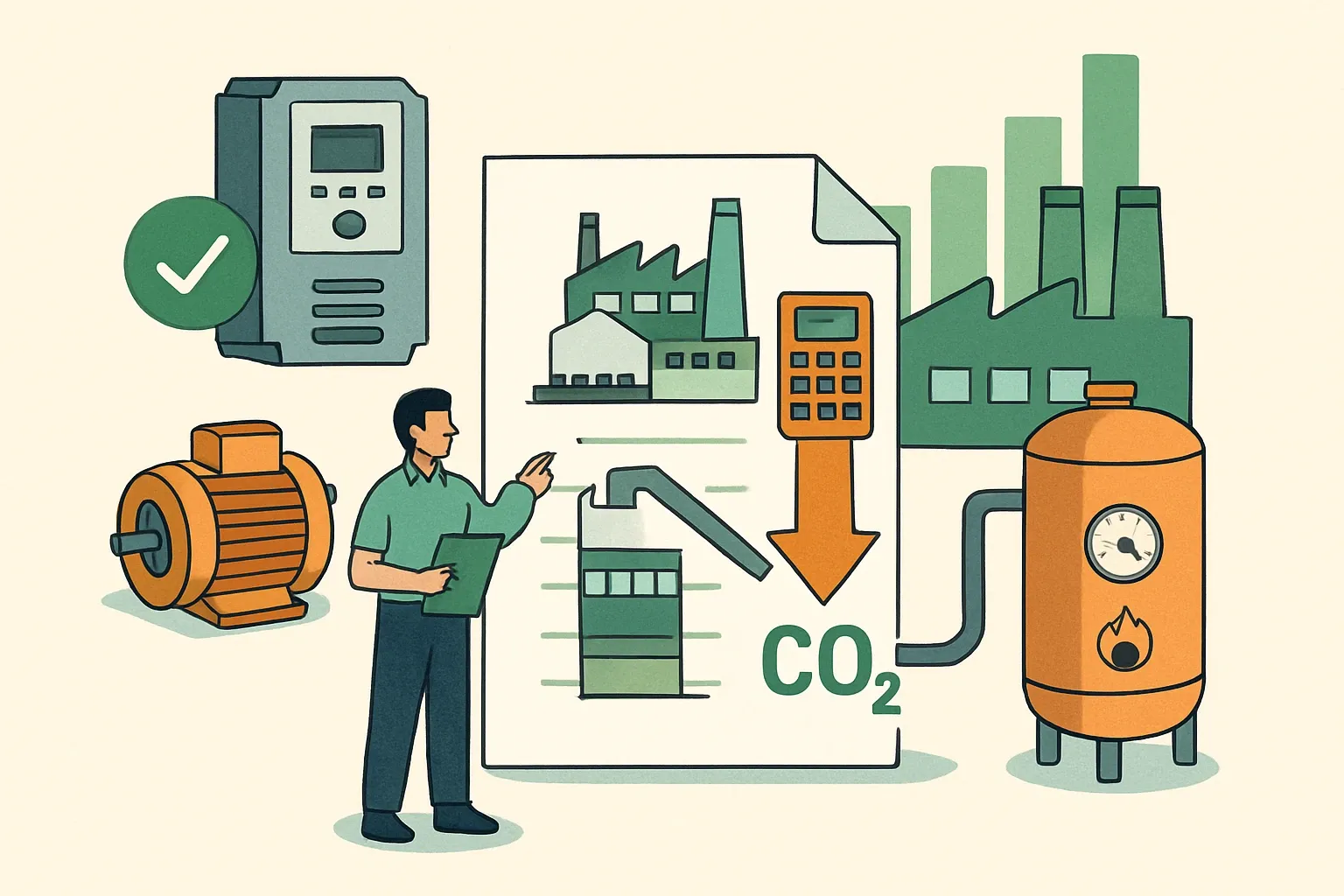
- Equipment specifics: nameplate data, rated efficiency, VFD size, compressor type, boiler input and output.
- Commissioning evidence: trend logs, acceptance tests, utility interval data exports, photos of installed meters.
- Boundaries: what changed at the line or plant level, and what did not.
Collect this for a defined reference period that fits your EPD’s method. If your last EPD used calendar‑year data, match that cadence unless the PCR prescribes otherwise.
Make the math show up in A1 to A3
Most operational upgrades hit module A3 for manufacturing. Electricity reductions scale linearly when you use location‑based grid factors. Fuel cuts reduce both combustion emissions and upstream burdens. If a project also trims scrap or rework, that can ripple across other modules through lower material inputs. Treat the plant like a fitness tracker: if it is not logged, it did not happen.
Addendum, revision, or full reissue
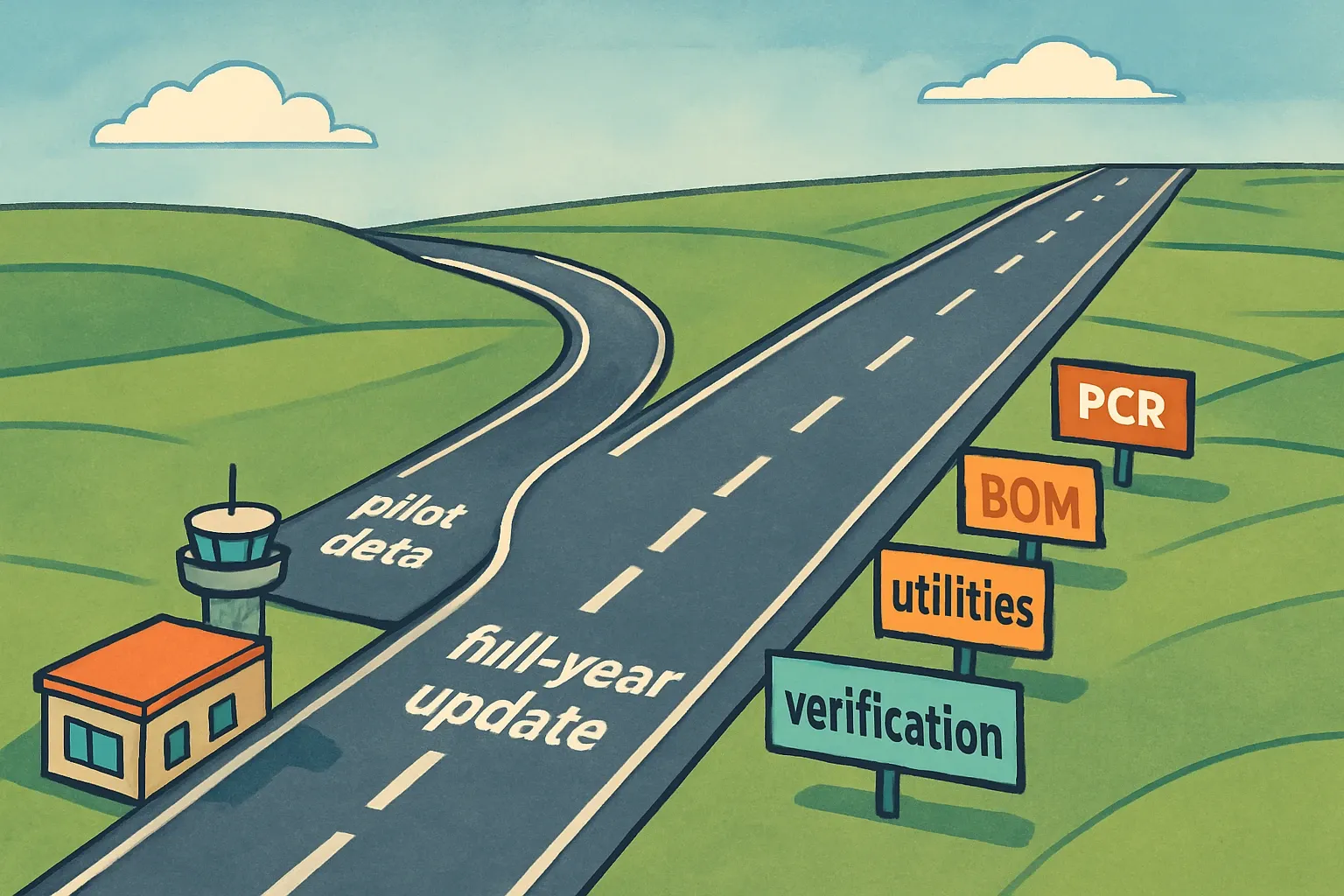
Program operators distinguish between minor corrections and substantial updates. In practice that means: if the calculation method, PCR version, or system boundaries change, expect a full reissue with fresh verification. If only the underlying data shift within the same method and PCR, a revised version under the same registration may be possible. Ask the operator about their thresholds and naming so your sales team does not get surprised by a new publication ID.
Pick the right electricity factors (and prove them)
Use the latest regional grid factors for the LCA reference year. EPA’s eGRID provides subregion emission rates and is updated on a regular schedule, with the eGRID2023 dataset released and revised during 2025 (EPA eGRID, 2025) (EPA eGRID, 2025). If you use supplier‑specific or market‑based electricity, archive contracts, REC details, and invoices. Auditable evidence beats wishful spreadsheets every time.
Quick wins that typically move GWP
Compressed air: leak repair and system tune‑ups can reduce annual energy use by about 20 percent, and typical unmanaged plants leak 20 to 50 percent of air volume (ENERGY STAR, 2025) (ENERGY STAR, 2025).
Variable‑speed drives on centrifugal fans and pumps: savings can range from 7 to 60 percent depending on load profile and controls quality (ENERGY STAR, 2025) (ENERGY STAR, 2025).
Boiler and steam distribution improvements: fixing leaks and tuning combustion can save several percent of fuel, which is often enough to move A3 GWP if process heat dominates (ENERGY STAR, 2025).
Decide where the update line sits
Use this simple triage.
- Size the impact: estimate new kWh and fuel per functional unit. If modeled GWP improves meaningfully for your buyers, proceed.
- Check rules: confirm PCR version still applies and whether any 10 percent deterioration rule is tripped for other indicators that may have gone up (EPD International FAQ, 2025).
- Pick the path: minor recalculation within the same PCR and method usually means a revised version. Method or boundary changes usually mean a reissue.
How fast this can go
Speed is logistics. Clean meters, preserved trend data, and clear boundaries shorten modeling and verification. Waiting to gather evidence weeks after startup usually slows everything down. Getting plant, quality, and finance aligned on the reference period avoids rework that eats calendar.
Turn operational wins into spec wins
Lower process energy should translate into lower EPD numbers if you document it well and choose the right publication route. Teams that capture evidence while contractors are still on site tend to ship updated declarations faster, which keeps bids sharp when projects score carbon. If the improvement is real and repeatable, it definately deserves to be visible in the next version of your EPD.