What you own, what they own
Most manufacturers own their primary data, the published EPD PDF, and the right to commission a new declaration. Many consultants retain IP to the LCA model files, background datasets, and custom calculation scripts unless the contract assigns those rights. Read the statement of work, not the marketing brochure, since that governs handover.
What can be reused without drama
You can reuse plant utility data, bills of materials, production volumes, packaging specs, transport routes, and supplier EPDs. The verifier’s report and system boundary notes are often reusable references too. EPDs are typically valid for five years, which sets a natural refresh window for reuse planning (ISO 14025, 2024).
When reuse hits a wall
Two things commonly block reuse. First, a major PCR revision that changes required scope or impact methods, which forces a technical re‑alignment at renewal (EPD International GPI, 2024). Second, aging data rules. EN 15804 expects foreground data to be recent, generally within five years, and generic background data within ten, or you must justify exceptions (CEN EN 15804+A2, 2019).
If the previous consultant will not share
Start with the contract deliverables list and ask for every item specified. If that stalls, request the verifier’s report and the model output tables, since those are often explicitly listed. You can also ask the program operator how to transfer EPD ownership on the registry, which is typically allowed, even if the model itself is not delivered.
Small, practical moves help. Offer to pay a reasonable handover fee tied to defined artifacts. Set a short timeline, then escalate to a written notice that cites the contract. Keep it civil. You want the baton, not a brawl.
Are you allowed to republish the prior EPD
Republishing the exact PDF under a new provider name usually is not the goal. Instead, carry forward the verified system boundary, keep the same declared unit, and update data to the current reference year. A fresh verification is expected once you make material changes or switch program operators, since third‑party review is a core Type III requirement (ISO 14025, 2024).
Budget signal: update or full re‑model
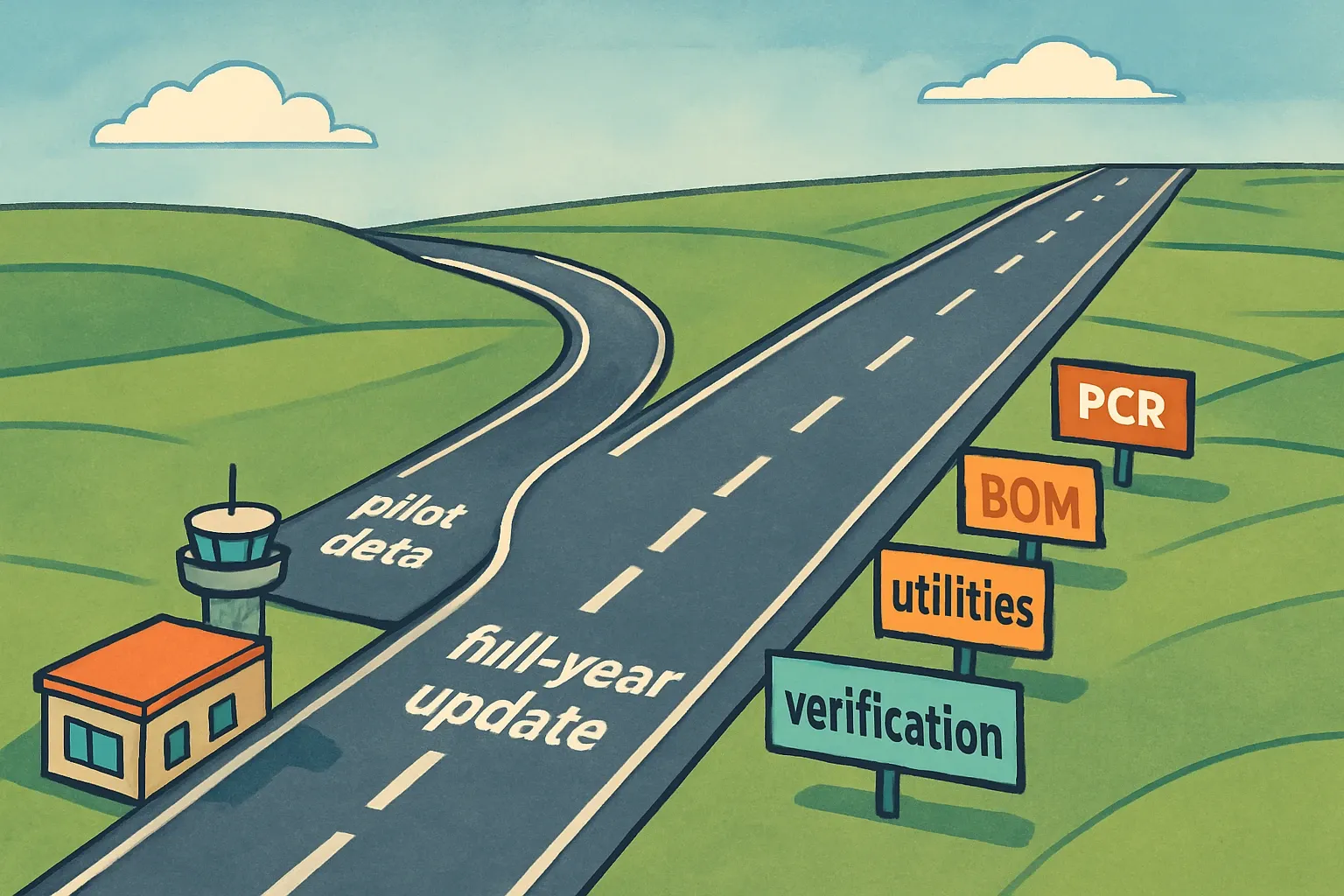
Choose an update when products, plants, BOMs, and energy mixes are materially unchanged, the PCR version is stable, and you have at least a year of recent operations data. Plan a full re‑model when product recipes shift, new plants or lines come online, or the PCR introduces new modules or indicators that cannot be mapped with confidence.
A good heuristic is simple. If 70 percent or more of foreground data and processes are intact, you likely land in update territory. If less, assume a remodel. If numbers are missing, say so and budget for discovery rather than guessing.
Speed moves that cut weeks
Map the existing model’s system boundary on one page. Lock the declared unit early. Freeze the reference year and assign a single owner for data requests. We prefer to lift the data burden off busy teams so engineers stay focused on production, while we wrangle the messy bits.
A quick quality gate helps too. Check that all supplier EPDs used as inputs are current within their five year window and align to the same base standard, typically EN 15804 for construction materials (CEN EN 15804+A2, 2019).
What happens if nothing is shared at all
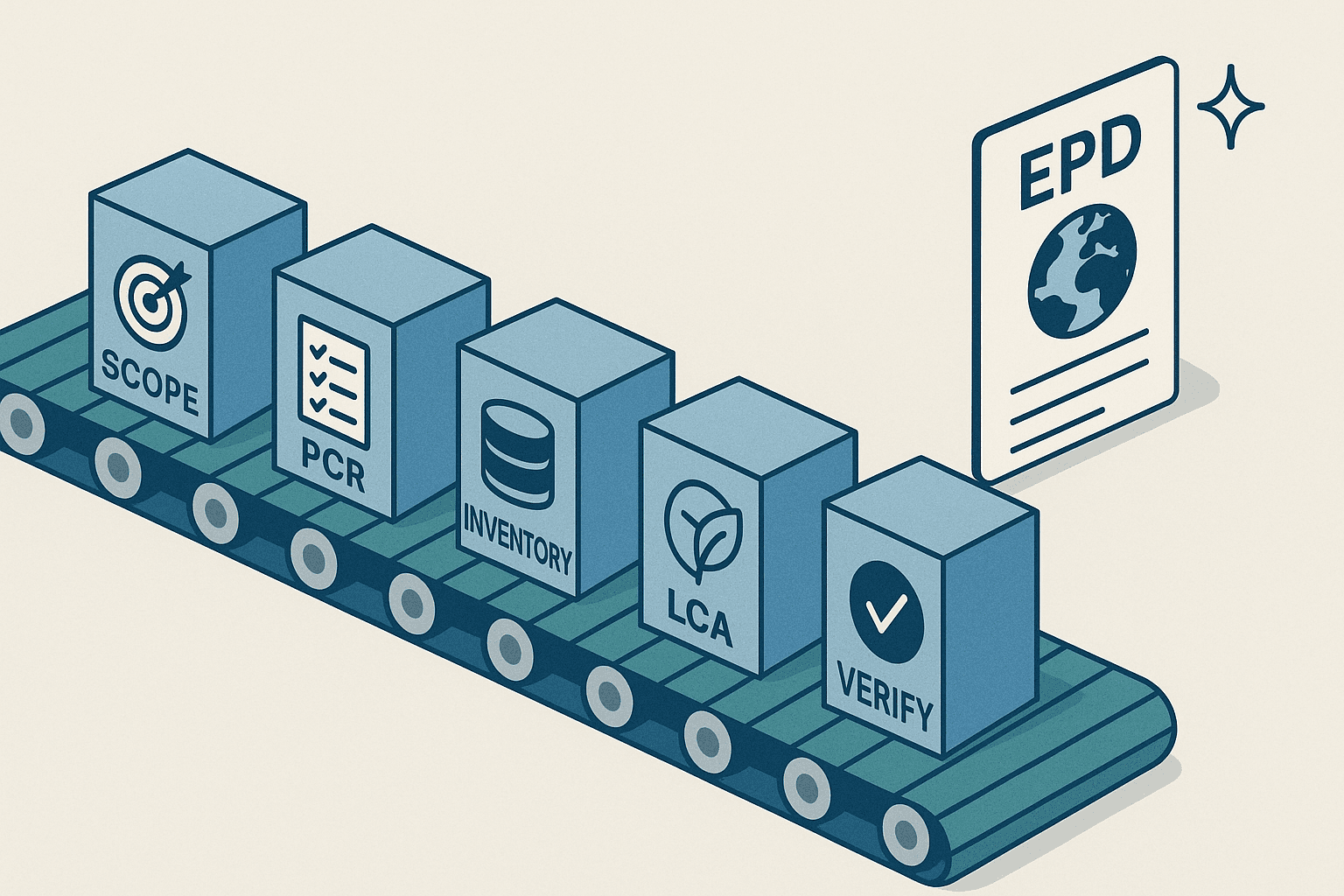
You can still rebuild. Use the published EPD to benchmark claimed system boundaries and declared unit, then collect fresh plant data for the latest reference year. Recreate the inventory with current datasets and send it to verification. This path often moves faster than waiting on a locked model, and it avoids inheriting hidden modeling shortcuts that no longer fit.
A clear path forward
Switching providers should not reset your sustainability story. Treat the old work as scaffolding, not a prison. Secure rights in your next SOW, plan for the five year review rhythm, and decide early whether you are updating or remodeling. Then move, quickly and cleanly, toward a verified EPD that wins specs without the drama. If that sounds brisk, good, because time kills deals and nobody wants that, dont they.