What shifts when the team is already experienced
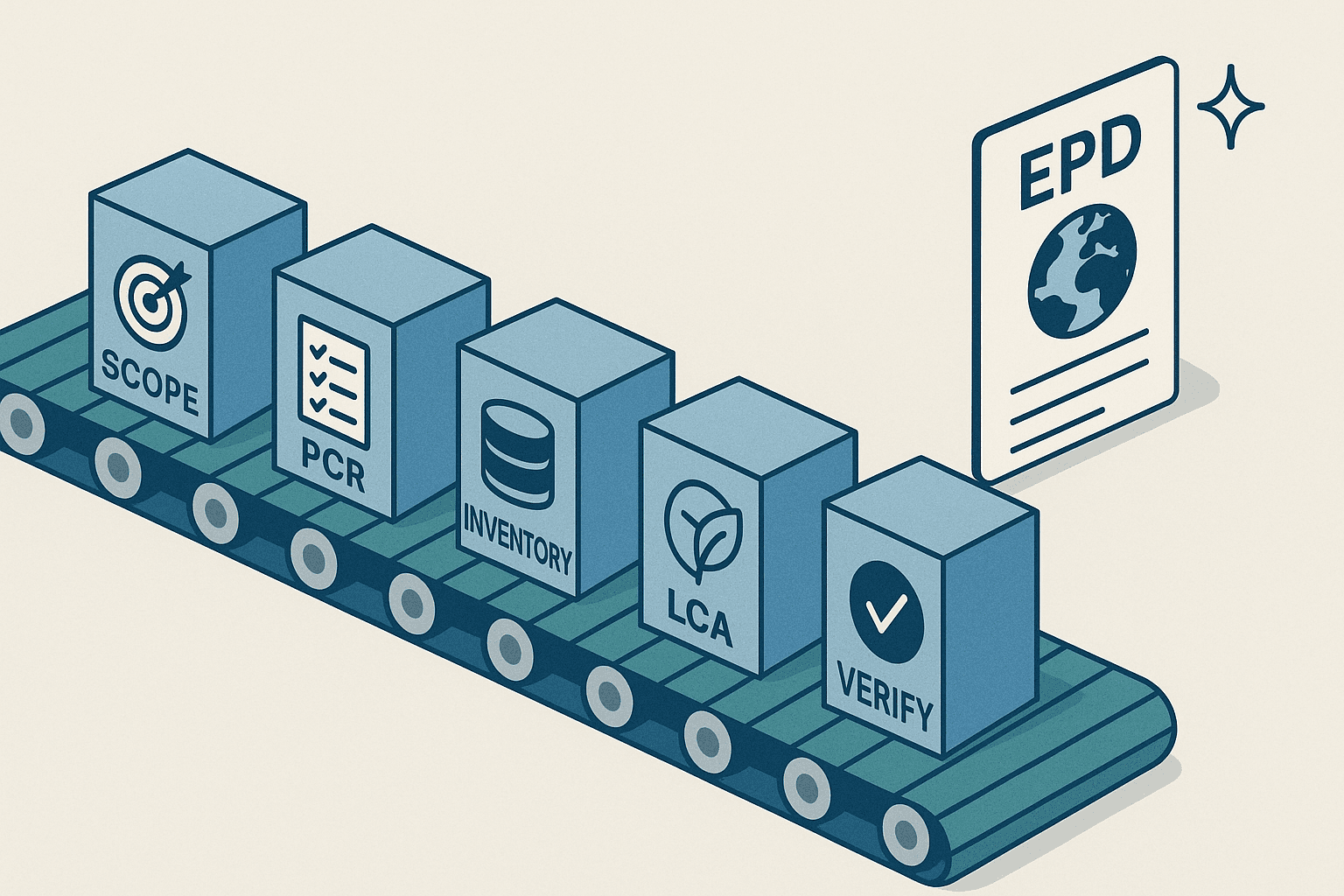
You are not learning LCA from scratch. You are choosing the fastest, lowest‑risk way to turn ongoing process data into repeatable, defensible EPDs that sales can use without more hand‑holding. The trade is between full modeling control and a guided lane that keeps verification tight while scaling across SKUs.
Model control and audit trails
General‑purpose LCA tools let experts build anything. That flexibility is gold until models fork, spreadsheets drift, and version history hides in emails. A self‑serve EPD platform should provide change logs, side‑by‑side model diffs, reviewer notes, and a clean handoff to verification so nothing gets lost in translation.
Custom factors and the grid reality
Executives ask for “what if we switch the plant to greener power” and they want the answer before lunch. Regional electricity matters a lot here. U.S. eGRID subregions range from about 430 lb CO2e per MWh in California to over 1,100 lb CO2e per MWh in parts of Hawaii (EPA eGRID, 2025) (EPA eGRID, 2025). Your platform should support location‑based and market‑based factors, residual mixes when needed, and transparent documentation of every override.
Background datasets: who picks and pins them
Dataset drift breaks comparability. Experienced teams know that annual database updates can shift results, sometimes by more than the change you are trying to prove. A good platform lets you pin a dataset version per product, declare provenance inside the EPD, and run safe side‑by‑side re‑calcs when a library updates. If a 2024 library release corrected electricity market mixes, you want that noted and traceable for reviewers, not buried in a changelog.
Rapid what‑ifs without breaking the verified model
Leaders need quick toggles for recycled content, fuels, suppliers, or transport legs. Look for “sandbox” scenarios that never touch the canonical, verified model until promoted. The platform should show deltas by module and indicator so experts can defend shifts at A1–A3 without re‑opening the entire background report every time.
Direct data ingestion that cuts rework
Manual CSV wrangling steals time from your best people. Platforms worth their seat should ingest plant data from spreadsheets and systems, apply reusable mappings, and surface unit‑process detail for power users. The trick is to reduce transformation work while still exposing enough granularity to answer hard questions about a resin, an alloy, or a grid mix.
Verification, surveillance, and the five‑year clock
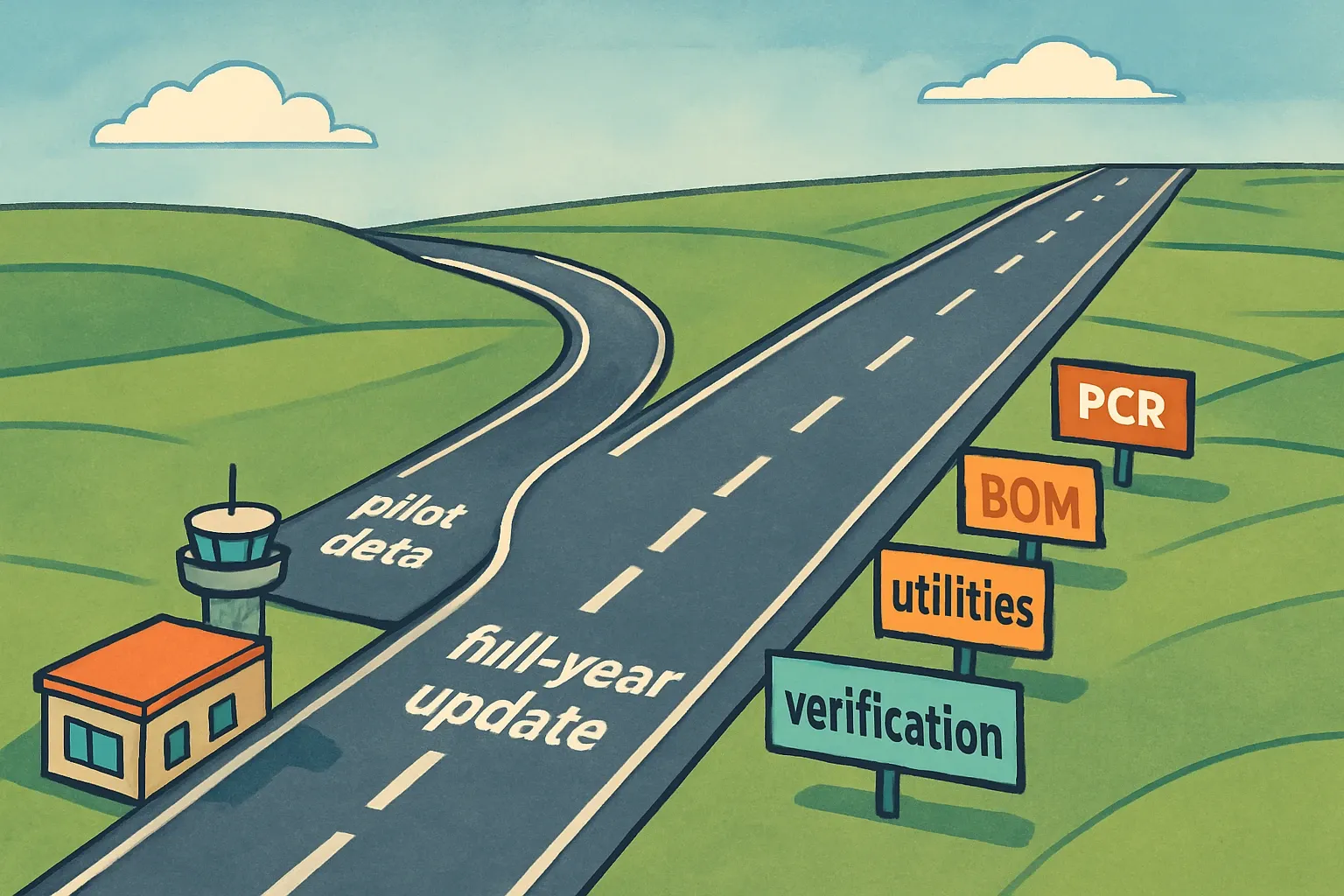
Every EPD needs third‑party verification and typically carries a five‑year validity window. Under current rules, owners must perform an internal follow‑up at least once per year during that period, with updates triggered if results shift beyond defined thresholds (EPD International, 2025) (EPD International, 2025). Platforms that embed this cadence into workflows beat calendar reminders on a whiteboard.
Portfolio management beats one‑off heroics
If you publish dozens of EPDs, governance becomes the job. A portfolio‑grade platform standardizes templates, inherits assumptions across families, and queues verification in batches. Classic LCA tools still shine for novel chemistries or first‑principles R&D, but they can slow multi‑product refreshes where consistency matters more than creative modeling.
When to stay in classic LCA software
You are developing a new process, testing boundary choices, or challenging a PCR interpretation. You want to explore unusual cut‑offs, sensitivity methods, or custom LCIA. In these cases, full control in a modeling tool is the right call, then publish once the design stabilizes.
When a self‑serve EPD platform fits
You refresh data quarterly. Sales needs rapid, credible what‑ifs. Plants change fuels, suppliers, or shifts in grid contracts. You manage many similar SKUs and care that every declaration reads the same, passes review cleanly, and lands in the right operator portal with zero back‑and‑forth.
A quick evaluation checklist
- Governance: Can you lock dataset versions per product and see a model change log with diffs?
- Custom factors: Does it support location‑based and market‑based electricity, with clear factor sources and dates, not mystery numbers (EPA eGRID, 2025)?
- Scenarios: Can non‑experts run what‑ifs without touching verified models, and can experts promote changes with a review trail?
- Data ingest: Will it map common plant exports automatically and preserve unit‑process detail for audits?
- Verification flow: Does it package reports the way program operators expect and schedule annual surveillance tasks inside the workspace (EPD International, 2025)?
- Portfolio scale: Can it replicate templates across product families and queue many EPDs for consistent, repeatable publishing?
Tieing it together
For experienced teams, the question is not tools vs platforms. It is where expertise creates the most leverage. Keep deep modeling for invention work. Use a guided EPD platform to run fast, keep assumptions aligned, and publish repeatably. That is how the spec wins stack up without burning cycles on avoidable rework. And yes, it should definately feel easier every quarter.