Pathways analysis, in plain English
A pathways analysis is a structured way to map how a product’s LCA results can improve over time. Start from your verified EPD model, then test realistic changes in materials, energy, yield, and logistics. Capture the carbon effect, lead time, and commercial upside for each lever, then stack them into a roadmap your team can execute.
Set the baseline the right way
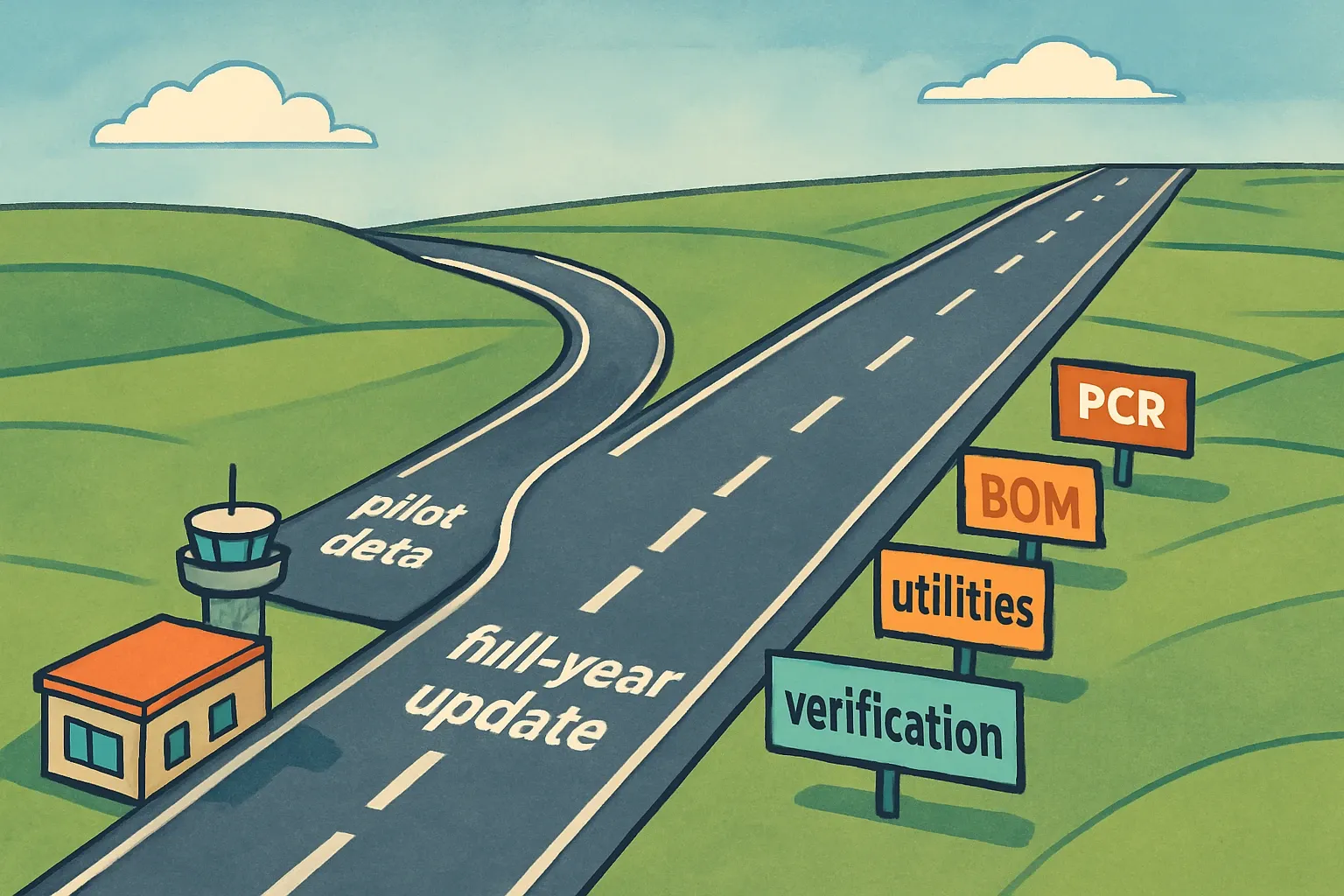
Lock a clean reference year for data, the declared unit, and the PCR and standard in scope, typically EN 15804 or ISO 21930 under ISO 14025 rules. For new lines, a prospective EPD can bridge the first months, then be refreshed once a full year of production data exists. Treat missing meters or approximations as risks to be retired early.
Where the carbon usually hides
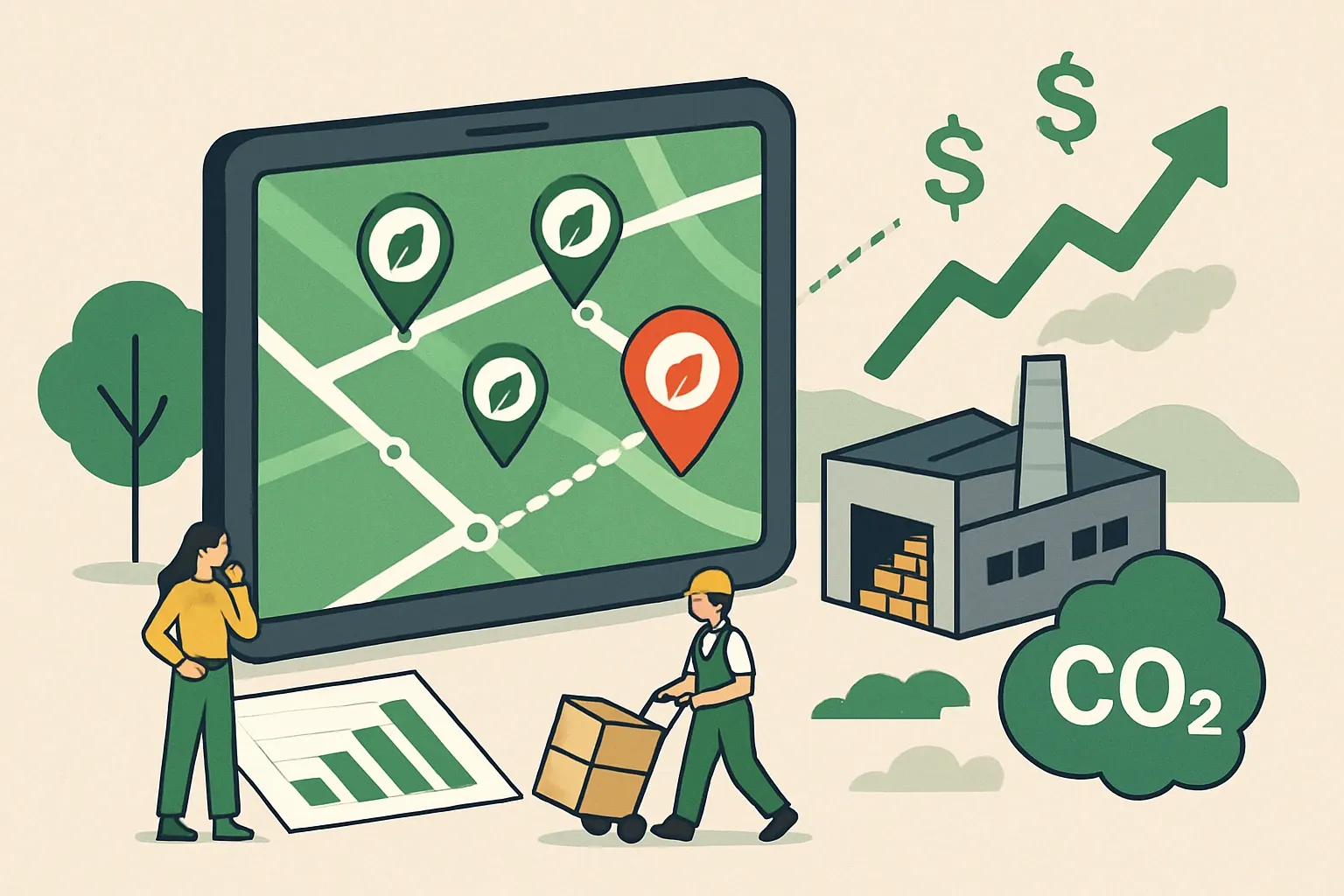
For many construction products, most impact sits in A1 to A3. Electricity and fuel are frequent drivers, so anchor two numbers: the 2023 U.S. grid averaged about 0.37 kg CO2 per kWh across all eGRID subregions (EPA eGRID, 2025); combusting one gallon of diesel emits about 10.19 kg CO2 (EIA, 2024) (EIA, 2024). These constants make quick hotspot math possible when screening scenarios.
The levers that move the needle
Swap electrons before steel. Cleaning purchased electricity or shifting to lower carbon subregions often beats exotic materials on speed. Material tweaks matter too. Recycled aluminium typically saves around 95 percent of energy compared to primary, with similar GHG reductions, where applicable to your design (IAI, 2025) (IAI, 2025). Transport mode shifts, packaging optimization, and yield improvements are reliable thirds in the pecking order.
Make the scenarios comparable
Keep units consistent and assumptions transparent. Model each lever against the same declared unit, same background datasets, and the same plant boundary. Use sensitivity analysis to show how supplier variance or seasonal energy swings change results. If a scenario only works with perfect scrap quality, flag that dependency.
Prioritize with an abatement curve your CFO will respect
Rank every measure on four axes: percent GWP cut, cost to implement, lead time, and delivery risk. Plot them as a marginal abatement curve that the finance team can read in five minutes. Measures that reduce both carbon and cost go first. Measures that raise cost but unlock specs go next because they may pay back in bid wins.
Timelines that match EPD renewal cycles
Most program operators set EPD validity at up to five years, so stage your roadmap to land a measurable cut before the next renewal and a bolder redesign in the cycle after (EPD International GPI, 2024). Prospective EPDs should be revisited once 12 months of data are in scope, which also de risks verification.
Spotlight checks that avoid do‑overs
Confirm PCR version and scope alignment with your competitive set before modeling. Validate declared unit relevance for how the product is sold. For multi‑plant products, decide if you need plant specific EPDs or a representative average. Keep a model log so verifier questions are fast to answer. Small habits, big speed.
Five step modeling playbook
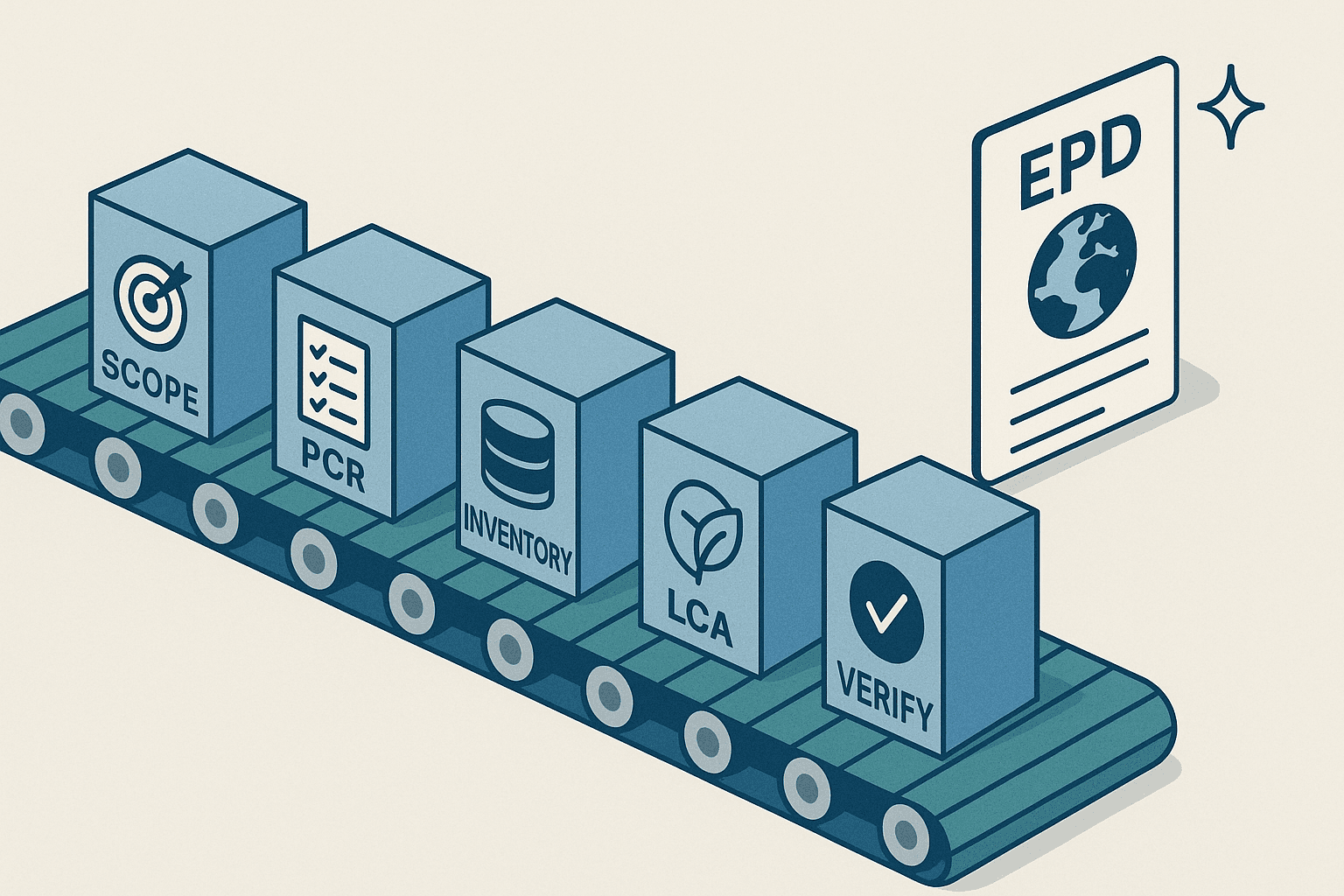
- Baseline the verified model and freeze datasets and system boundaries for comparability.
- Quantify hotspots with quick math on energy and fuels using current factors for your regions.
- Build improvement measures as discrete scenarios with data owners and evidence.
- Rank by GWP cut, cost, lead time, and risk, then draw your abatement curve.
- Lock a 12 to 24 month pathway, assign owners, and set quarterly checkpoints.
Commercial alignment, not carbon theater
A pathway only matters if it helps win specs. Tie each measure to sales enablement materials and plan the EPD update cadence to keep the label fresh. Buyers often apply penalties for products without product specific EPDs, so publishing on time protects margin. This matters alot in bids where low carbon options are shortlisted first.
Quick math you can trust for fast screens
If your product uses 1,000 kWh per declared unit at the plant, a move from a 0.50 kg CO2 per kWh subregion to 0.30 kg cuts about 200 kg CO2 per unit right away, excluding T&D nuance. A 500 mile truck leg at 6 mpg burns roughly 83 gallons, or about 850 kg CO2, before any backhaul credits using the EIA factor above (EIA, 2024). Use these as directional screens, then refine in your full model.
From analysis to action
Pathways analysis is not a slide. It is a sequenced build plan that operations can deliver, verification can defend, and sales can sell. Keep the data collection white glove, the scenarios realistic, and the calendar tied to renewal and launch windows. Do that and your next EPD is more than a document. It is a competitive move.