Why a corporate playbook now
LEED v5 was ratified by USGBC members on March 28, 2025, sharpening expectations for embodied carbon and material health. Market pull is real. Massachusetts alone certified 132 projects in 2024 and Washington, D.C. logged 33.3 LEED square feet per capita, signaling steady demand for transparent products (USGBC, 2024). HPD adoption is also surging, with 13,000 published HPDs covering 40,000 products (HPDC, 2025) (HPD Collaborative, 2025).
Build the portfolio map that prevents silos
Start with a single view of the portfolio. List product platforms, the likely PCR families they align with, geographies, and program operators. Add SKU revenue, margin, renewal risk, and key specs lost due to missing credentials. The result is a heatmap that shows exactly which EPDs and HPDs to do first, and which can ride on shared models.
Decide what is corporate versus business unit
Corporate owns the rulebook and the rails. That means PCR selection principles, data standards, verification approach, document templates, internal QA, and a shared release calendar. Business units own market timing and messaging inside their segment plays. It is like a streaming platform and shows. Corporate maintains the platform. Business units create hits.
Stand up a shared data and modeling layer
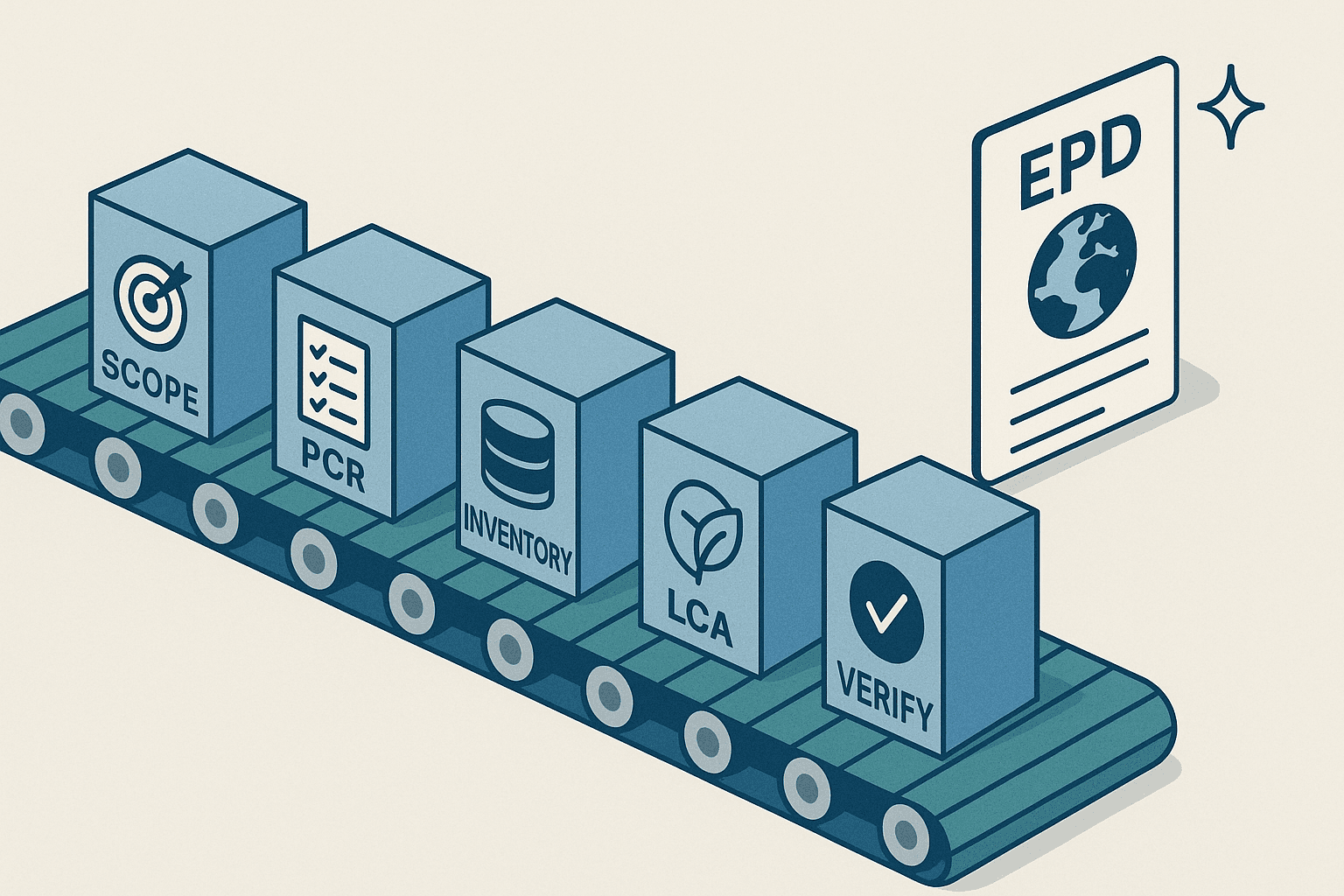
Create one reference-year dataset for utilities, process flows, and waste, with plant-level metering and version control. Lock a common bill of materials schema for all platforms. Reuse LCI blocks across similar lines so teams do not rebuild the same extrusion or curing process twice. This is where speed, ease, and completeness are won.
Standardize PCRs and operator pathways
Pick target PCRs and at least two operator options so schedules do not bottleneck. EPDs are typically valid for five years, and many operators require an annual internal follow up to keep data current, so plan renewals early (EPD International, 2025) (EPD International, 2024). If a PCR is expiring soon, model once and publish under the new version rather than paying for rework later. When no perfect PCR exists, choose the one most commonly used by competitors in that category and document the rationale.
Fund it once, execute many times
Bundle platform work into waves. Pool budget for data collection tooling, supplier onboarding, and gate reviews. Then greenlight unit-level EPDs and HPDs in batches that share foreground data. Select partners who run white-glove data collection inside complex orgs, are operator-agnostic, and can reuse models across platforms without sacrificing verification quality.
Orchestrate releases so sales can win specs
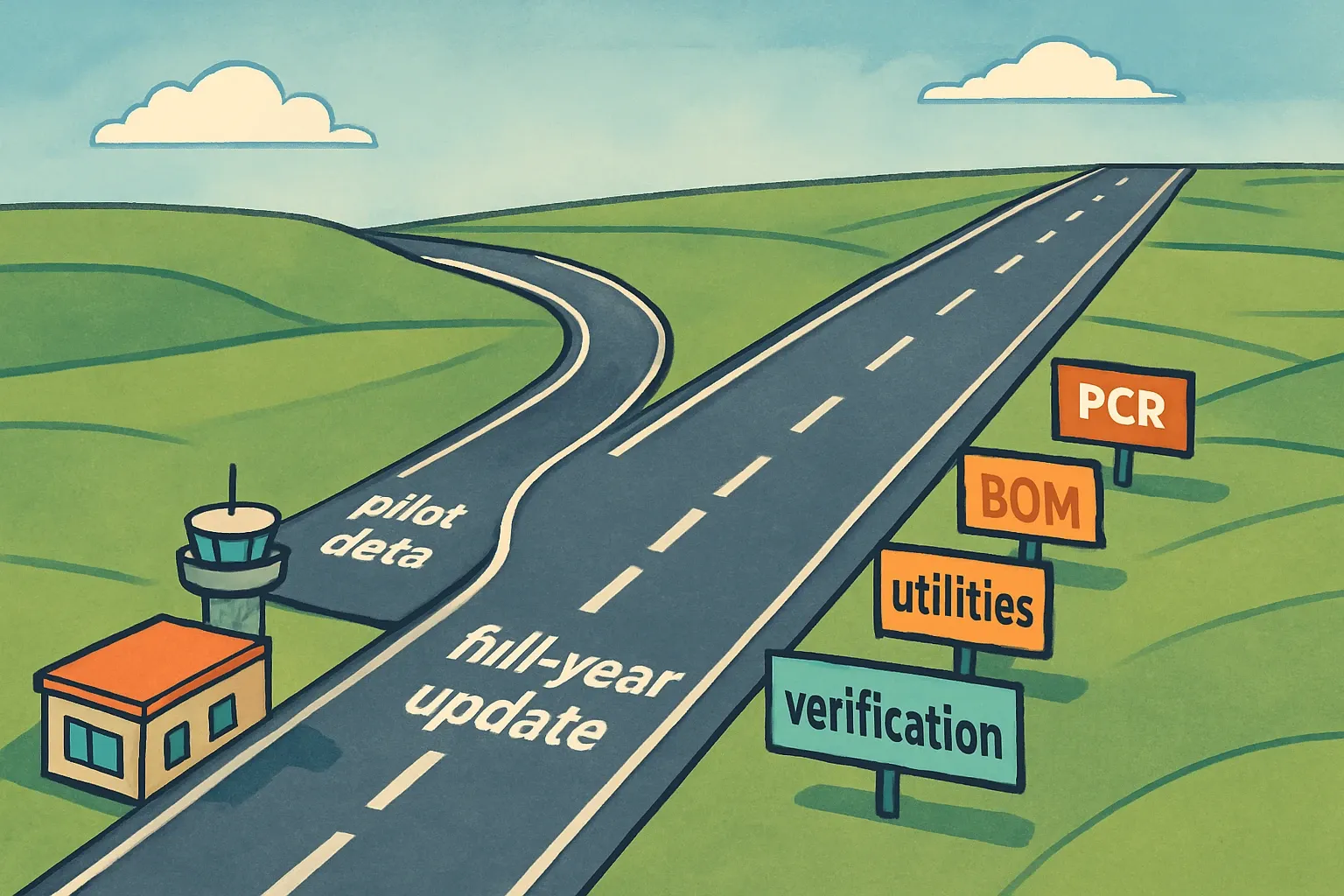
Publish in seasonal drops that align to bid calendars. Flag renewals six months out so there is no lapse that triggers pessimistic accounting on projects. Keep a one-page credential sheet per platform that sales can email in under a minute. When a product is new, use a prospective EPD where allowed and schedule the full-year update immediately after the first reference year closes.
KPIs that actually move the business
Track coverage ratio by revenue: the share of product revenue under current EPDs and HPDs. Track time-to-credential from data request to publication. Track reuse rate of models and datasets across platforms. Reliable cost averages across industries are scarce and vary by portfolio scope, so focus on cycle time and coverage, not mythical unit costs.
A 90-day kickoff plan
- Portfolio map and heatmap. Confirm PCR targets, operator options, and a renewal calendar.
- Data and model spine. Stand up the master data schema, reference-year plan, and verification workflow.
- Wave 1 execution. Launch two to four high-leverage EPDs plus the matching HPDs, with Wave 2 prepped in backlog.
Make EPDs and HPDs a reusable asset
A coordinated play keeps platforms fast on the field while corporate calls the formation. Shared data cuts rework. Standardized PCR choices avoid renewals chaos. Sales gets predictable drops. The outcome is not a binder of PDFs. It is a living system that keeps products in the spec conversation and frees experts to build better products. It is definately worth the discipline.