First, define the fork in the road
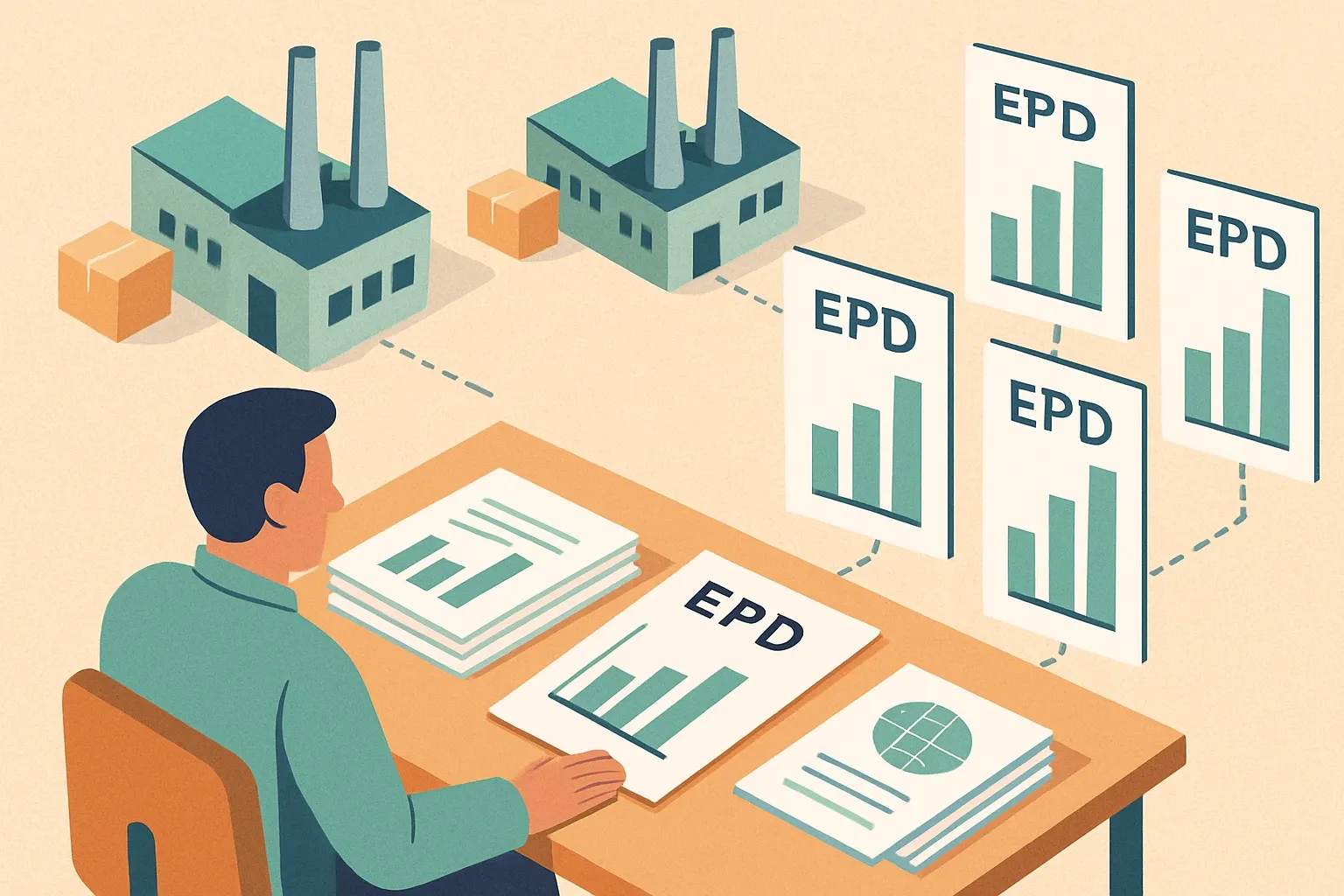
An averaged EPD rolls multiple facilities into one declaration using a weighted method, usually by production volume. A plant‑specific EPD reports results for a single manufacturing site, including its energy mix, scrap and yield, and logistics.
Where public policy is landing in 2025
California’s Buy Clean program sets maximum GWP limits and requires facility‑specific, verified EPDs at installation for structural steel, rebar, flat glass, and insulation. Limits effective January 1, 2025 include 1,010 kg CO2e per tonne for hot‑rolled structural steel and 755 kg CO2e per tonne for rebar, plus category limits for glass and insulation (DGS, 2025) (DGS, 2025). Industry‑wide and company‑wide averages are not accepted for this purpose.
New York requires EPDs for all state concrete mixes starting January 1, 2025, with contract thresholds of at least 50 cubic yards for state agencies above 1 million dollars, and at least 200 cubic yards for DOT contracts above 3 million dollars (NYS OGS, 2025) (NYS OGS, 2025). That is a loud signal. Facility data is quickly becoming table stakes where public money is involved.
When a single averaged EPD still makes sense
If plants use near‑identical inputs, fuels, and scrap rates, and you mainly sell into private projects or markets without facility requirements, one averaged EPD can speed your launch and cover most sales conversations. Quality matters more than quantity here. Weight results by production volume, disclose representativeness, and document the plants included so reviewers do not guess what is behind the numbers.
When plant‑specific EPDs pay back fast
If product GWPs differ meaningfully by plant due to grid mix, fuel switching, or yield, plant EPDs reduce risk in bids and let sales steer to the lowest‑carbon site. They also align with agency rules that screen by facility. Think of it like releasing album tracks instead of a mashup, the playlist is clearer and specifiers can pick the exact cut they need.
The hybrid that wins specs without chaos
Many teams ship a two tier setup. Publish plant‑specific EPDs for the plants that supply regulated or public work states, keep a high quality averaged EPD for the rest of the market. Sales then leads with the plant EPD where required and the averaged file elsewhere. This avoids the either or trap and keeps submittals clean.
Data you will actually need
Plan for one recent 12 month reference year of utilities, material inputs, yields, and outbound transport per plant. Map customers to supply plants early so project teams are not scrambling at submittal time. Most EPDs carry a five year validity period set by program operators, which gives you a practical refresh cadence and avoids last minute expiries during construction (EPD International, 2024) (EPD International, 2024).
Fast reality checks before you choose
If any major customer or public buyer mentions facility thresholds, plant‑specific is the safer bet. If your product line is new and data is thin, start with a tightly documented averaged EPD, then add plant files as volume stabilizes. If logistics shift sourcing across plants, write down who decides the supplying plant so that the EPD attached to a bid is always the right one. This sounds obvious, yet it is the place where submittals most often stumble.
Commercial lens, not just compliance
A compliant EPD removes the generic penalties that otherwise get applied in building LCAs and owner reporting. That keeps your product in play without a race to the bottom on price. One mid sized public win can pay for the program many times over, which is why getting the format right is definately worth it.
A quick decision checklist
- Are public buyers in your pipeline screening by facility, category limits, or both, with numeric caps in bid language?
- Do GWP results vary across plants more than you are comfortable defending in front of a reviewer?
- Can sales reliably map key customers to a specific plant for submittals?
- Will one five year cycle of documents cover your growth markets without constant change requests?
Tie it together
If regulations point to facility data or your plants are materially different, go plant‑specific where it counts and keep an averaged EPD to cover the rest. If processes are uniform and buyers are not asking for facility details, one great averaged file can move you faster. The smartest teams treat EPD format as a go to market choice, not a paperwork afterthought.