What EPD management actually means
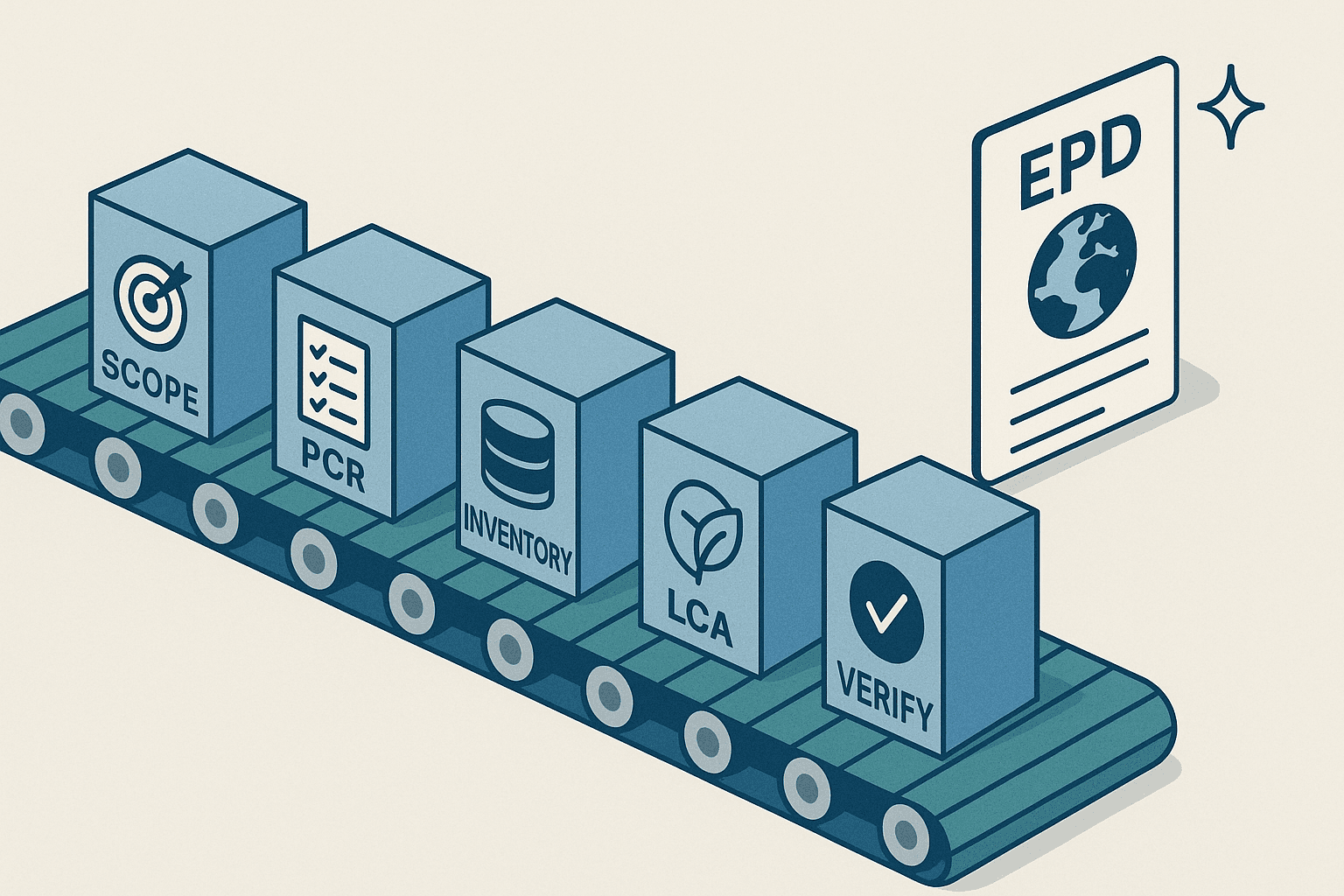
EPD management is the operating system for your declarations. It plans the portfolio, locks the rulebook, gathers plant data, runs the LCA, routes verification, and publishes with the chosen program operator. Think of it like a pit crew for product transparency, keeping cars fueled while the race never stops.
It also keeps score. A good setup tracks PCR versions, renewal dates, verifier comments, and which submittals pulled which EPD file. We see it as governance plus speed, not software alone.
The rules that set your clock
Most construction EPDs are valid for five years, so renewal planning is a scheduling problem, not a surprise. IBU states EPDs are published after verification and “valid for 5 years” (IBU, 2025) (IBU, 2025). The International EPD System requires an annual internal follow‑up and an update if any indicator worsens by at least 10 percent during validity (EPD International, 2025) (EPD International, 2025).
PCRs change, sometimes mid‑project. For construction products, PCR 2019:14 went through an extension and transition window into 2025, with both old and new versions applicable until June 20, 2025 (EPD International, 2024). Once verification is done, registration to the operator’s portal normally takes 1 to 3 working days, so the long pole is upstream work, not the final upload (EPD International FAQ, 2025).
Data that moves the needle
Standards define “good enough” data. EN 15804 requires producer‑specific data to represent a reference year within 5 years, generic data within 10 years, and to be based on a 12‑month average for the declared system unless justified otherwise (CEN EN 15804+A2, 2019). That single paragraph explains why ad‑hoc pulls and partial months create rework.
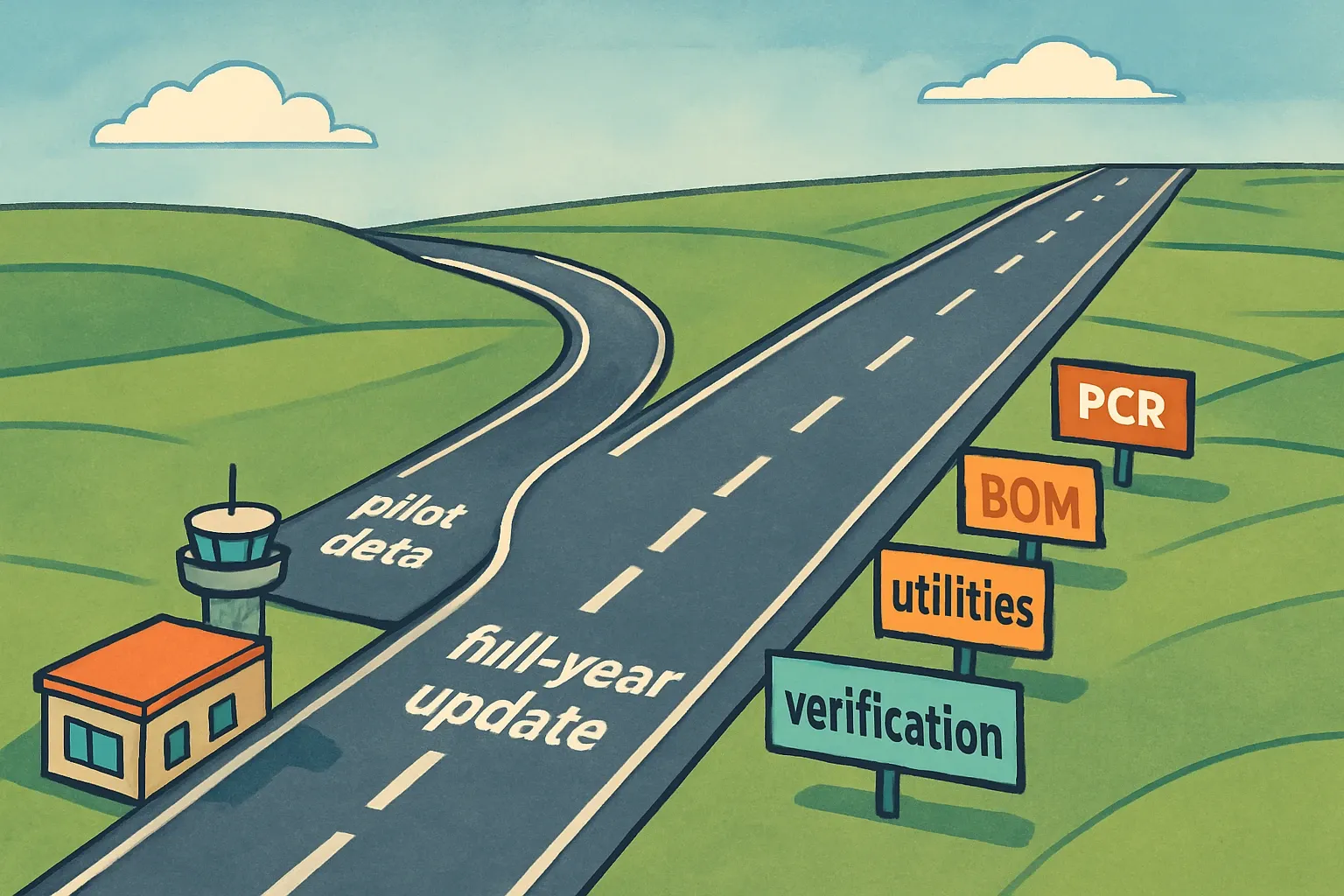
New products can ship “prospective” EPDs with a shorter initial period if allowed by the PCR, then refresh once a full year is available. That keeps bids moving without waiting a year for perfect history.
The software and service mix that actually saves time
Winning teams pair a purpose‑built platform with white‑glove data collection so the plant, procurement, and R&D are not stuck in email archaeology. Templates mirror the PCR, inputs are validated at entry, and gaps are flagged early instead of at verifier review.
Look for multi‑plant modeling with shared bills of materials, a change log that ties every recalculation to a reason code, and exportable digital EPD data alongside the PDF. The payoff is fewer late‑stage corrections and faster verifier turnarounds.
Verification without the bottlenecks
Treat verifiers like editors. Route complete, cross‑checked packs and you shorten review cycles. Operators confirm that publication follows verification, so quality in equals speed out. Build a single source of truth for comments, dispositions, and evidence to avoid déjà vu on every product family (EPD International FAQ, 2025).
If your indicators change materially during the five‑year window, plan an in‑period update. The 10 percent trigger is not just a rule, it is a risk threshold you can monitor with quarterly dashboards (EPD International, 2025) (EPD International, 2025).
Portfolio health, not one‑off heroics
A strong EPD management solution shows a heat map of expiries, PCR transitions, and verifier capacity. It also tags which customers or specs depend on each declaration so commercial risk is visible, not hidden in inboxes.
The goal is simple. Never let a key EPD lapse in the middle of a bid. Most buyers will accept any current EPD, and the age inside the validity window rarely matters, but an imminent expiry can spook a submittal.
LEED v5 and why it raises the bar for orderliness
LEED v5 centers decarbonization and keeps verified, product‑specific EPDs central to materials documentation. USGBC members ratified LEED v5 on March 28, 2025, which increases attention on embodied carbon reporting across trades (USGBC, 2025) (USGBC, 2025). That makes an organized portfolio a sales enablement tool, not just a compliance file.
Integrations that matter more than buzzwords
Pull utility data, ERP volumes, and transport lanes directly into templates so the model reflects reality without copy‑paste risk. Use supplier questionnaires that capture location, weights, and end‑of‑life routes in one shot. Dont automate for its own sake, automate to remove swivel‑chair work and cut cycle time.
How to choose an EPD management solution
Prioritize three things. First, ruthless data collection that respects plant time. Second, transparent LCA workflows aligned to the active PCR and operator. Third, renewal governance that watches five‑year validity, the 10 percent update rule, and verifier capacity at once (IBU, 2025; EPD International, 2025).
Ask vendors to prove they can publish with your preferred operator in the US and EU without locking you in. Program operator agnosticism gives options if business priorities shift.
Your next three moves
- Lock the current PCRs and operators for your top 10 revenue products and confirm their expiry or transition windows in writing (EPD International, 2024).
- Freeze a 12‑month reference year and assign a single coordinator with authority to unblock data requests on day two of the project plan (CEN EN 15804+A2, 2019).
- Stand up a portfolio dashboard that tracks five‑year validity, annual follow‑ups, and verifier load so sales knows what is safe to promise this quarter (IBU, 2025; EPD International, 2025).