What each one actually measures
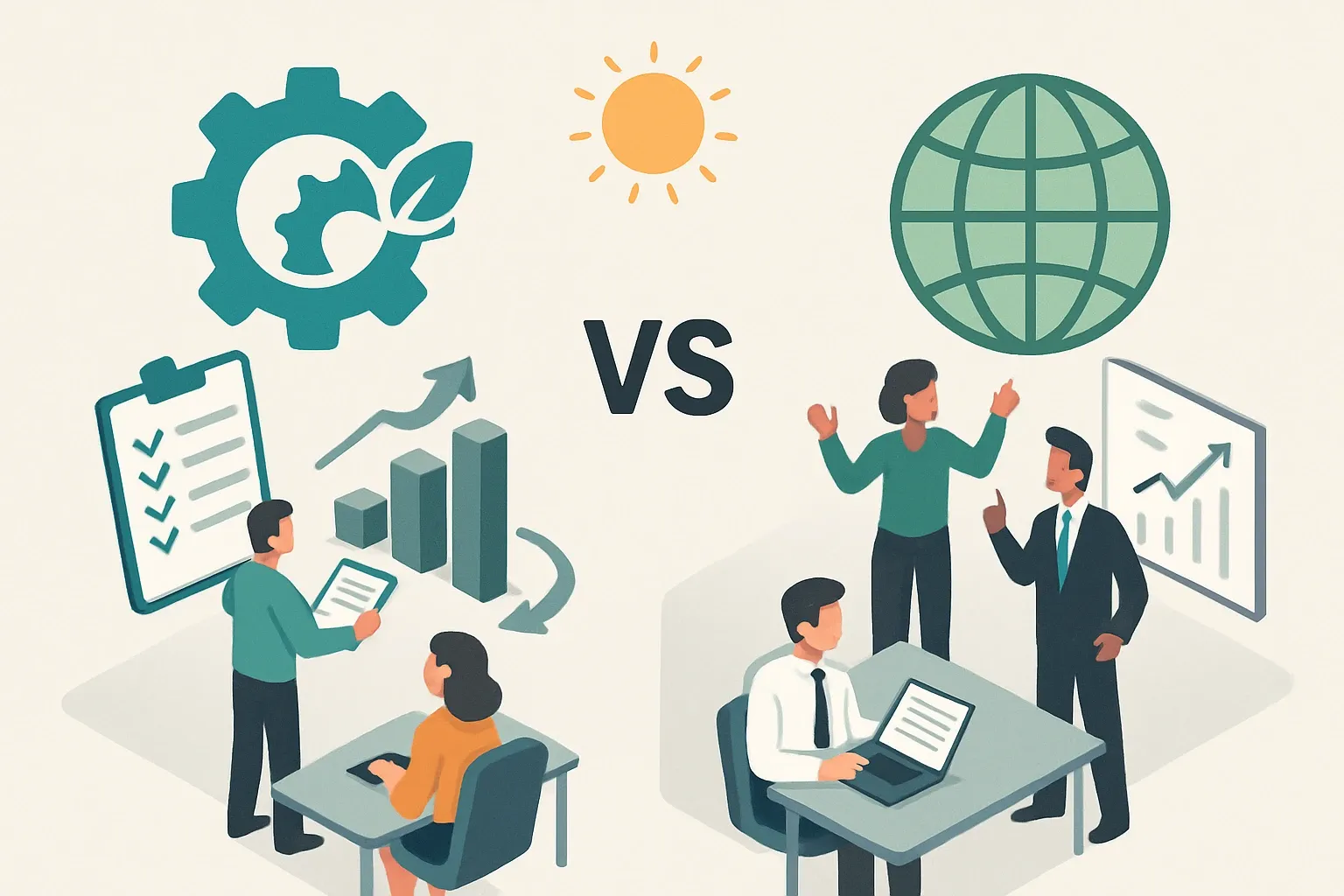
A Life Cycle Assessment looks at a single product or product family, cradle to whatever boundary you choose. Think of it as a high resolution close up.
An Organisational Carbon Footprint totals Scope 1, 2, and material Scope 3 for the entire company under standards like the GHG Protocol Corporate Standard or ISO 14064 1. That is the wide angle shot.
Simple analogy to remember it
LCA is the GoPro mounted on one machine on the factory floor. OCF is the drone flying over your whole site and suppliers.
Both views matter. They answer different questions and feed different stakeholders.
Choose LCA when product wins are on the line
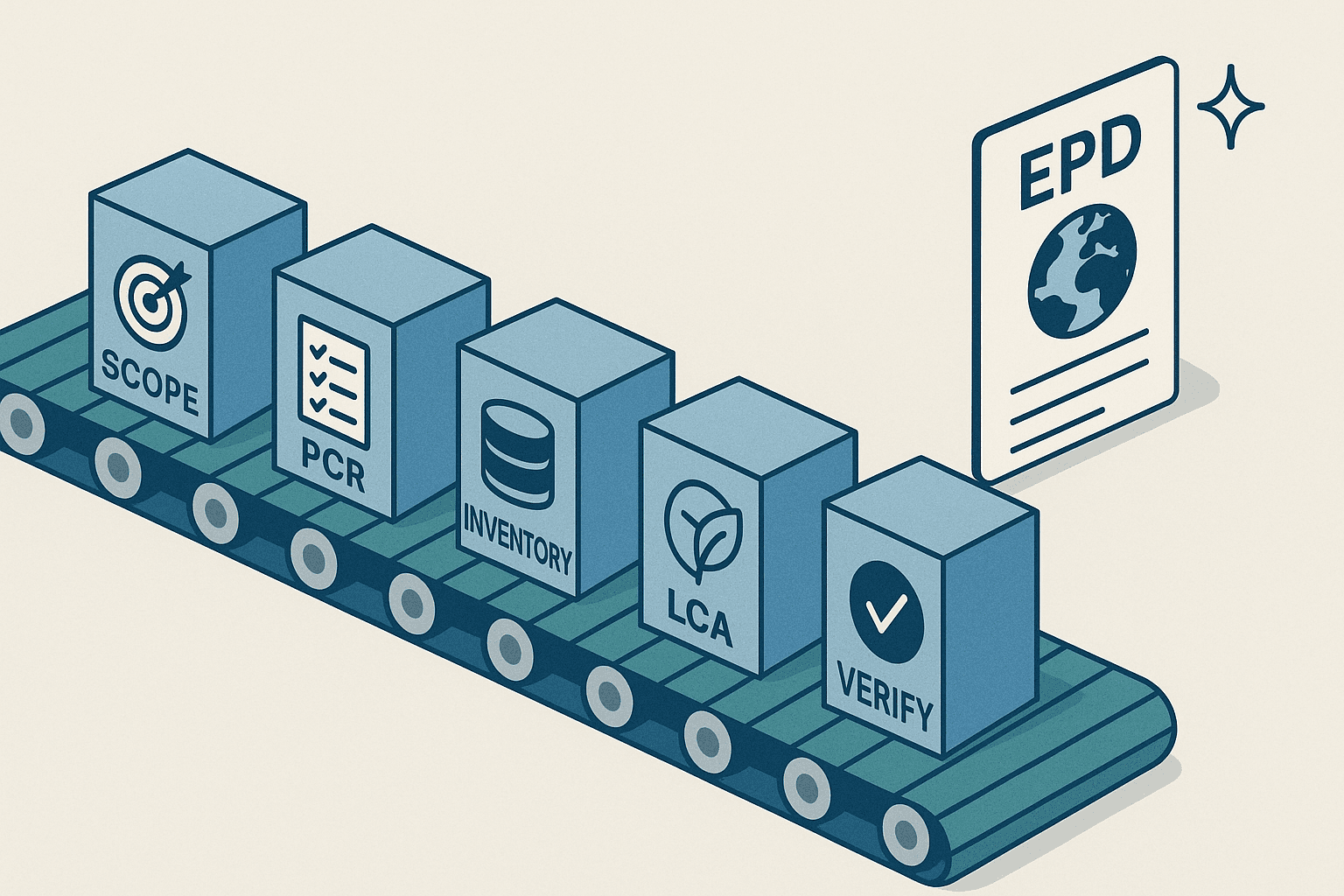
Bids and specs still ask for product specific EPDs because they are third party verified and comparable within a given PCR. EPDs typically remain valid for five years before renewal is due, which fits common bid cycles well (EPD International, 2024) (EPD International, 2024).
If sales is blocked on projects that require EPDs, LCA is the most direct unblocker. It is also the only route to credible product design trade offs with quantified impacts.
Choose OCF when corporate disclosure is the driver
OCF is the right starting point if the board or lenders want a company level baseline. CSRD phases in reporting for financial year 2024 for public interest entities over 500 employees, then 2025 for other large companies meeting two of three thresholds, including 250 employees or 40 million euros in net revenue (European Commission, 2024) (European Commission, 2024).
Most manufacturers find Scope 3 dominates the total, often an order of magnitude larger than Scopes 1 and 2 combined on average across sectors (CDP, 2024) (CDP, 2024). That makes supplier engagement a priority in OCF scoping.
How they feed each other
An OCF baseline spots the big sources, then LCAs dive into the highest impact product lines to cut intensity. New LCAs roll back up as better product emission factors, improving next year’s OCF math.
LCA insights also sharpen procurement requests. If a resin change drops A1 to A3 impacts, purchasing can negotiate that improvement at scale.
Data effort and what to expect
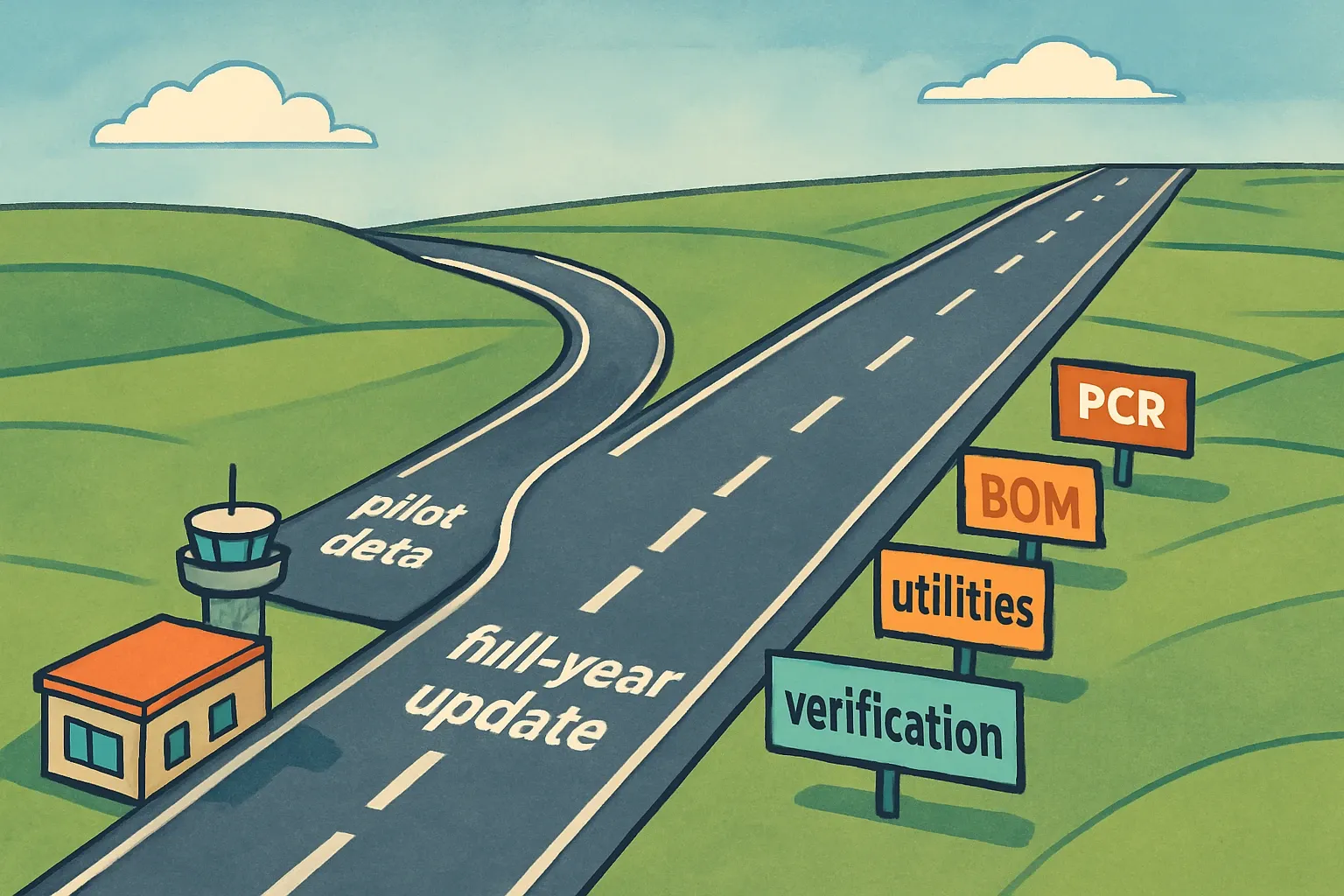
A product LCA usually relies on one reference year of plant level data for energy, materials, yields, and waste. For a brand new line, a shorter prospective window is possible, then updated once a full year exists.
An OCF pulls from utility bills, ERP volumes, fleet fuel, and supplier questionnaires. The heavy lift is Scope 3 data quality. A partner that collects primary data from operations and suppliers for you will save real time.
ROI logic you can explain to finance
Product specific EPDs remove penalties many design teams face when they must use generic, conservative factors. That keeps your product in play on low carbon projects rather than getting swapped for a competitor with an EPD.
OCF, by contrast, reduces transition risk and aligns financing or customer scorecards. It is less visible in a single bid but strengthens the license to operate with large accounts.
Pitfalls to avoid
Do not treat an OCF as a substitute for product claims. It will not unlock an EPD credit or meet spec language that calls for a verified declaration.
For LCA, align the PCR and program operator up front and check validity windows so the EPD does not expire mid pipeline. Also confirm system boundaries so marketing claims dont drift beyond what is verified.
A fast decision checklist
- Need an EPD for a live bid or a catalog line that is frequently specified. Go LCA first.
- Need a corporate baseline for CSRD or investor reporting. Go OCF first.
- Chasing both. Start OCF to map hotspots, then prioritize two or three LCAs for the biggest revenue or impact lines.
What good execution looks like
For LCA, insist on clear data requests, plant friendly templates, and a project manager who chases inputs so engineers can keep building products. Publication through a recognized operator and a tidy EPD PDF are table stakes.
For OCF, expect a defensible Scope 3 screening, a plan to replace averages with supplier specific data over time, and documentation aligned to GHG Protocol.
Make the call with clear criteria
If the blocker is sales access to projects that require EPDs, choose LCA now. If the blocker is stakeholder disclosure or strategy, choose OCF now.
Most manufacturers benefit from a one two punch. Get a company footprint that sets direction, then deploy focused LCAs where margin and market share are won.