What an LCA tool actually does for a manufacturer
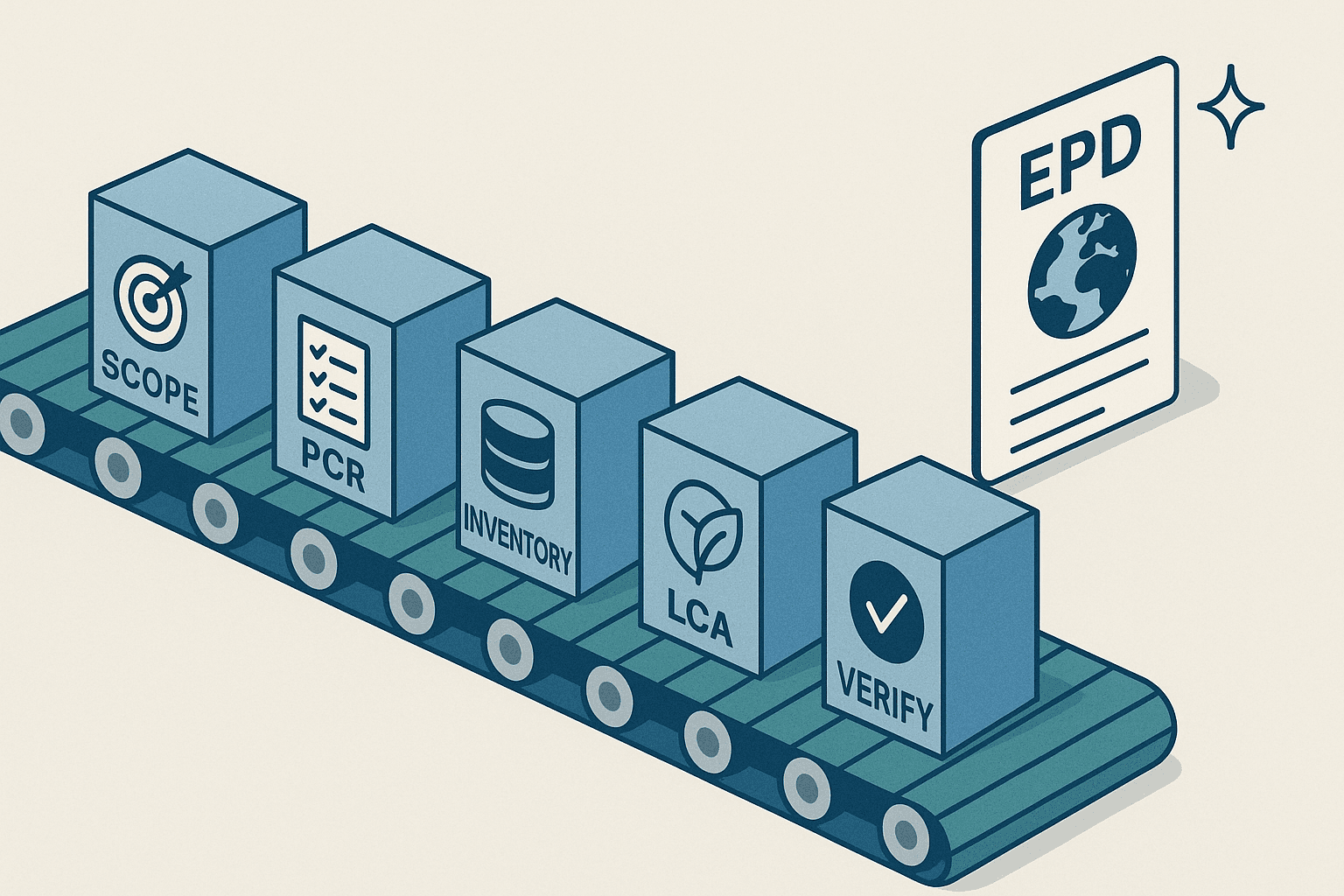
An LCA platform builds auditable product models that flow into EPDs and sometimes HPDs. Think of it as a disciplined spreadsheet with physics, chemistry, and supply chains baked in. For construction products, success is measured by how quickly those models become third‑party verified declarations that specifiers can rely on.
The core standards your tool must serve
Any credible setup should model to ISO 14040 and 14044, then publish to ISO 14025 and EN 15804+A2. That means full life‑cycle modules from A1 to C4, with Module D when relevant, and output that matches program operator templates. EN 15804+A2 also expands reporting beyond a single carbon line, so software must clearly separate fossil, biogenic, and land‑use change carbon and provide a combined total.
Databases decide your results more than buttons do
Background datasets shape the footprint of metals, cement, polymers, and electricity mixes. As one example, the global steel sector reported an average of about 1.92 tonnes CO2 per tonne of crude steel in 2023, which shows why choosing realistic, region‑appropriate datasets matters for A1 to A3 modeling (World Steel Association, 2024) (worldsteel, 2024). If a tool cannot show source, version, geography, and data age at a glance, comparisons get fuzzy fast.
Verification and program operator alignment
EPDs must be independently verified. Most program operators set a five‑year validity window, so your model, report, and XML need to match that operator’s rules without post‑processing gymnastics. IBU states that an EPD is valid for five years and reminds applicants to plan several weeks for verification and approval, which affects launch timing (IBU, 2024) (IBU, 2024). EPD International likewise notes that validity is normally five years and that updates are required if significant changes occur during that period (EPD International, 2025) (EPD International, 2025).
Data collection is the bottleneck, not the math
Most delays come from pulling utility bills, scrap rates, transport legs, and BOMs across plants. The best setups make data entry feel like guided intake, accept spreadsheets and API feeds, flag gaps early, and keep a single reference year per product while allowing plant‑specific variants. If a tool expects engineers to retype ERP data by hand, it will lose to a process that actually wrangles the data for them.
Want to accelerate your EPD creation process?
Follow us on LinkedIn for insights that help you streamline workflows and boost ROI on your next EPD.
Comparison criteria that matter more than logos
When people search for an lca software comparison, they are really comparing workflows. Use this quick checklist to separate signal from noise.
- Data provenance shown for every dataset, including geography and version, with change logs you can export.
- EN 15804+A2 ready output in both human‑readable PDF and machine‑readable XML, mapped to your chosen operator’s schema.
- Clear modeling of multi‑plant, multi‑SKU families, with parameterized scenarios and lockable defaults for verifiers.
- Built‑in QA tools, like mass and energy balance checks, transport sanity checks, and alerts for missing modules.
- Reviewer view that exposes assumptions and cut‑off rules, with side‑by‑side revision tracking.
- Secure roles so sales can pull EPDs without touching models, while LCA leads keep control.
- Evidence pack exports that bundle background data, calculations, and references for verification in minutes, not days.
Integrations that reduce swivel‑chair time
Look for importers for common ERP and MES exports, electricity mix auto‑updates by region, and BOM parsers that tag materials to the correct datasets. Accuracy improves when the tool reads your plant’s meters and meters your data changes. If IT cannot green‑light it in one security review, your timeline slips.
Regulatory context, without the whiplash
LEED v5 continues to reward product‑specific, third‑party verified EPDs in project documentation and submittals. Federal incentives and Buy Clean rules have shifted in early 2025, so prioritize owner and code‑driven requirements, and publish to the operator your customers prefer. If you also report under EPA’s GHGRP, remember the 25,000 metric ton CO2e per year reporting threshold when aligning facility data pipelines to feed both compliance and LCA models (US EPA, 2025) (US EPA, 2025).
How to run your own apples‑to‑apples trial in one afternoon
Pick one high‑volume product. Set the same reference year, plants, and transport legs. Import the same BOM and electricity mix. Build A1 to A3 first, then add A4 and C1 to C4. Export PDFs and XMLs and give them to a verifier for a quick plausibility read. Time the steps, count the manual edits, and note any missing indicators. If the second iteration still takes days, the tool or the process is not ready.
Speed and ROI, spelled out for product teams
Publishing earlier means more bids where the EPD box is ticked rather than penalized. Sales teams do not chase projects that require EPDs if they know the declaration will land after the spec is awarded. A good LCA workflow frees R&D and plant leaders from data hunts so they can focus on improvements that actually lower impacts. The cost of the credential is often dwarfed by a single mid‑sized project win, and that is the commercial reality we care about.
The practical bottom line
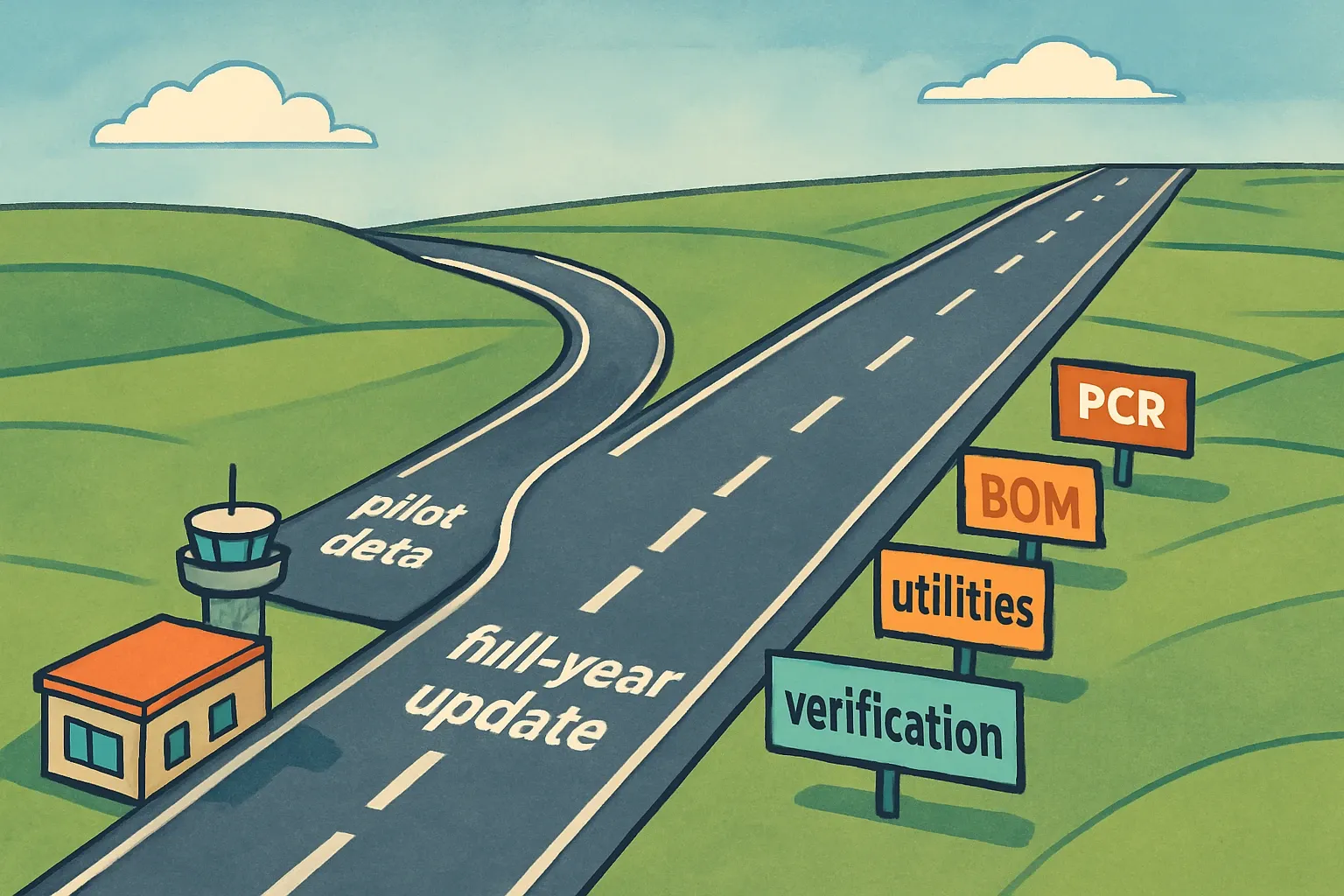
Great LCA software is only half the win. Pair it with a white‑glove data collection process, insist on EN 15804+A2 output that verifiers recognize on sight, and align with a program operator that your customers already use. Get those three right and your next EPD will feel less like turbulence and more like a smooth takeoff. And dont forget to start with clean reference‑year data, because everything else sits on top of that foundation.