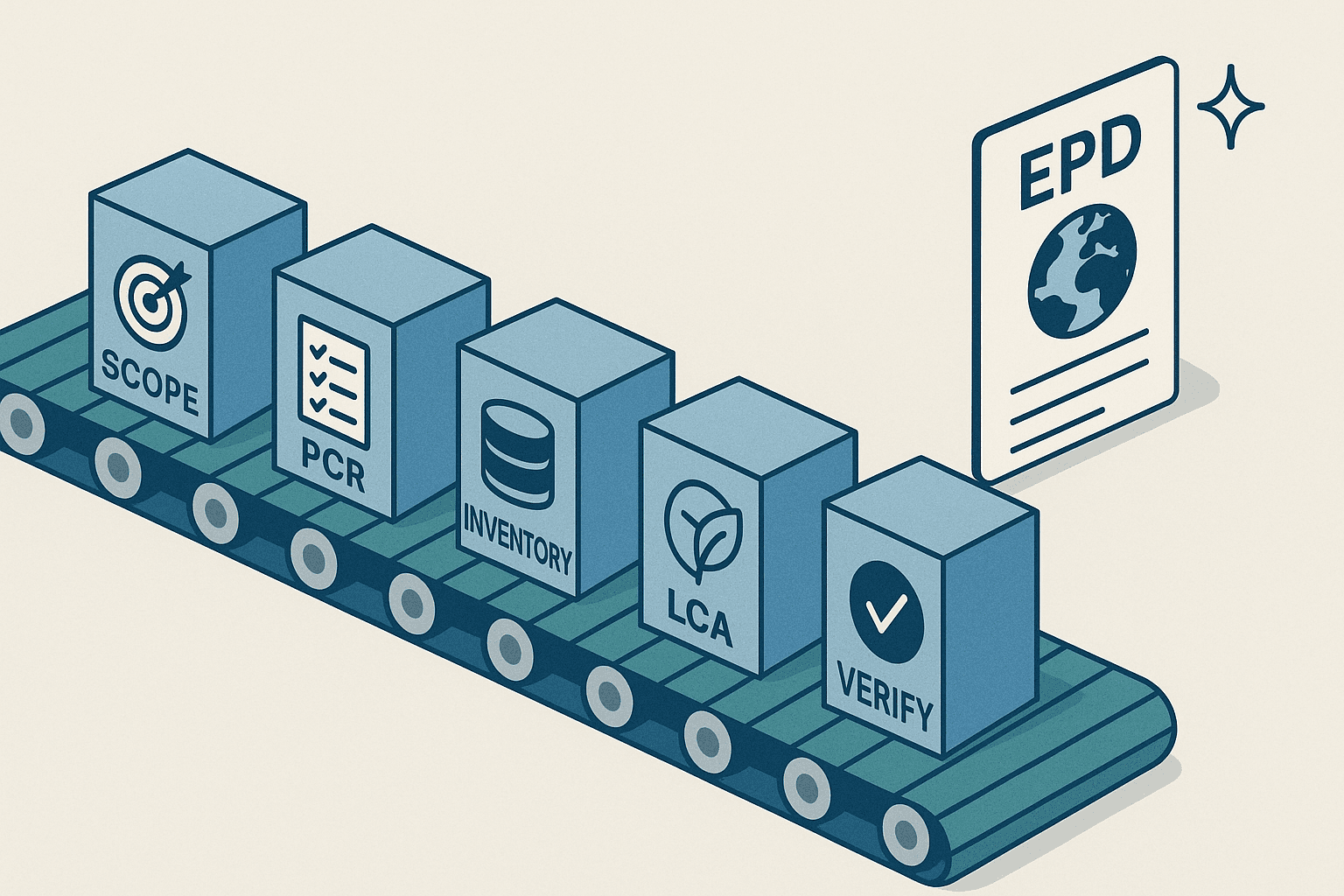
Start with the rulebook, not the spreadsheet
A PCR is the rulebook of Monopoly: ignore it and the game falls apart. Many construction PCRs follow EN 15804, which requires models to cover at least 95 percent of total mass, energy, and environmental relevance, so perfection is not the target, coverage is (EN 15804+A2, 2019). That single number is your north star when deciding what to model in detail and what to group.
A right‑sized BOM structure
Use three layers that mirror how factories and LCAs work. Level 1 is the finished product. Level 2 is subassemblies that ship or are built as units. Level 3 is parts and materials with purchasing units, suppliers, and the LCI dataset you plan to map.
That structure keeps ownership clear for data collection, and it slots neatly into background databases during modeling. It also makes changes easy to version and reuse across product families.
Set practical cutoffs that match the science
Adopt a working policy that aligns with the 95 percent rule. Model exact if a component drives more than a few percent of mass, cost, or energy, or if it is chemically sensitive like resins and alloys. Generalize when items are small, homogeneous, and consistent across SKUs like screws, clips, or minor shims.
Write the rule down so teams stop debating every washer. The policy should cover mass thresholds, toxicity flags, and any customer‑critical attributes such as recycled content claims.
Shared parts across families deserve a component library
Create a reusable component list with unique IDs, parametric fields, and an LCI mapping baked in. When a hinge, extrusion, or insulation batt repeats across ten SKUs, the library pays for itself on day one. Version components when suppliers, recipes, or energy mixes change so past EPDs remain auditable while new ones stay current.
The small stuff without the small talk
Fasteners, labels, protective films, and minor fittings can be grouped into sensible buckets such as Hardware mix, Packaging mix, and Adhesives mix. Track the total mass, typical material split, and a single dataset link for each bucket. If any bucket creeps above your cutoff or contains a hazardous substance, break it out.
Map once to background datasets, then reuse
Choose representative LCI datasets upfront, document the rationale, and stick with them for the library components. When electricity is a key driver, align the dataset with the factory’s grid region and the reference year so results do not drift across product lines. If the power mix updates, create a new component version instead of quietly swapping the dataset.
Verifier‑friendly checkpoints
- A clear mass balance that shows included, grouped, and excluded items, tied to the 95 percent coverage rule (EN 15804+A2, 2019).
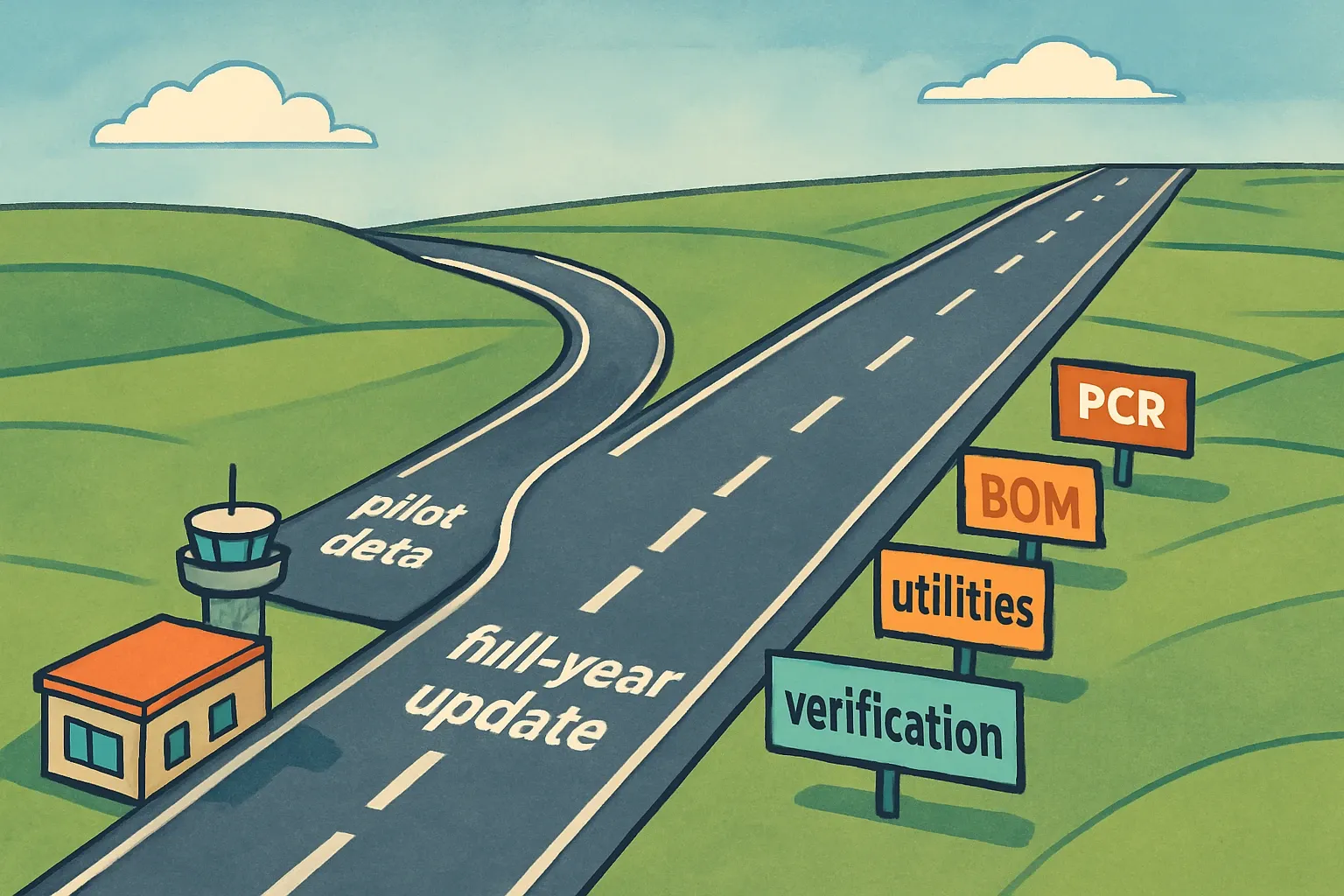
- A single reference year for utilities and volumes, stated plainly in the model notes.
- Transport distances and modes that match purchasing records, not guesses.
- Consistent units between purchasing, BOM, and LCI datasets.
- Rationale for any grouped buckets and the dataset chosen for them.
These five signals lower review friction and speed approval. They also make internal audits less painful later.
When detail should increase
Crank up granularity when a component is carbon heavy like primary aluminum, when it is chemistry sensitive like isocyanate‑based foams, or when a customer claim depends on it such as recycled content. Increase detail for in‑use replacements or consumables that recur in later life cycle modules because small parts can add up over time.
Plan for renewal and PCR updates without rework
Most program operators set EPD validity at up to five years, which means a solid component library amortizes quickly across renewals and product refreshes (EPD International GPI, 2023). When a PCR version changes, the library lets you remap only the affected components and carry forward everything else. That is how teams avoid the dreaded rebuild from scratch.
A quick sanity test before sending to LCA
Open the BOM library and ask three questions. Do the top five mass contributors have exact datasets and supplier ties. Do grouped buckets stay under your cutoff and include a written rationale. Does the reference year match the utility bills attached to the model. If yes on all three, you are definately ready.
The payoff for getting detail right
Right‑sized detail accelerates modeling, reduces verifier comments, and keeps numbers stable across SKUs so sales can speak with confidence. It also flips future EPDs from month‑long slogs into short cycles because most of the heavy lifting already lives in your component library. That is real speed with real quality, not spreadsheet heroics.