What “verification” actually means
Verification is an independent check that your Life Cycle Assessment and the EPD document conform to the correct rules. Think of it like a pre‑flight inspection for your product story, where a qualified verifier reviews the LCA model, the data sources, the calculations, and the EPD text against the Product Category Rules and the program operator’s handbook. No spin, just evidence.
The rulebook behind the check
Two pillars set the ground rules. ISO 14025 defines Type III EPDs and requires independent verification. EN 15804 is the construction material playbook that spells out how impacts are modeled and reported. A PCR narrows those rules to your product category, so the verifier evaluates you against that exact rulebook, not a generic guess.
Who does what, and when
- Manufacturer provides facility and product data and signs off on accuracy.
- LCA practitioner builds the model, documents assumptions, and drafts the EPD.
- Independent verifier reviews methods, datasets, calculations, and the draft.
- Program operator performs a quality check, registers, and publishes the EPD. One team can handle coordination across these roles, yet the verifier must remain independent of the LCA modeling to avoid conflicts of interest.
The step‑by‑step verification flow
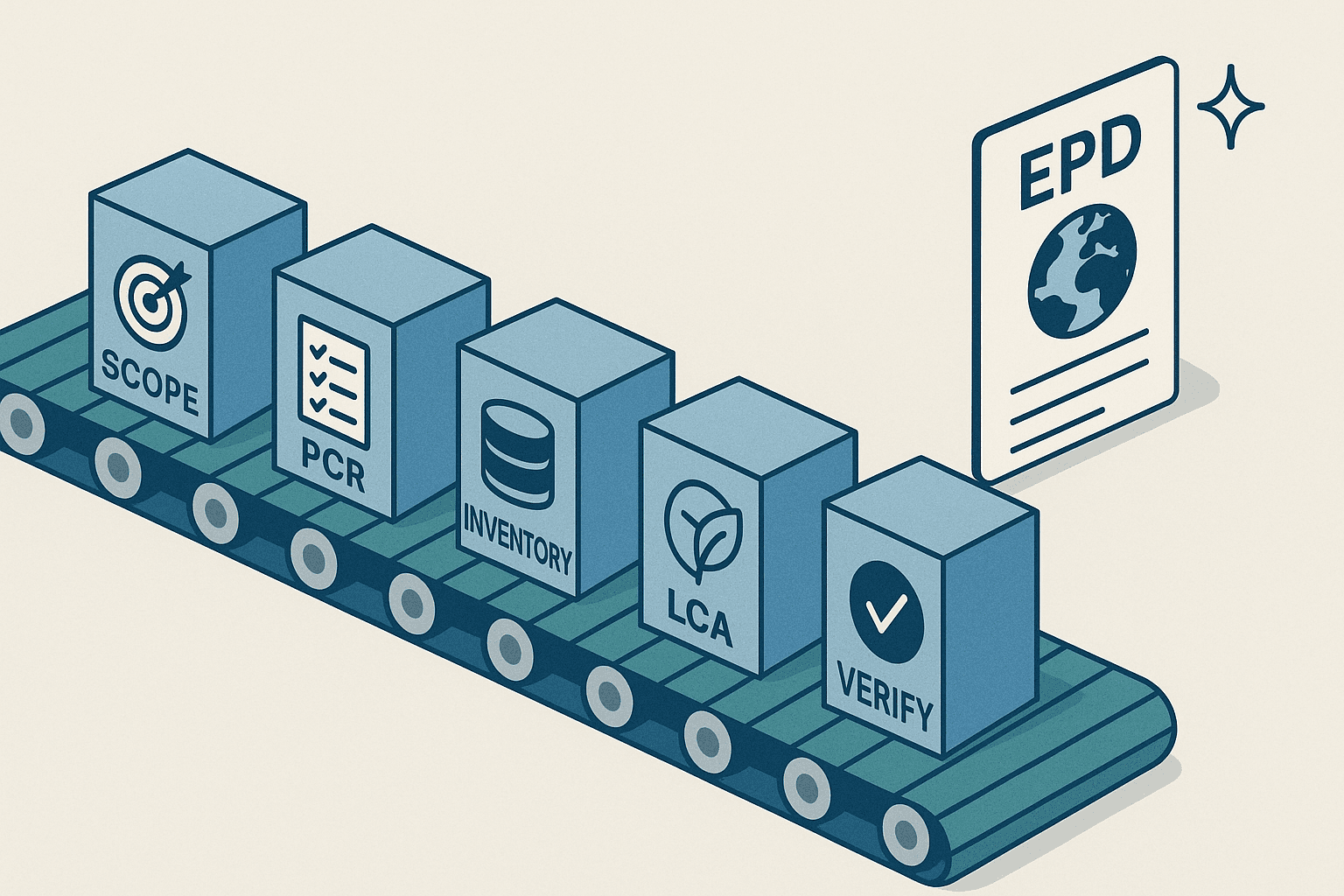
First, scope the PCR and system boundaries so there is no moving target. Next, assemble primary data, build the LCA, and produce a draft EPD that aligns to the PCR’s reporting tables. The verifier then reviews the model files and the draft, asks questions, and requests corrections. After final fixes, the operator does a formal check and publishes the EPD with a registration number.
Ready to streamline your EPD verification process?
Follow us on LinkedIn for insights that help you enhance trust and win more projects.
The data bar you have to clear
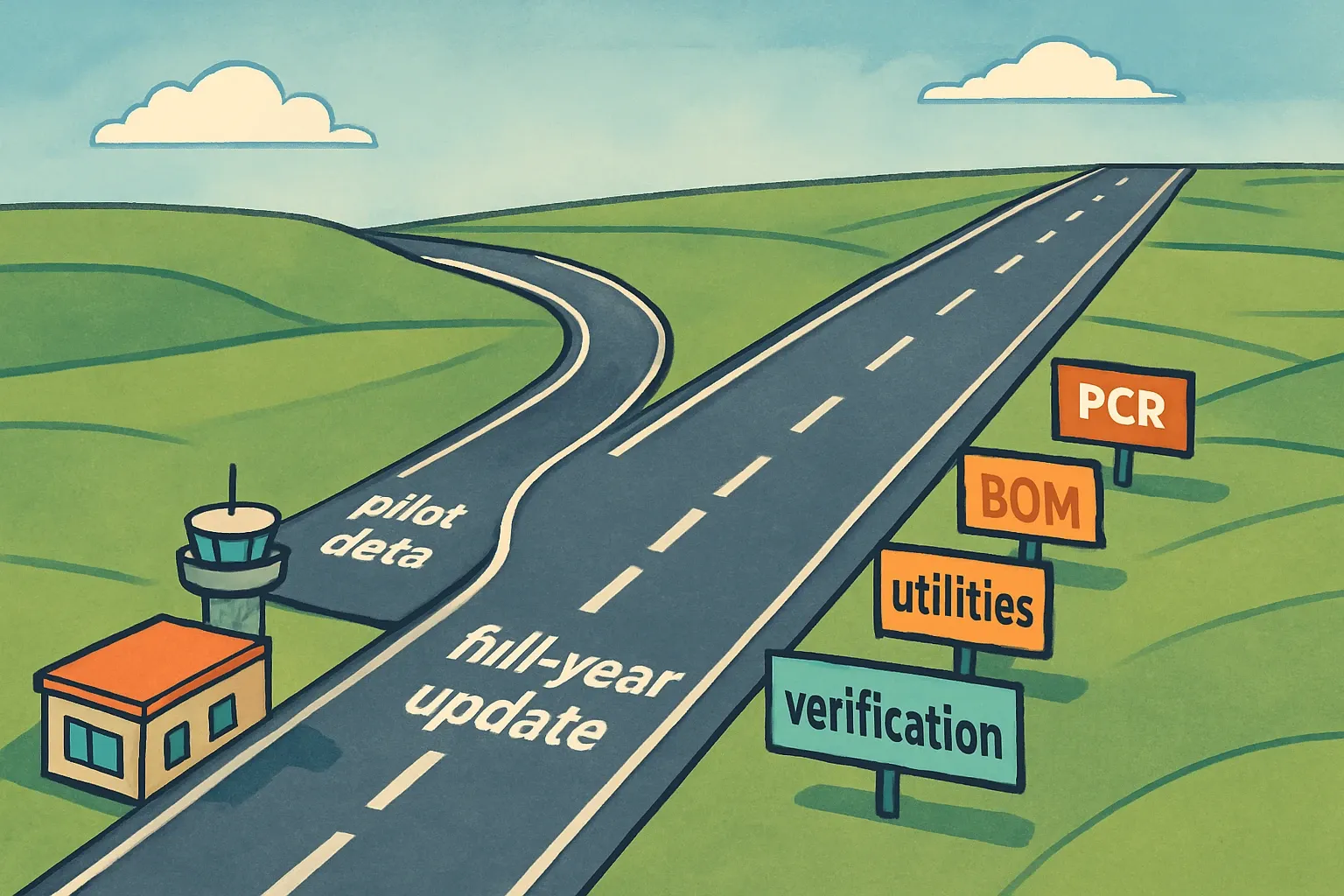
Primary production data for product‑specific processes should cover at least 12 consecutive months to be representative of normal operations, which is a common requirement in EN 15804 for construction products (EN 15804, 2019). Shorter periods are possible for new lines with prospective EPDs, but expect tighter scrutiny and a required update once a full year exists.
How long the EPD stays valid
Across major programs, EPDs are generally valid for five years, after which renewal is needed, sometimes sooner if processes change materially (The International EPD System GPI, 2024) (Environdec GPI, 2024). IBU states five years for building product EPDs (IBU, 2024) (IBU, 2024). UL Solutions also sets a five‑year validity for its EPD program (UL Solutions EPD Program, 2024). PCRs can expire during that window, yet your EPD remains valid until its own expiry, then must renew under the current PCR.
What verifiers actually look for
Material and energy balance that makes sense, consistent system boundaries, correct use of background datasets, and transparent allocation. They check that declared units, modules, and impact indicators conform to the PCR, that cut‑off rules are justified, and that any claims in the EPD text match the numbers. If the model and the message diverge, verification stops until they align.
Common blockers that slow everything down
Missing utility invoices or inconsistent mass balance between inputs and outputs. Outdated PCR selection that competitors do not use anymore. Unclear co‑product allocation logic. The cure is boring and effective, keep a clean data room and align on the PCR before modeling starts.
Pre‑flight checks that de‑risk verification
- Confirm the PCR and operator before data collection so tables and modules match.
- Lock the reference year and facilities in scope, then freeze them unless a change is approved.
- Keep citations for every primary data point, including who provided it and when.
- Store the LCA model, EPD draft, and change log in a shared workspace the verifier can access.
Picking a program operator and verifier, pragmatically
Choose an operator recognized in your sales geographies and a verifier approved by that operator. Look for reviewers who know your product category and datasets used in your region. Favor teams that handle data wrangling and scheduling across plants. That white‑glove coordination is what keeps review cycles short and predictable, which is definately what commercial teams want.
When your process changes mid‑cycle
Significant shifts in energy mix, formulations, or yields can make published results obsolete. Most operators expect you to update the EPD early if the change materially affects impacts, or at renewal at the latest. If precise thresholds are not stated publicly, ask the operator in writing and document the decision. Better a small update now than a major correction later.
What this unlocks commercially
A third‑party verified EPD signals reliability to specifiers and procurement teams, which means fewer clarifying emails and less risk of being swapped late in the bid. It also helps future proof marketing claims. Verification is not just a compliance checkbox. It is a trust accelerator that lets product teams focus on the next launch while the numbers speak for themselves.