What “validity” means in an EPD
An EPD’s validity is the window during which the verified declaration can be used in market claims and project documentation. Most program operators set this window to five years from verification, noted as a “valid to” date on the PDF (EPD International FAQ, 2025, EPD International, 2025). The operator, not the manufacturer, controls the ground rules through General Programme Instructions and the applicable PCR.
Do PCR expiries invalidate an EPD
Short answer, no. When a Product Category Rule expires or is revised, your already published EPD keeps its original validity. You move to the updated PCR at renewal, not midstream, unless you voluntarily update sooner (EPD International GPI, 2024). Most PCRs themselves run on five year cycles before review, so expect changes to roll through on that cadence (UL Solutions, 2025, UL Solutions, 2025).
Surveillance and “material change” triggers
Validity is not a free pass. If any reported indicator worsens by more than 10 percent during the validity period, the EPD must be updated, even if its expiry is years away (EPD International FAQ, 2025, EPD International, 2025). Common triggers include a significant recipe change, a new plant or line with different utilities, or a major energy mix shift after a power contract renewal. Keep a light monitoring cadence so surprises do not arrive at a spec deadline.
EN 15804+A2 made some EPDs “valid but dated”
Europe’s EN 15804+A2 expanded mandatory reporting from seven to thirteen core indicators and split carbon into fossil, biogenic, land use change, and a total number. Many older A1 based EPDs remain valid, yet are harder to compare in tools that expect A2 data. Buyers notice when two PDFs do not speak the same language, so plan your next renewal to A2 if you have not already (CEN EN 15804+A2, 2020).
Ready to keep your EPD valid and competitive?
Follow us on LinkedIn for practical insights that ensure your declarations meet project specifications and win tenders.
Does an expired EPD still count
An expired EPD can remain visible in some operator libraries for transparency, but it is typically not acceptable for active marketing or to satisfy current procurement rules. Most project teams will ask for a current EPD when submitting documentation to earn credits or comply with embodied carbon requests. Our take is simple, schedule the refresh at least six months ahead of expiry so verification timing does not pinch a bid.
Quick checks when someone asks "is this EPD valid"
- Open the PDF and find the “valid to” date on the cover or declaration page.
- Confirm the program operator listing still shows the EPD as current in its portal.
- Note the standard and PCR version. A2 versus A1 tells you about comparability, not just validity.
Validity across markets and rating systems
Program operators differ in templates and portals, yet the five year pattern is consistent across major schemes such as IBU in Europe, which also states EPDs are valid for five years before update is required (IBU, 2024). LEED v5 was ratified by USGBC members on March 28, 2025 and recognizes verified EPDs within its decarbonization focus, so teams will keep requesting up to date product specific declarations on submittals (USGBC, 2025). In the United States, several state Buy Clean policies continue to reference EPDs even as some federal incentives have shifted in 2025, which makes staying current a practical guardrail rather than a nice to have.
Prospective EPDs and reference years
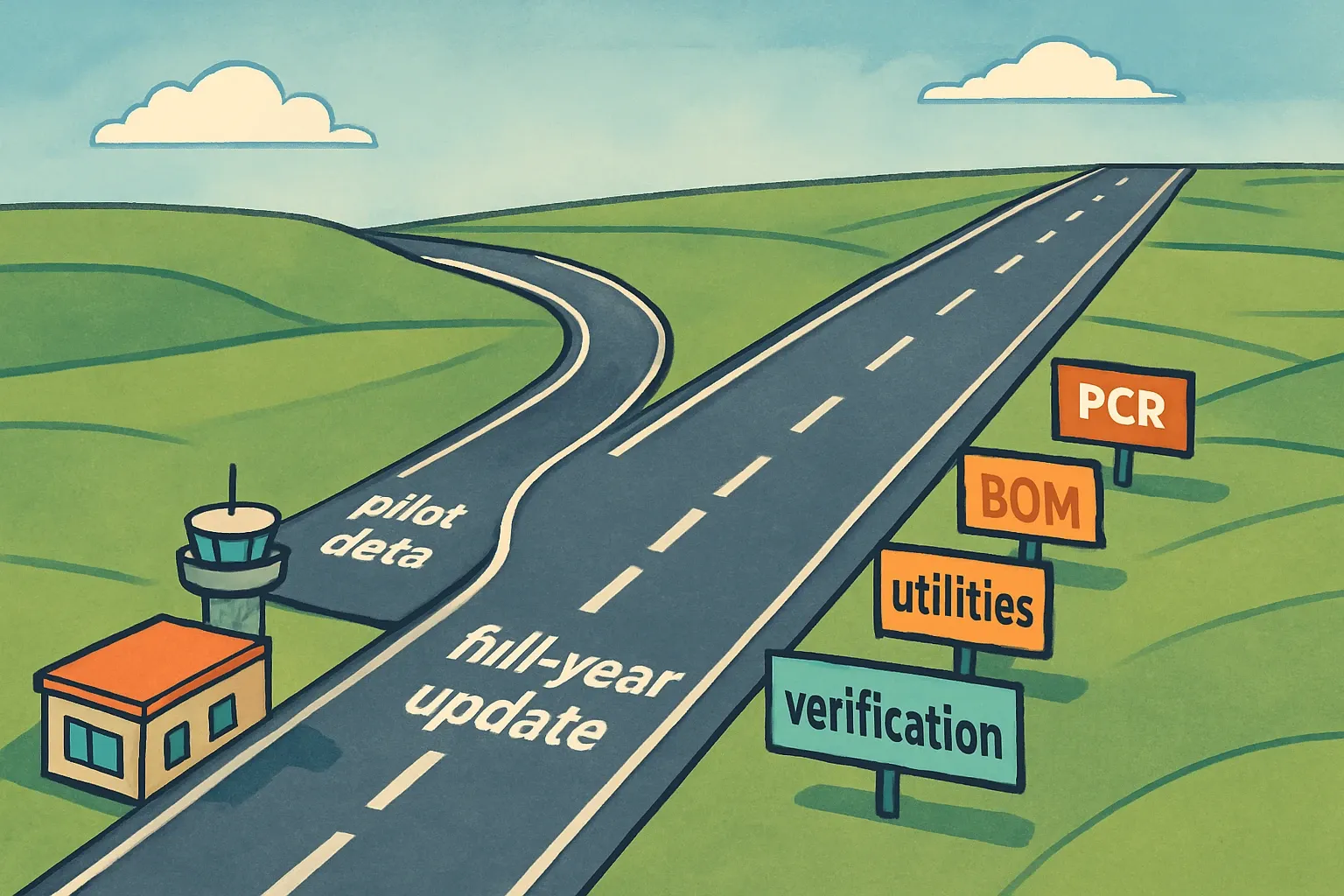
New products sometimes publish a prospective EPD using an initial production period and then replace it once a full reference year is available. For mature lines, select a recent twelve month window and stick to it for internal benchmarking. Consistent boundaries make renewals simpler and less error‑prone, which saves hours when auditors ask for the background report again.
Renewal timing that protects revenue
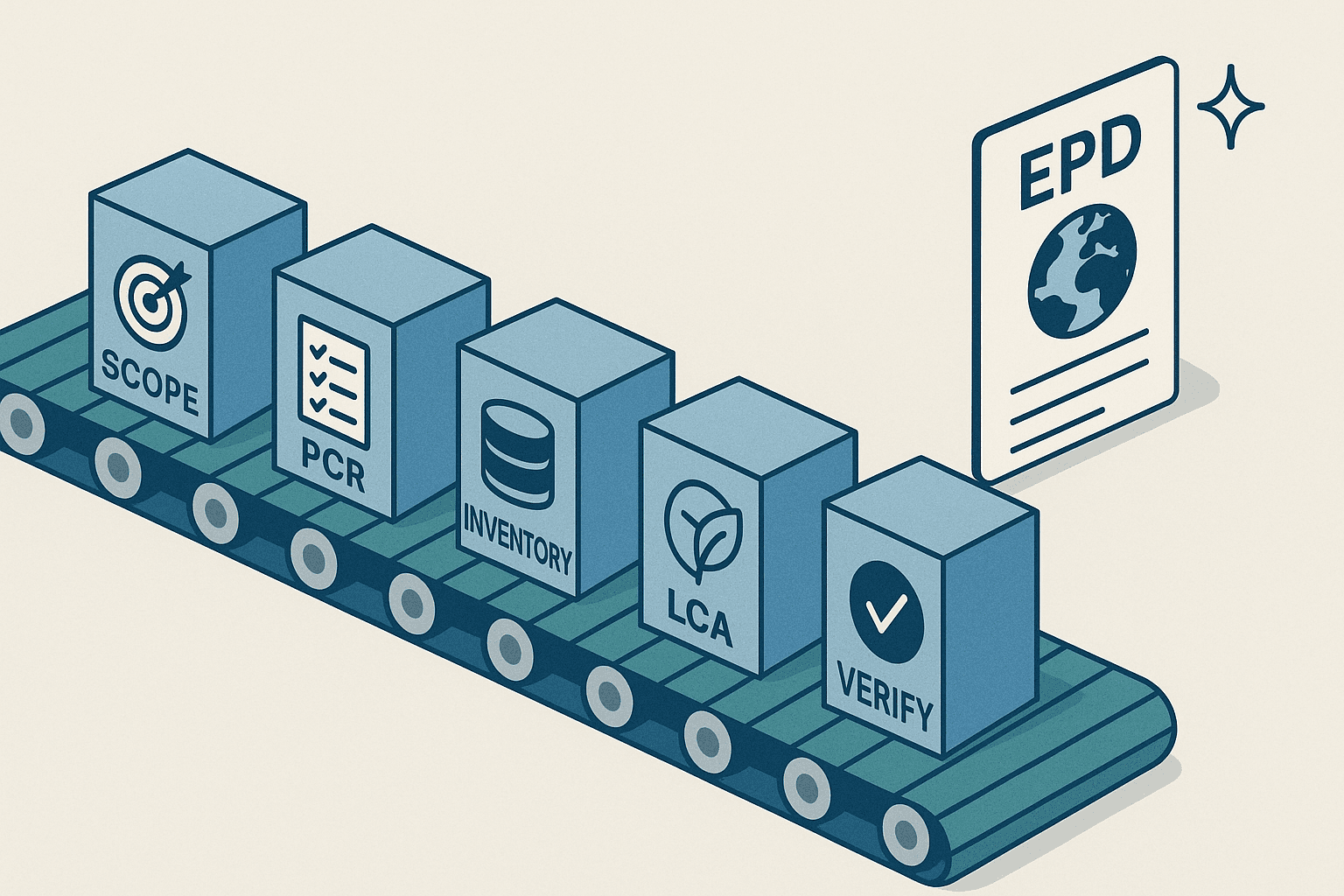
Think like inventory. If a top mover is nine months from expiry, begin data collection now, then book verification about three months before the date on the PDF. That buffer covers vacations, plant shutdowns, and the occasional data correction that always appears the week you least expect it. A current, comparable EPD keeps a product in play where EPD validity is a check box buyers will not waive.
Final thought
Validity is a clock, not a verdict. Use it to pace refreshes, align with PCR upgrades, and switch to A2 so specifiers can line your numbers up straighforwardly. Do that, and the EPD will keep opening doors while competitors quietly time out.