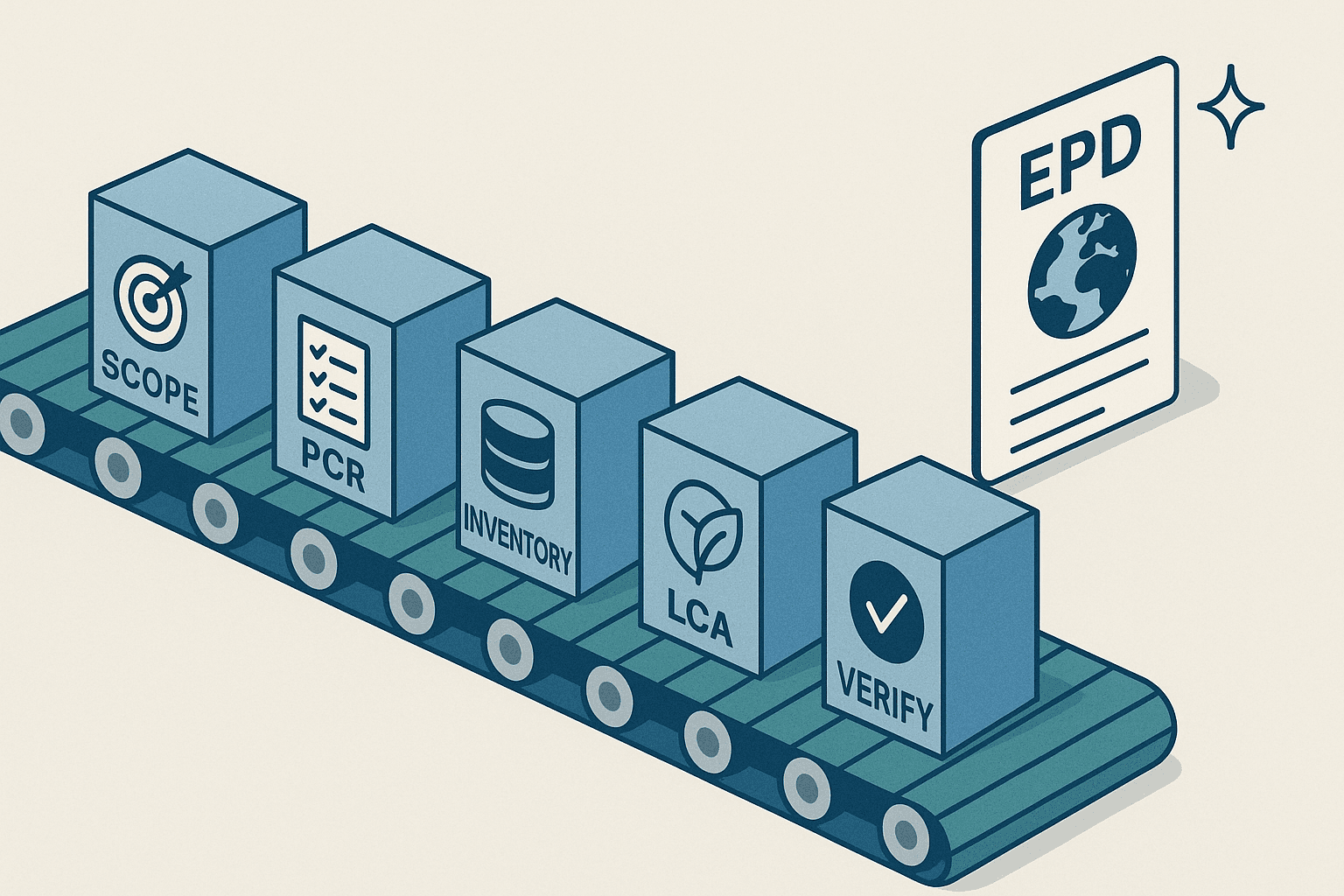
What an EPD update actually means
An update can be a renewal, a revision, or a reissue. Renewal keeps the same product and scope but refreshes data and methods to current rules. A revision changes declared values because manufacturing or supply inputs changed. A reissue cleans up metadata like a name, plant list, or product code without touching the LCA results.
If your governing standard or PCR changed since the last publication, expect a fuller recalculation under the new rules. That is normal, not a red flag.
How often EPDs need updating
Most program operators set validity at five years. After that, the EPD must be renewed to remain current and scoreable for rating systems or procurement. This five‑year norm is explicit in the EPD International General Programme Instructions and mirrored by IBU’s program rules (EPD International GPI, 2024) (IBU General Rules, 2024).
PCRs have their own expiry clocks. A PCR expiring does not cancel your posted EPD, but your next renewal must use a current PCR.
What changed recently that affects an update
EN 15804 A2 has become the default for Europe and influences many global PCRs. Results published to A2 are structured differently than older A1 EPDs, so direct comparisons to legacy declarations can be misleading without careful alignment.
In the United States, federal procurement incentives shifted in early 2025. State and private owner requirements continue to rely on third‑party verified EPDs to document embodied carbon in bids. Treat federal changes as background noise and keep your declarations current where projects are actually won.
LEED v5 is in flight and continues to lean on product‑specific, verified EPDs for embodied‑carbon accounting. If your EPD is valid and transparent, it stays useful through the transition.
Want to keep your EPDs competitive and relevant?
Follow us on LinkedIn for insights that help you navigate updates and maintain your edge in project specifications.
The clean test for an off‑cycle refresh
You do not have to wait five years. Update an EPD sooner if any of this happens:
- New facility comes online or an existing one stops producing the declared product.
- Material recipe or supplier geography changes in a way that moves impacts.
- Major energy shift such as a CHP install or contract for low‑carbon electricity.
- You want to disclose improvements from a decarbonization project that customers keep asking about.
If the change is only branding or a catalog code, consider a reissue instead of a full recalculation.
Picking the right PCR when the rules moved
Start with your competitive set. If most comparable products cite the same PCR and operator, aligning there simplifies comparisons and customer reviews. Also check the PCR’s next revision date and whether your target operator is accepted where you sell. When choices exist, pick the PCR that best fits your product system and the markets you care about, not the one that looks easiest today.
Data that actually speeds an update
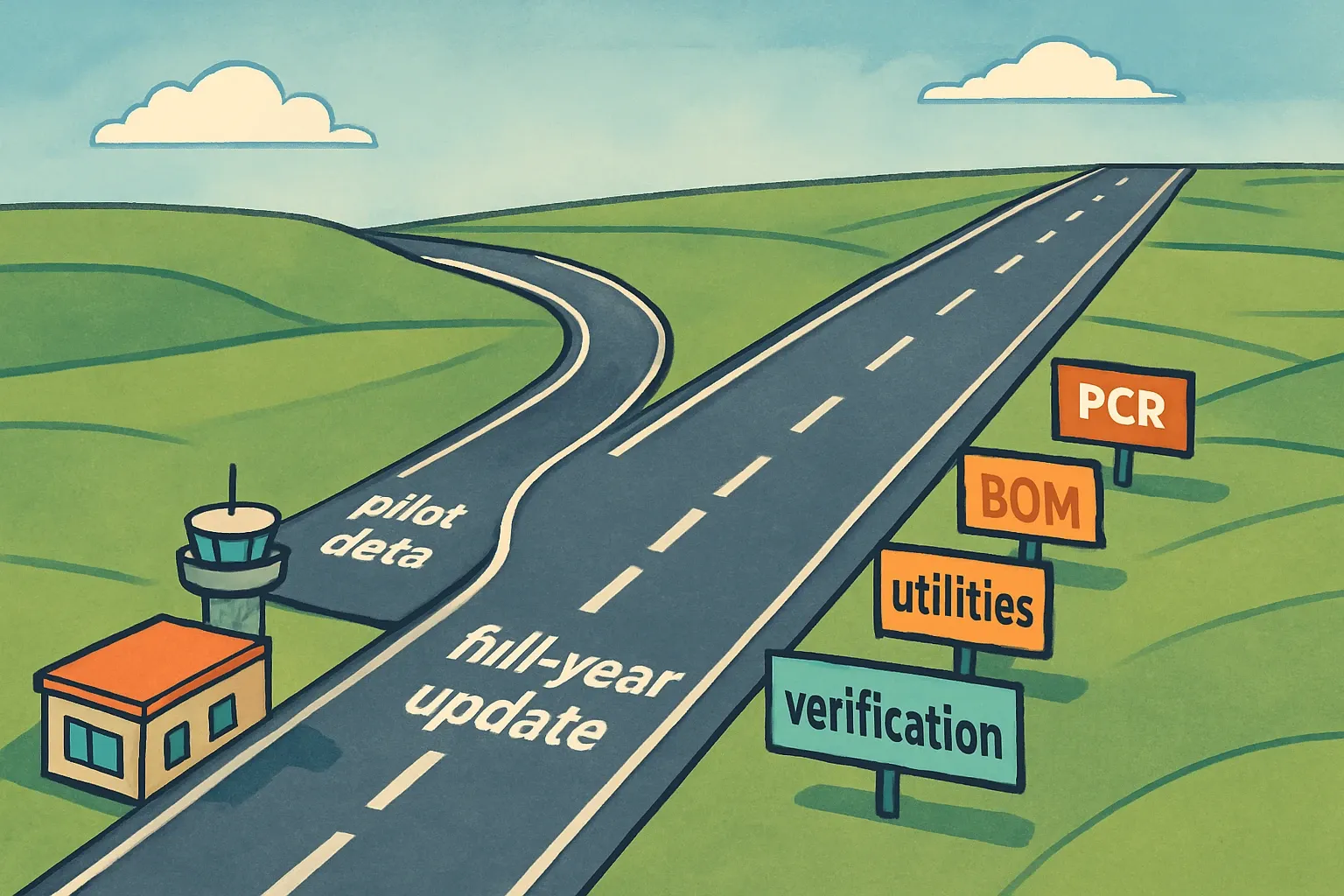
Lock a clear reference year and gather plant utilities, production volumes, yields, scrap, and outbound transport for that period. Confirm which variants will be covered, including color lines or mix designs that share a bill of materials. Multi‑site products benefit from a single template so teams are not emailing ten versions of the same spreadsheet. Small prep moves like these cut weeks of ping‑pong.
A2, biogenic carbon, and comparability
Under A2, biogenic carbon storage and timing are reported more transparently. That is helpful and also a source of confusion. Avoid slide‑deck claims that cherry‑pick one module. If you publish an update for a real performance gain, show it across the declared modules and provide a short method note customers can keep in their files. Dont bury the lede.
Communicating the update to the market
Name the version, date it, and include a two‑line change log in your product literature. Train sales to answer one question crisply. What changed, by about how much, and where can a reviewer verify the claim in the PDF. If you moved operators or PCRs, say so in plain language.
What to look for in an update partner
Choose a team that will handle data wrangling with plant managers, align the PCR to your category, and publish with the operator your customers prefer. Operator agnostic publishing keeps options open between Smart EPD in the United States and IBU in Europe. Fast only matters when quality is locked, so ask about verification workflows and how cross‑checks are documented for third‑party review.
A short, practical checklist
- Confirm your current EPD’s validity date and governing PCR.
- Decide renewal, revision, or reissue based on the scope of change.
- Freeze the reference year and list the exact facilities in scope.
- Collect utilities, production, yields, waste, inbound and outbound transport.
- Prewrite two sentences that explain the change your customers will care about.
The risk of waiting vs the reward of shipping
Outdated EPDs create friction with specifiers who must document embodied carbon today. A current, verified declaration keeps you in the conversation and removes an easy reason to swap in a competitor. The work is manageable with the right plan, and the payoff lands in bid scores and closed projects. It is definately worth it.