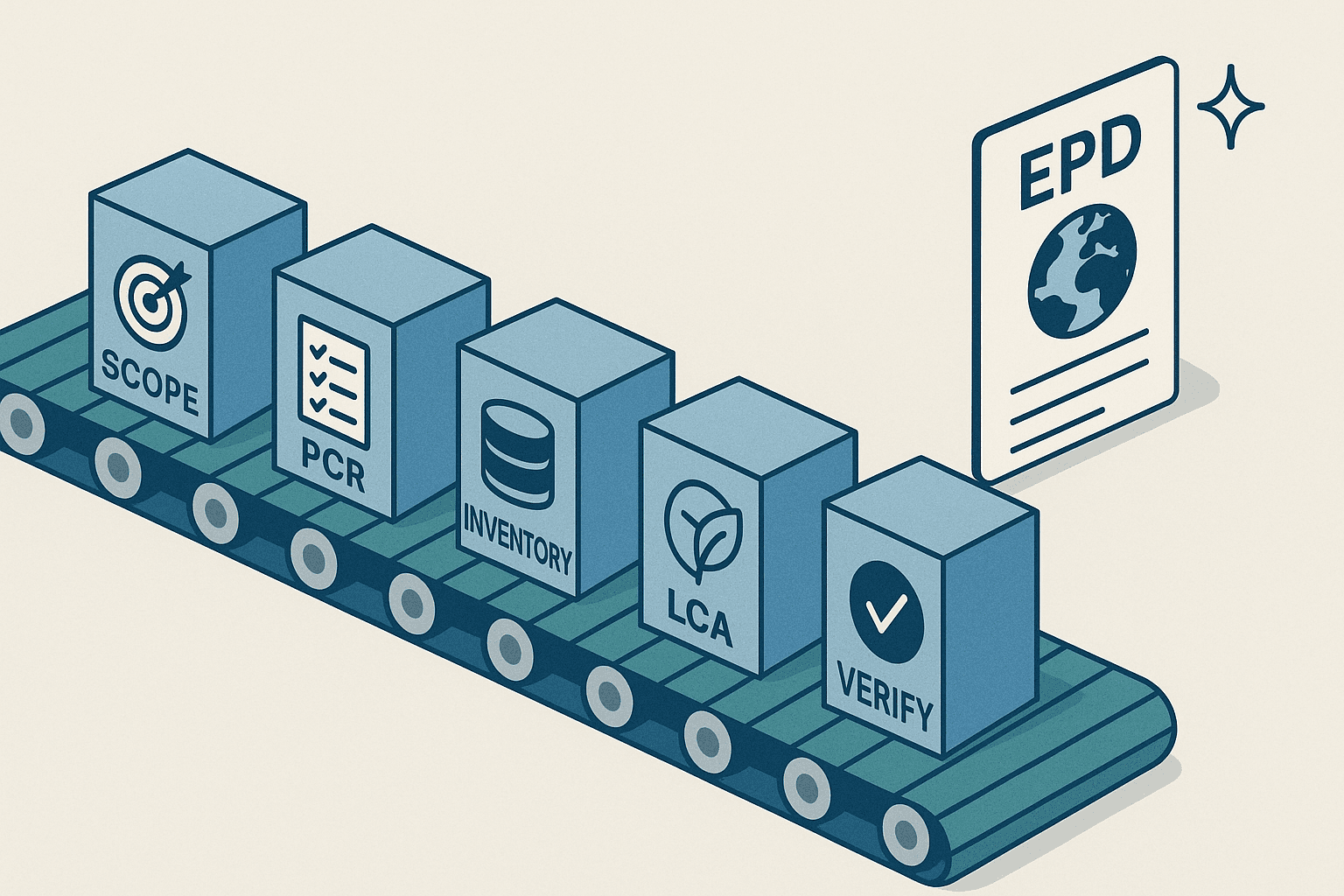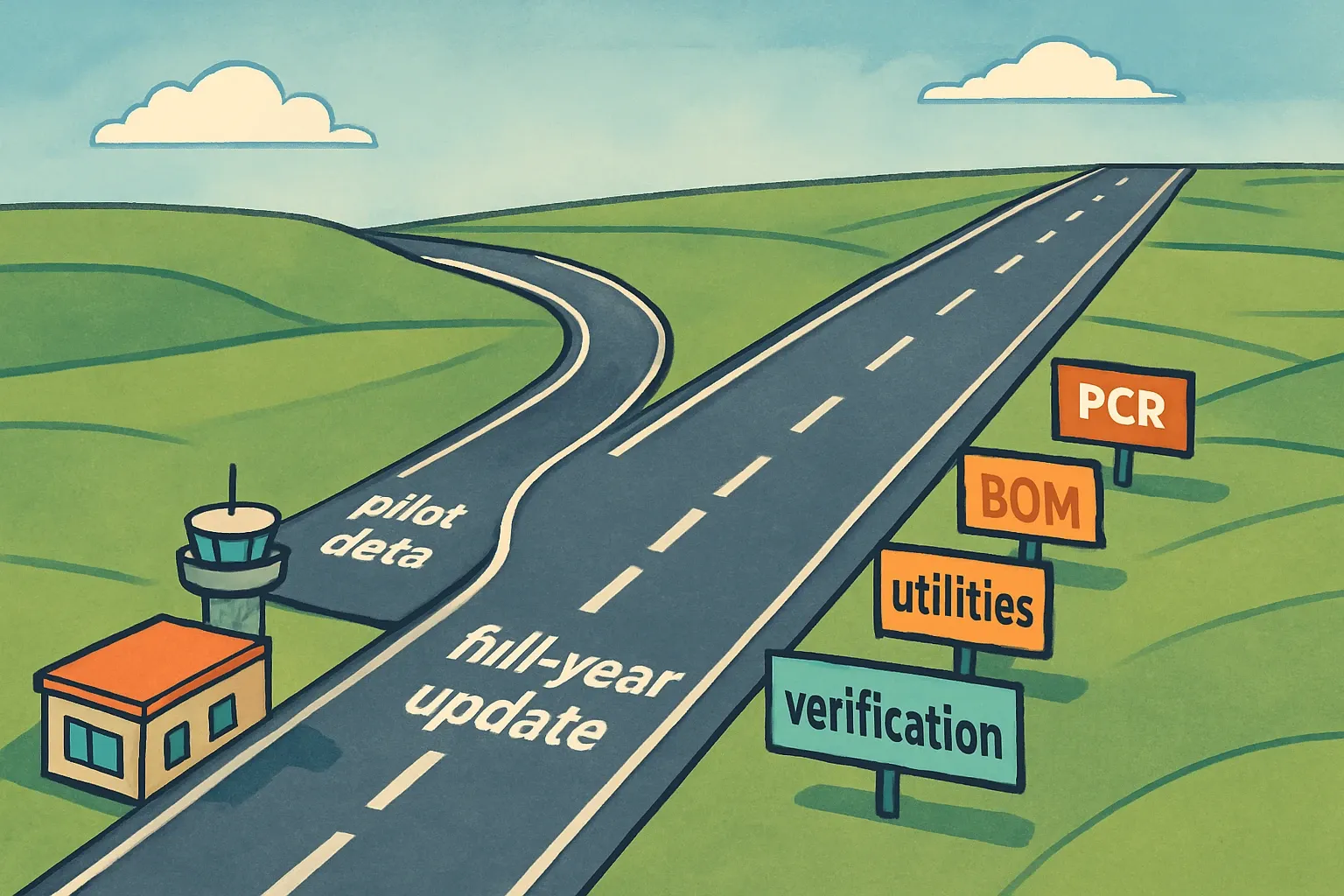
The one‑by‑one trap
One product, one EPD, one more round of outreach. That pattern quietly taxes R&D, procurement, and plant teams with duplicate tasks. Worse, every new request starts cold because tribal knowledge lives in inboxes, not in a system.
This is the moment to stop doing it teh hard way. Build once. Reuse many times. Your second EPD should be the easiest one you ever publish.
Treat wave one like a portfolio build
Think of the first EPD wave as setting up a streaming library. You are not uploading a single track. You are tagging artists, albums, and rights so playlists assemble on demand. For EPDs, that library is a product portfolio digital twin that maps each SKU to sources of truth.
The payoff shows up the day a customer asks for coverage on adjacent SKUs. Instead of new forms and fresh guesswork, you select verified ingredients, approved suppliers, and known process assumptions, then generate the next model with confidence.
What your reusable model actually stores
A self‑serve EPD model is a structured dataset, not a binder. At minimum, capture:
- Complete supplier roster with site‑level IDs and contact paths
- Bills of materials by SKU and by product family, with alternates
- Chemical inventory down to CAS where materiality calls for it
- Process energy, water, yields, scrap and rework by line and shift where relevant
- Transport lanes with modes and distances, plus packaging and end‑of‑life defaults
Structure once, reuse many times
Group SKUs into families where the PCR allows. Define parameters that vary predictably, like pigment load or liner basis weight, then lock the rest as shared baselines. Many program operators allow an EPD to cover several similar products when rules are met. That is your multiplier.
When a BOM change occurs, update the shared component and let lineage flow to all affected SKUs. The model becomes a living asset that answers what changed, when it changed, and how much it moved your GWP.
Governance that keeps you fast, not sloppy
Speed without guardrails is rework. Publish a short playbook for data stewardship. Name roles for supplier onboarding, change control, and exception handling. Require evidence for any substitution. Keep a visible audit trail so verifiers can follow the breadcrumbs without a phone marathon.
Finally, schedule portfolio health checks that align with PCR updates and renewal windows. EPDs are typically valid for five years, which makes batch renewals and targeted refreshes practical when your model is organized (IBU, 2025).
Numbers that justify the upfront work
An LCA study can take between 1 and 12 months and verification commonly adds about two weeks. That is the baseline you can compress once your inputs are validated and reusable (EPD International, 2026).
Market momentum is not slowing. One major program operator reported surpassing 18,000 valid and registered EPDs in 2025, plus thousands more added during the year. More EPDs in the market means more spec cycles where product‑specific data is expected (EPD International, 2025).
Capacity matters too. IBU highlighted a limited pool of qualified verifiers and about a 40 percent rise in external verification costs that forced 2025 fee adjustments. Translation for manufacturers. good data hygiene reduces verification back‑and‑forth when supply is tight (IBU, 2025).
When LEED v5 changes the ask
LEED v5 brings embodied carbon from side quest to main quest with a prerequisite to quantify cradle‑to‑gate impacts across structure, enclosure, and hardscape. A self‑serve model means you already have product‑specific numbers or can configure them quickly for priority SKUs. That keeps bids moving when design teams need credible GWP values early.
A pragmatic first 90 days
Start where coverage drives revenue. Pick the ten to twenty SKUs that show up most in bids. Map their suppliers, BOMs, and energy. Normalize naming and units. Validate one facility end to end, then roll the template to the others. Build a change log. Publish the first set. Use the same rails for the next set.
Make your second EPD your easiest
The goal is not one glossy PDF. The goal is a portfolio engine that turns verified inputs into repeatable declarations with minimal lift. That engine shortens response time when a hyperscaler asks for coverage, keeps experts focused on real engineering, and gives sales fewer reasons to walk away from specs that reward transparency.