Start with the real deliverable
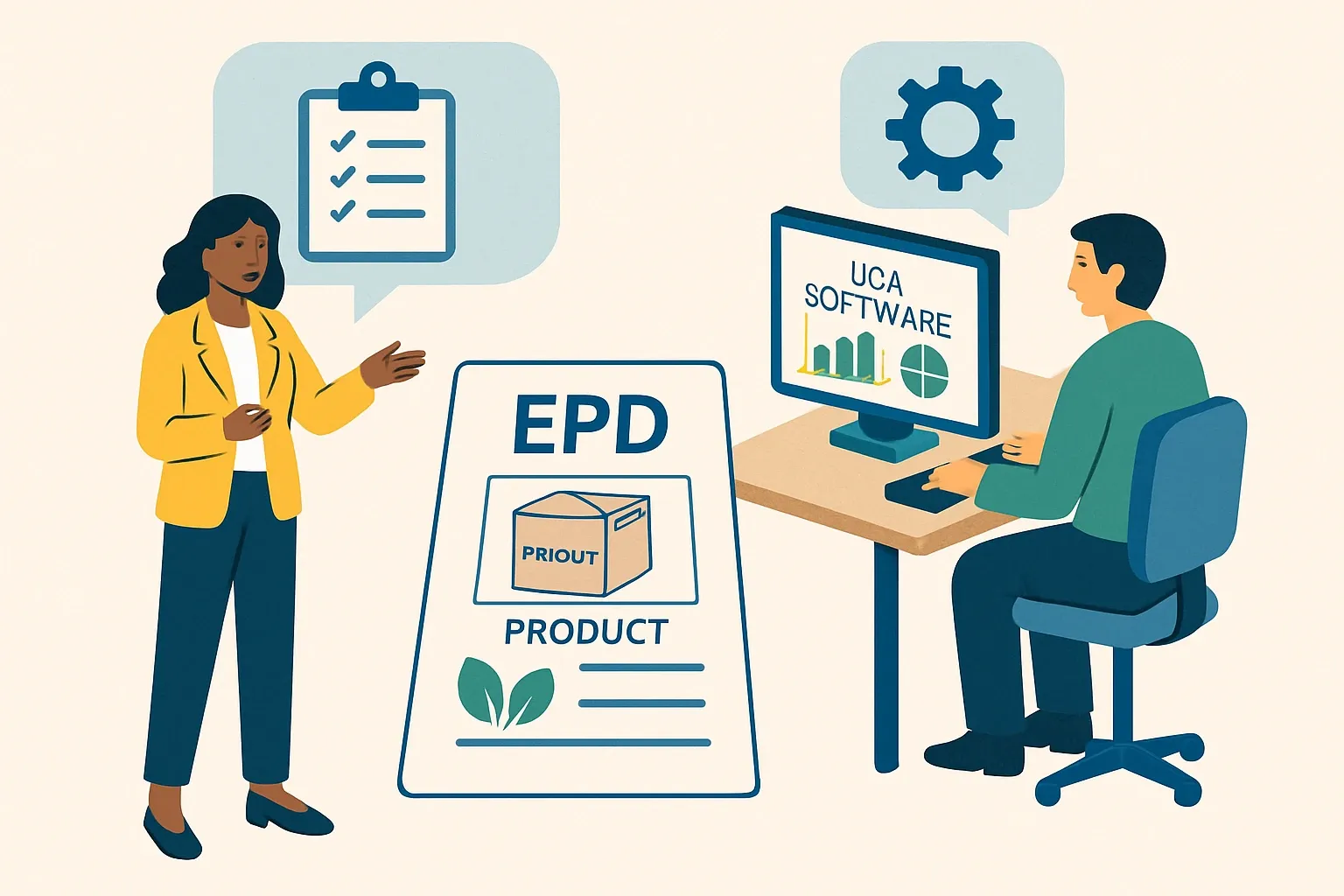
An LCA model is not an EPD. An EPD is a verified, published document tied to a Product Category Rule and a program operator, ready for submittals and databases. Think of software as the instrument, and an EPD as the recorded album that gets distribution.
What LCA software actually gives you
Software provides a modeling environment, background databases, and export formats. It does not run your data collection, interpret your bills of materials, or handle third‑party verification and publication. If the team lacks a seasoned practitioner, the learning curve can feel like switching from acoustic to synth overnight.
What an EPD consultant actually gives you
A good consultant runs the project end to end. They scope the PCR, set the reference year, collect data across plants, build the LCA, coordinate verification, and publish with the operator your market expects. The catch is bandwidth on your side. Many firms push data wrangling back to the manufacturer, which quietly soaks up weeks.
Where time really disappears
The long pole is not the LCA math. It is chasing utility bills, supplier mixes, packaging specs, maintenance schedules, and waste records across facilities. We prefer to own this lift so R&D and plant leaders stay focused on production rather than spreadsheet archaeology. That is where speed shows up in the real world.
Want to speed up your EPD process?
Follow us on LinkedIn for insights that help you choose between consultants and software, maximizing your ROI and keeping your products in the spec.
Verification and validity, in plain terms
Most program operators set EPD validity at five years, after which renewal is required under the current PCR (IBU Programme Rules, 2024). Treat this like a passport. Plan your renewal window while you still have runway so sales never lose a spec because an EPD lapsed.
When software alone makes sense
Software is a fit for teams with in‑house LCA expertise, consistent product recipes, and a steady cadence of similar updates. It is also helpful for early design screening where you test variants before committing to verification. Just remember that publishing still requires a verifier and a program operator.
When a consultant‑led path wins
First EPD for a flagship product. Multi‑site production with shifting energy mixes. Complex supply chains and private label variants. A looming bid window. If that sounds familiar, a consultant who owns data collection, verification, and publication reduces schedule risk and protects margin in competitive tenders.
The hybrid that actually ships
The strongest pattern we see marries software under the hood with a white‑glove project team that drives data to done. You get reproducible models and audit trails, plus someone accountable for the messy middle. That blend keeps quality high and cycle times short. It is not flashy, it is effective and it scales.
How to evaluate partners without the hype
Ask who collects plant data and how they chase gaps. Confirm their PCR selection process and how they benchmark competitors. Check verifier relationships and typical publish timelines. Request sample data templates and a RACI for your team. If answers feel fuzzy, delivery will be too.
ROI shows up in specifications
EPDs remove penalties buyers face when they must estimate carbon with conservative defaults. That keeps your product in play on more projects and reduces last‑minute swaps. Reliable averages for cost and payback vary by scope and product, so anyone promising a universal number is guessing. The commercial lift is real, and it is often visible in faster bid cycles.
Decision quick‑start
If you have skilled LCA staff and stable recipes, start with software and a plan for verification. If your strength is manufacturing and sales, pick a consultant who will actually do the data work. If speed matters most, combine them. The path you choose should be the one that gets verified EPDs into the market quickly and keeps them current. Move now, avoid the scramble later, and do not let paperwork slow the spec. It is definately avoidable.