What the law actually says
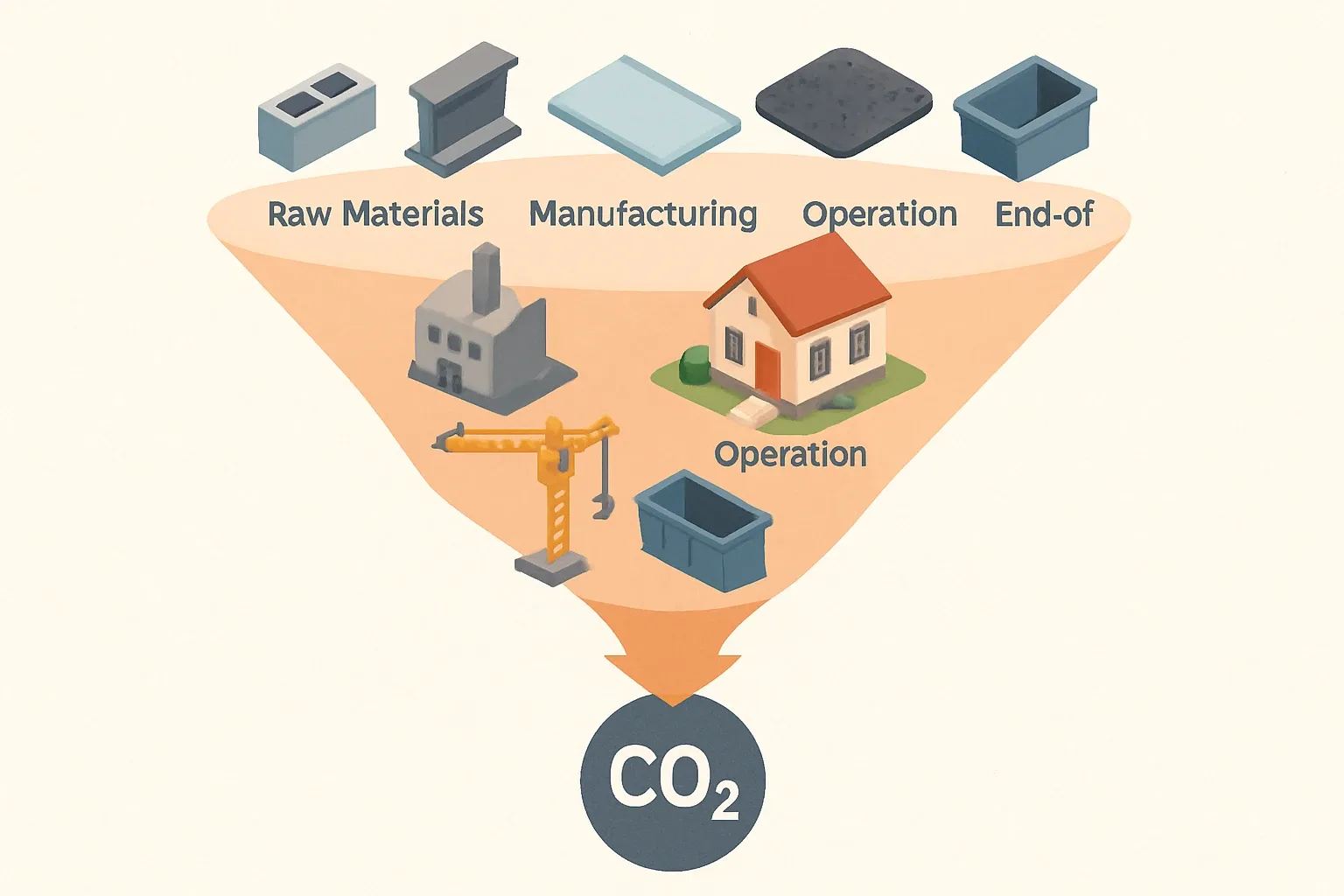
Senate Bill S.2967 was signed on November 20, 2024 as Chapter 239 of the Acts of 2024. Section 113 directs the Executive Office of Housing and Livable Communities (EOHLC) to issue regulations that require cradle‑to‑grave life‑cycle assessments of state‑funded housing, aligned with ISO 14040 and 14044. That is a direct signal that carbon accounting will be part of the funding playbook, not an optional add‑on ([Acts of 2024, Chapter 239, 2024](https://malegislature.gov/Laws/SessionLaws/Acts/2024/Chapter239)).
Where the EOHLC rule stands now
EOHLC posted a proposed rule, 760 CMR 75.00, on August 15, 2025, then opened public comment through September 5, 2025. The Secretary of the Commonwealth’s notice confirms the proposal and cites EOHLC’s statutory authority under Chapter 239, Section 113. Final text had not been published as of December 2, 2025, so timelines and documentation specifics may still shift ([EOHLC Regulations page, 2025](https://www.mass.gov/info-details/eohlc-regulations-current-regulations-and-proposed-amendments); [Secretary of the Commonwealth, 2025](https://www.sec.state.ma.us/divisions/pubs-regs/hearings/html/pdf-8-29-25.htm)).
Why EPDs matter even if the rule says “LCA”
The statute calls for project LCAs. Project LCAs need product data. When specifiers do not have product‑specific EPDs, they often fall back on conservative default factors that make your product look heavier than it is. Showing up with third‑party verified EPDs gives the project model better inputs, which keeps you from being sidelined by a placeholder number. It is like walking into an exam with your calculator rather than borrowing one in the hallway.
Materials likely in the spotlight
Chapter 239 also created an embodied carbon council to map out use of EPDs and low‑embodied‑carbon materials in public projects, with a plan to recommend maximum global warming potential values for key categories including cement and concrete mixtures, steel, glass, asphalt, and wood by January 1, 2026. The language is a nudge toward EPD‑backed procurement in parallel with the housing LCA requirement (Acts of 2024, Chapter 239, 2024).
Want to win more projects in Massachusetts housing?
Follow us on LinkedIn for insights on how EPD readiness can unlock specs and improve your bidding strategy.
Who is affected
The proposed 760 CMR 75.00 rule targets state‑funded housing projects overseen by EOHLC. Expect LCA submittals before construction begins, with scope that spans extraction through demolition, plus on‑site construction and operations. That scope mirrors the statute’s cradle‑to‑grave direction, so teams should plan data collection across A1 to C stages, not just A1 to A3 ([Acts of 2024, Chapter 239, 2024](https://malegislature.gov/Laws/SessionLaws/Acts/2024/Chapter239)).
What to do this quarter
Think of this as pre‑season training. Small reps now beat big rework later.
- Lock a reference year for utilities, energy, waste, and throughput across each plant. Gather invoices and meter reads in one place.
- Map bills of materials to the PCRs competitors use for comparable products, so your eventual EPDs are apples to apples.
- Identify which SKUs sell most often into public housing pipelines and prioritize those for EPDs and supplier data requests.
Picking the right partner for the heavy lift
Choose an LCA and EPD partner that collects data with you, not from you. Look for ISO 14040 and 14044 fluency, constructive PCR guidance, program‑operator agnosticism, and the ability to publish with Smart EPD or IBU when you are ready. Ask how they handle first‑time data gaps, how fast they move from intake to draft, and whether they will quarterback supplier outreach. If they cant show a crisp project plan, keep shopping.
Budget signals to watch
Two policy clocks matter for bidding strategy. First, the housing LCA rule is moving through the administrative process, and the comment window is closed, which typically precedes a final publication step by weeks or months in Massachusetts procedure ([Secretary of the Commonwealth, 2025](https://www.sec.state.ma.us/divisions/pubs-regs/hearings/html/pdf-8-29-25.htm)). Second, the embodied carbon council’s plan to recommend GWP thresholds keeps EPDs front and center in state procurement playbooks, which tends to pull private owners along over time (Acts of 2024, Chapter 239, 2024).
The commercial takeaway
Getting LCAs and EPDs ready is not just compliance prep. It shortens bid cycles, reduces substitution risk, and helps teams defend margin when carbon caps or points are in play. Move early, make data collection painless for your ops leads, and publish where specifiers actually look. The ROI shows up the first time a project team picks you because your numbers were already in the model.