What “good” looks like for a Balkan EPD
An EPD is a third‑party verified report of a product’s life‑cycle impacts under EN 15804 in Europe. Strong EPDs are product‑specific, verified by an accredited body, and easy to find in public registries. Most construction EPDs carry a five‑year validity window, so plan renewals before tenders demand it (EPD International, 2024).
The standards that actually show up in bids
EN 15804+A2 is the rulebook for European construction EPDs. Major operators require it and the older A1 format is being phased out of national data hubs. ÖKOBAUDAT does not admit A1 EPDs issued after 1 October 2022, which effectively sets the bar for projects using German methods and many EU‑funded builds (ÖKOBAUDAT, 2024). IBU states its transition period to A2 ended in October 2022, so new or adapted EPDs must use A2 there as well (IBU, 2025).
Where Balkan manufacturers usually publish
You will most often see EPDs for the region hosted by The International EPD System, IBU in Germany, EPD Italy, or AENOR GlobalEPD. Some firms pick BRE or Smart EPD when projects lean UK or US. The choice is commercial and tactical, provided the EPD is EN 15804 compliant and recognized by buyers.
A quick read on “EPD Balkans” search angles
If someone types EPD Balkans, EPD Serbia or EPD Croatia, they usually need two answers. Which operator should we use, and which PCR fits our product family. Both answers depend on competitors’ precedents, language needs, and where the projects sit geographically.
PCRs that drive scoping decisions
For construction products under the International EPD System, PCR 2019:14 is the main reference. Version 2.0.0 triggered a transition that sunset older sub‑versions on 20 June 2025, so check that your verifier and model line up with the current PCR version before you start (EPD International, 2025).
Exports into the EU and the CBAM effect
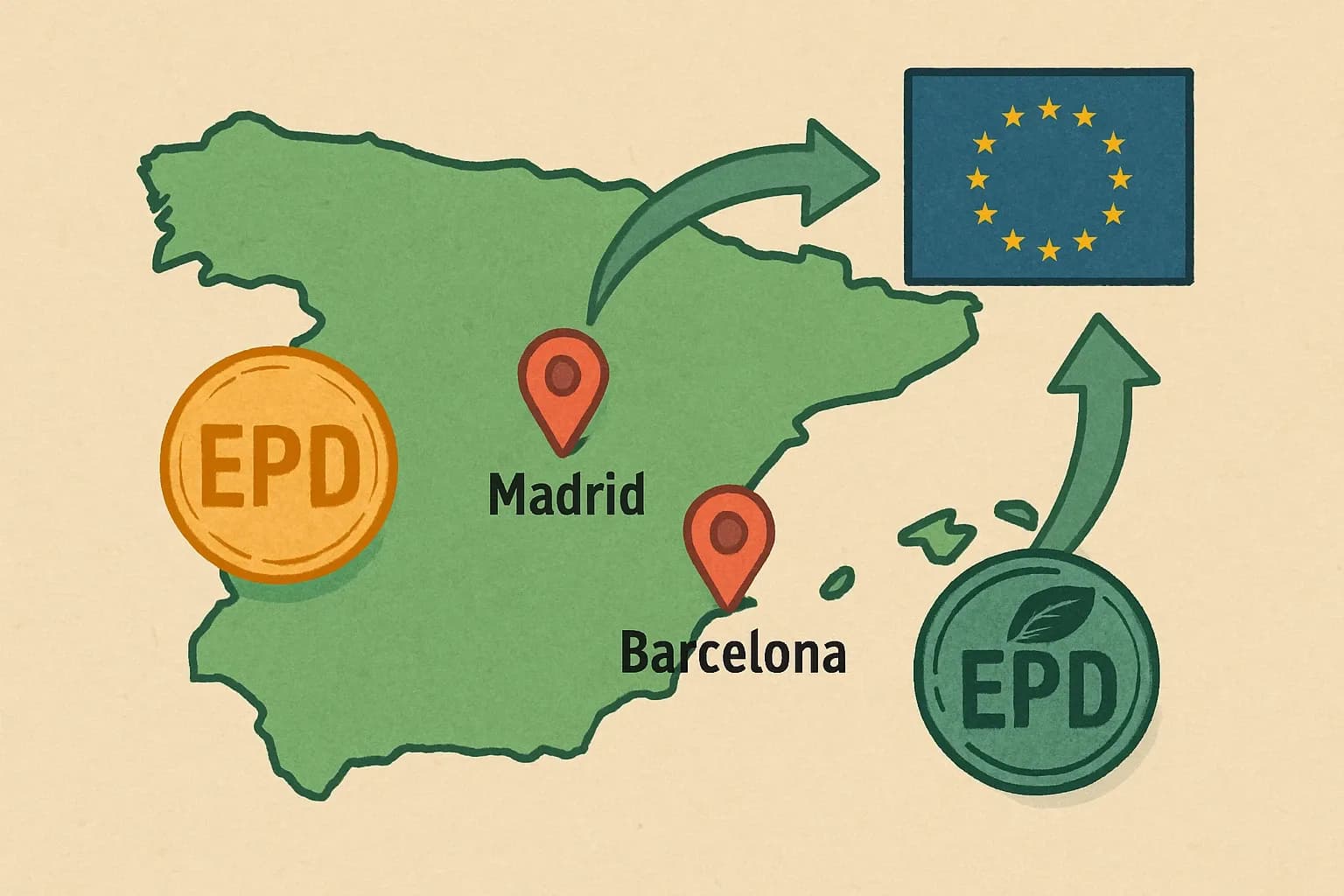
CBAM covers cement, iron and steel, aluminium, fertilisers, electricity and hydrogen, with a new de minimis threshold of 50 tonnes per importer per year that exempts about 90 percent of importers while still covering roughly 99 percent of related emissions (European Parliament, 2025). If you export from the Western Balkans into the EU, that reporting culture is already nudging buyers to ask for robust product‑level data. An EPD will not replace CBAM reporting, yet it makes your carbon story consistent across submittals.
Ready to navigate EPD opportunities in the Balkans?
Follow us on LinkedIn for insights that help you meet regulations and win more tenders.
Where EPDs appear in Balkan tenders
Public works in EU member states in the region follow EU procurement frameworks and Level(s) methods. Private developers increasingly ask for product‑specific EPDs so their building LCA is not penalized by generic, higher‑carbon defaults. LEED v5 remains in development in 2025, and project teams still award credit for product‑specific, third‑party verified EPDs in practice.
Timelines and validity you can plan around
Most verified EPDs remain valid for five years, then require renewal or re‑verification as your data changes, typically when indicators shift more than around 10 percent in the period. That renewal clock matters if your competitors’ declarations are set to expire during a tender season and yours will still be valid (EPD International, 2024).
Data you will need to collect, quickly
Think in a single reference year for meter‑readings, production volumes, fuels, scrap, water, packaging, and transport. New products can start with a prospective EPD if at least a few months of production data exist, then be trued up after a full year. A good partner will help you recieve plant data with minimal disruption by coordinating across operations, procurement, quality and finance.
Picking a program operator, without drama
Choose an operator that your target buyers already recognize, that supports your product’s PCR, and that can publish in English plus any needed local language. Check whether they push data to hubs like ECO Platform and whether your EPD can be mirrored in national libraries such as ÖKOBAUDAT.
ROI lens for sales leaders
Without an EPD, spec teams must use conservative generic data, which can make your product look worse on paper than it performs. With a verified, current EPD, your product gets evaluated on its own merits and is far less likely to be swapped out late in design. The cost of a solid EPD is often recouped with a single mid‑sized project win.
The Balkans market snapshot you can quote
The International EPD System reported hosting more than 10,000 valid EPDs worldwide by late 2024, with construction products dominating the registry. That scale signals mainstream buyer expectations rather than a niche trend (EPD International, 2024).
A simple playbook to start this quarter
- Confirm that your target markets accept EN 15804+A2 and set your goal to publish there first. ÖKOBAUDAT’s A2 stance is a useful North Star for EU projects (ÖKOBAUDAT, 2024).
- Map your closest competitors and the PCRs they used. Match the dominant PCR unless there is a clear technical reason not to.
- Lock a reference year and assemble utility, bill of materials, packaging, transport and waste data by plant and product.
- Model to EN 15804+A2, verify with an accredited body, then publish where your buyers shop for EPDs.
- Set a renewal reminder at four years and line up improvement levers so the next EPD lands stronger.
Closing thought
The region does not need a different EPD playbook. It needs fast, clean data collection, operator‑agnostic publishing, and verification aligned with EN 15804+A2. Do that, and Balkan‑made products compete on real performance, not on generic penalties that were never written for them.