The lay of the land in Portugal
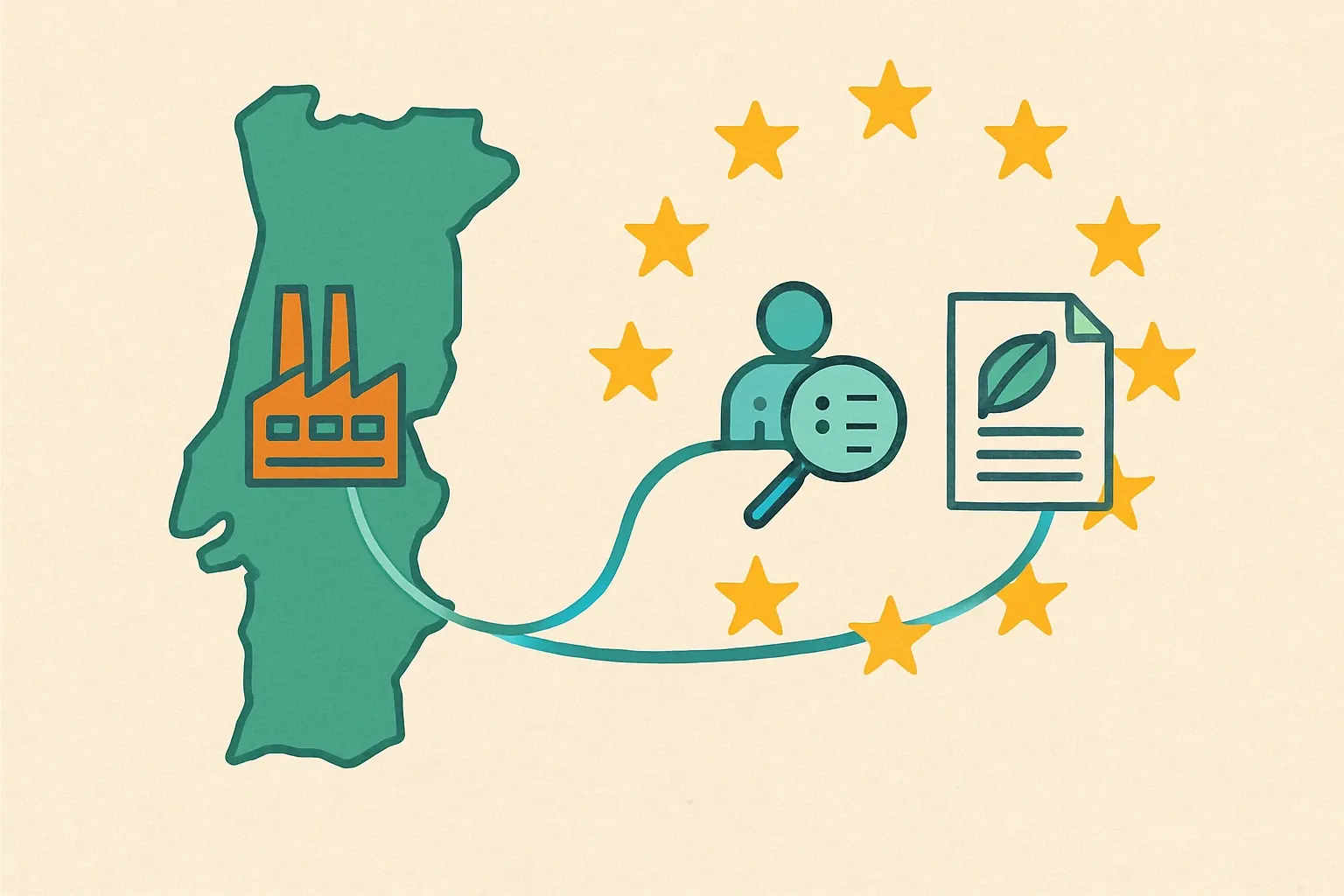
In Portugal, product EPDs follow EN 15804 and are widely accepted across the EU through ECO Platform recognition. Local manufacturers often publish with the Portuguese programme operator DAPHabitat, or with pan‑European operators such as IBU or the International EPD System. If teams search for “EPD Portugal”, they usually want two things at once, local credibility and cross‑border acceptance.
Where to publish your EPD
DAPHabitat is Portugal’s EPD programme. It is operated by the Sustainable Construction Platform and provides Portuguese and international pathways for building product EPDs (DAPHabitat, 2025). Pan‑EU alternatives like IBU and the International EPD System also work for products sold in Iberia and beyond. The right choice is usually driven by your customers’ tender preferences and where competitors already publish.
PCRs and version changes without drama
A PCR is the rulebook of Monopoly. Ignore it and the game falls apart. For construction products, the dominant PCR series is continuously updated, with a mid‑2025 transition that many operators flagged for planning purposes (EPD International, 2025). DAPHabitat closed its transition to updated instructions at the end of December 2024, so new submittals must use the current model (DAPHabitat, 2025). Build your plan around the version that will be valid through verification to avoid rework.
Validity and renewals you can plan around
Most EN 15804 EPDs are valid for five years, then require renewal. That cadence is consistent at major operators, including IBU which states EPDs are valid for five years before an update is needed (IBU, 2025). Use that window to schedule data improvements and supplier engagement rather than scrambling near expiry.
CSRD spillover for Portuguese manufacturers
Many Portuguese producers will fall in scope of CSRD based on the EU definition of a large undertaking. Updated thresholds are a balance sheet above 25 million euro, turnover above 50 million euro, and an average of 250 employees, with companies meeting at least two of the three criteria treated as large (CSSF, 2025). Policymakers discussed raising scope thresholds further in 2025, but those changes require formal adoption before they bite in practice (Reuters, 2025). If you are near the line, assume disclosure and plan your data model accordingly.
What specifiers expect in Iberia
Architects and contractors in Portugal and Spain look for EN 15804‑compliant, third‑party verified EPDs they can reference directly in bids. LEED v5 keeps EPD credit pathways and sharpens embodied carbon focus, so a product‑specific, verified EPD helps avoid penalties from generic factors that can push a product out of contention. An EPD does not guarantee wins, it removes avoidable friction.
Want to win more projects in Portugal with EPDs?
Follow us on LinkedIn for insights that help you navigate EPD requirements and unlock competitive advantages.
Choosing the operator, quickly
Pick the operator that matches your sales footprint, verifier availability, and data hand‑off speed.
- DAPHabitat, for Portugal‑centric projects and Portuguese language materials (DAPHabitat, 2025).
- IBU, common across the EU manufacturing base and frequently used by multinationals.
- The International EPD System, broad category coverage and global recognition.
Any of these can publish EN 15804 A2 EPDs that travel well in European tenders when properly verified.
Data to get right on day one
Two or three plants, one product family, one reference year. Gather primary data for energy, fuels, transport, and waste. Map suppliers for A1 inputs and ask for audited background data when possible. Capture packaging and distribution details for A4 because Iberian logistics can shift impacts more than teams expect. Good data discipline beats fancy models when reviewers ask hard questions.
Timing, without the sand traps
Plan backwards from the bid calendar. Lock the PCR and operator, schedule verification early, and agree on who chases which datasets. DAPHabitat’s latest programme instructions are live, so new submittals should align now to avoid resubmission cycles (DAPHabitat, 2025). If a product is brand new, a prospective EPD can bridge the first year as long as you commit to update once 12 months of production data are available.
Commercial ROI in the Portuguese context
Public and private owners are setting embodied carbon budgets for major projects. Without a product‑specific EPD, many calculators apply conservative factors that make pricing the only lever. With a verified EPD, your product drops into the model cleanly, which shortens back‑and‑forth and protects margin. The cost of building the declaration is typically earned back by a single mid‑sized win, though exact payback varies by sector.
A quick checklist to stay out of trouble
- Confirm the PCR and operator version that will apply through verification.
- Align on the reference year and who owns each dataset within the factory.
- Pre‑book a verifier so your slot does not slip.
- Decide early how many similar SKUs to group in one EPD.
- Keep a renewal reminder for year four to avoid a last‑minute scramble.
The short path forward
Treat “EPD Portugal” as a publishing choice, not a constraint. Pick DAPHabitat or a pan‑EU operator, lock the PCR version, and make data collection ruthlessly simple for the people who run your lines. If you do that, you will recieve a compliant, trusted EPD that helps win specs in Portugal and across the EU.